Marathon des Sables: From Desert Explorer to Photojournalist
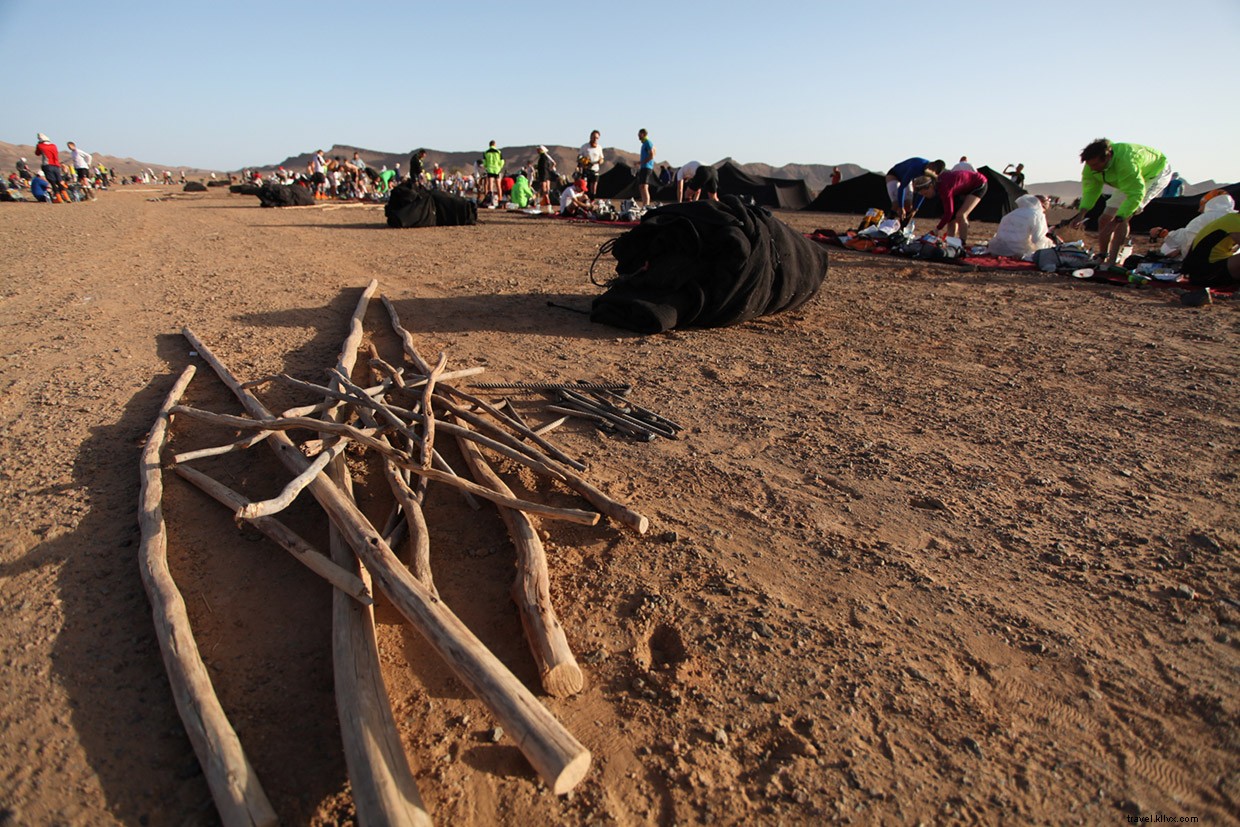
I’ve found photographing the race almost harder than running it. You’re up every morning at 5am when the camp is taken down ready to move it to the next site. Usually its fully erected again by 1pm, ready for the first runners to arrive back. This in itself is a remarkable feat and helps make the MDS stand out as a truly unique race. Having seen it from both sides, I can honestly say there are not too many other events organised so quickly or meticulously.
Once up, getting a mugful of coffee is my first and foremost aim, but around 20 minutes later I’m usually in the runners’ camp taking pictures and getting stories from the participants. On the build-up to the race’s start the mood is usually one of tense apprehension. Questions fly back and forth, mainly about kit; comparing and questioning food amounts, pack weights, shoes choices and so on. But what most forget is that, in the grand scheme of things, little of this actually matters; the desert being bigger than you or any of your kit choices.
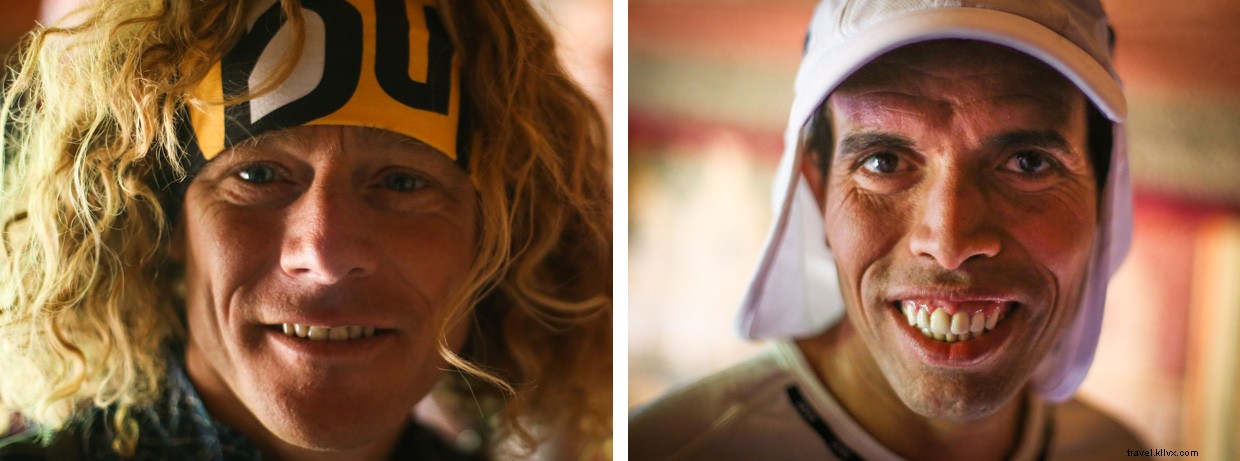
 I ran my race in an old pair of running shorts and a £2.99 cotton T-shirt. Space-age materials have little use in 45°C temperatures, where sweat does not need to be expelled as it’ll dry up naturally before it ever reaches the outside of your shirt. I suppose the biggest thing to get right is your own body weight (as little as possible) and your pack weight, carrying enough calories for the week ahead.
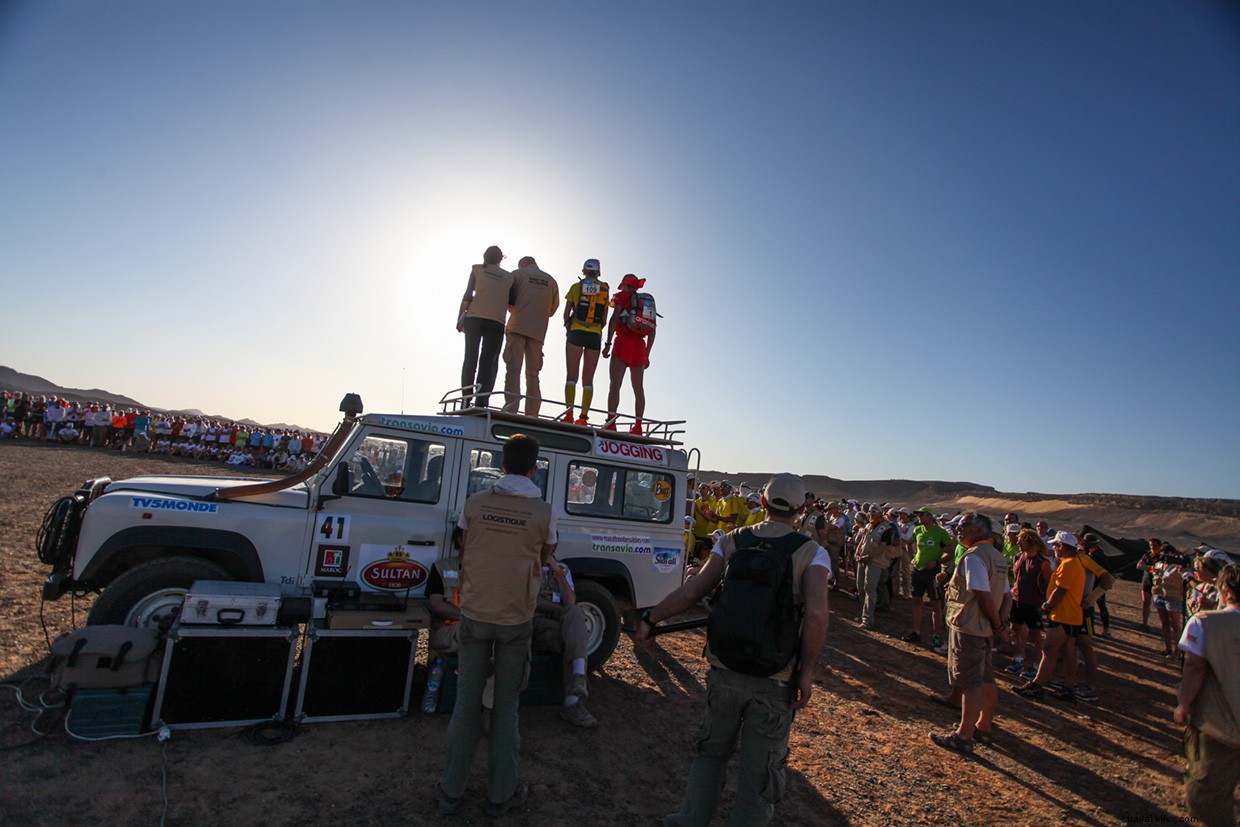
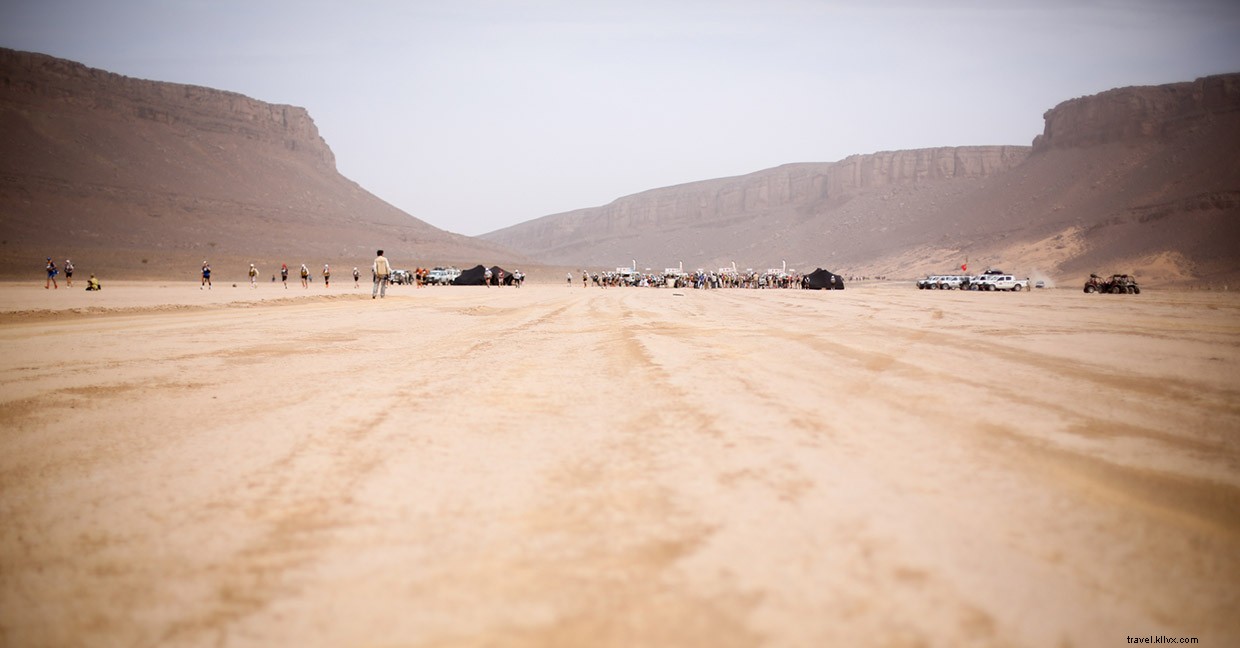
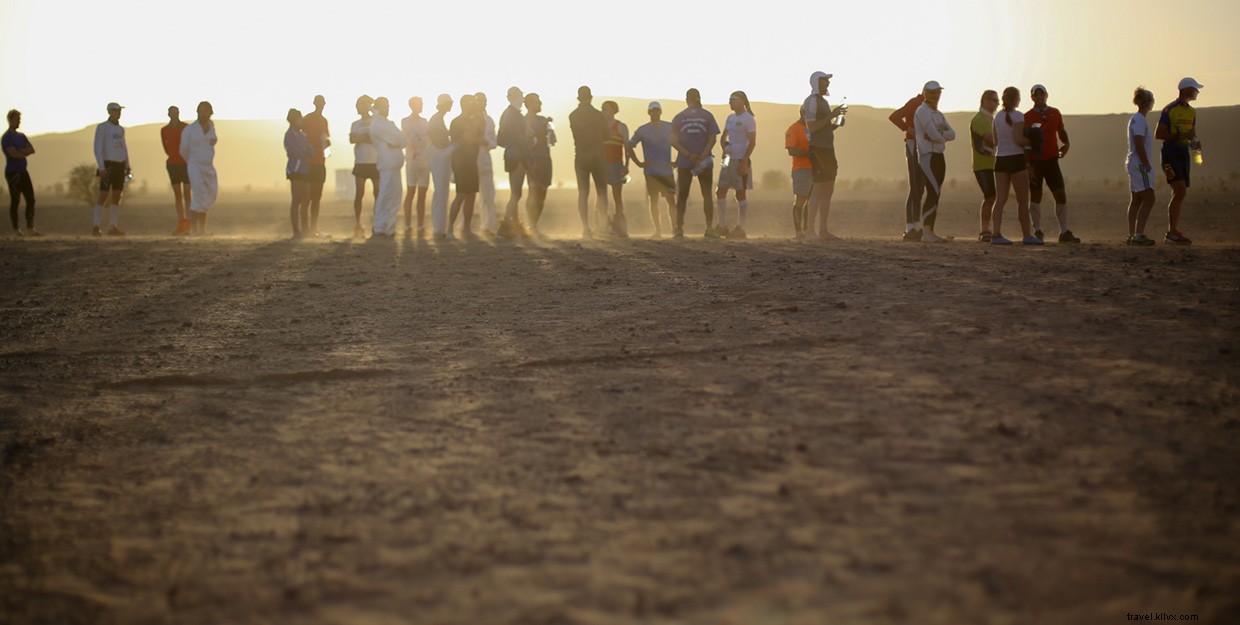
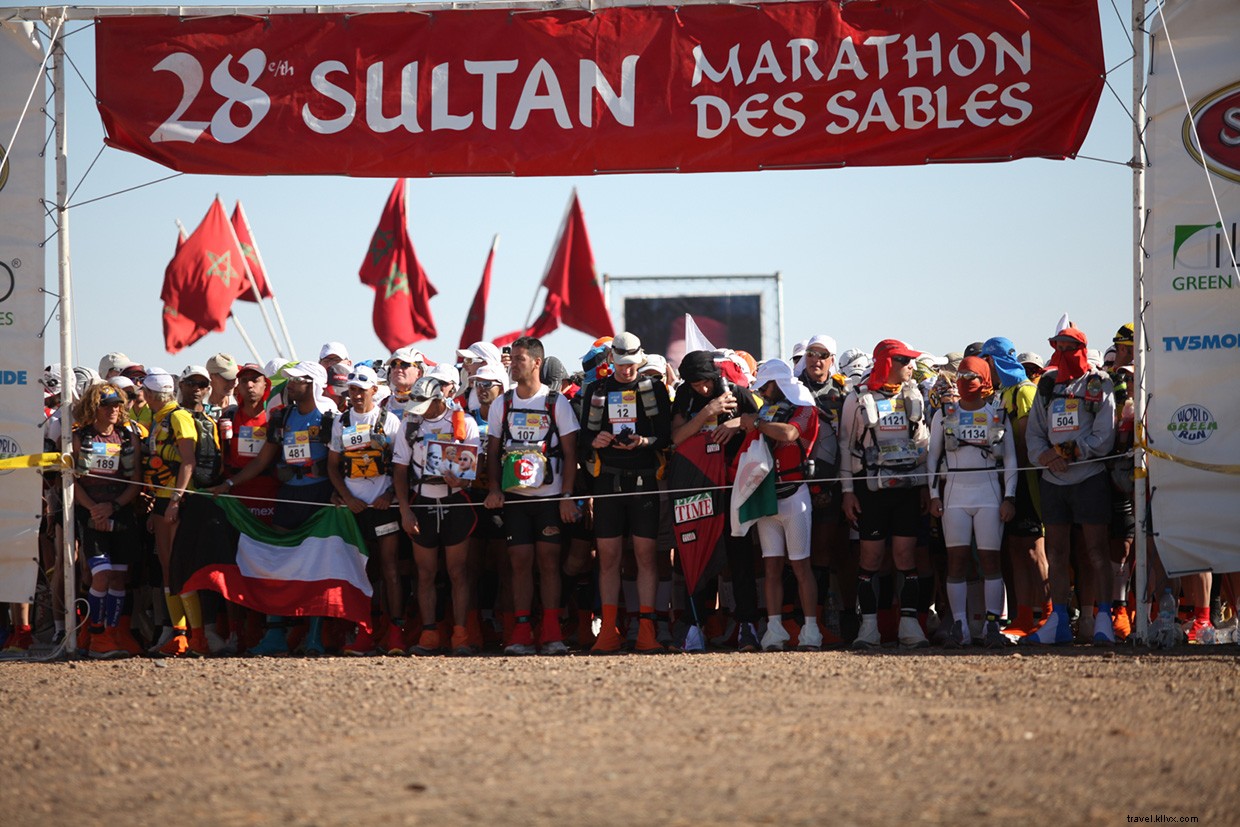
On the start-line the tension continues to build. The runners are told to be there for 8am and Patrick gives his pre-race briefing. The heat is gradually building too and the runners just want to get going. Patrick Bauer is the man behind the legendary race. Having first crossed the Sahara in 1984, Patrick wanted to start an event that would create similar experience for others. It took him two years to organise and fund but in 1986 the first ‘Marathon of the Sands’ was run with 186 competitors. The race is now in its 28th consecutive year.
It takes a long half-hour for the briefing to finish and the music on the start-line is finally turned up again just before the countdown. A helicopter takes off and Pilot Eddie, whose skills are second to none, hovers above the mass of nearly 1200 runners.
Finally they are off! The 251km race is underway and runners are now pretty much on their own for next seven days. Six stages, with the longest day of 80km being known as the ‘big scary’ by most who take part.
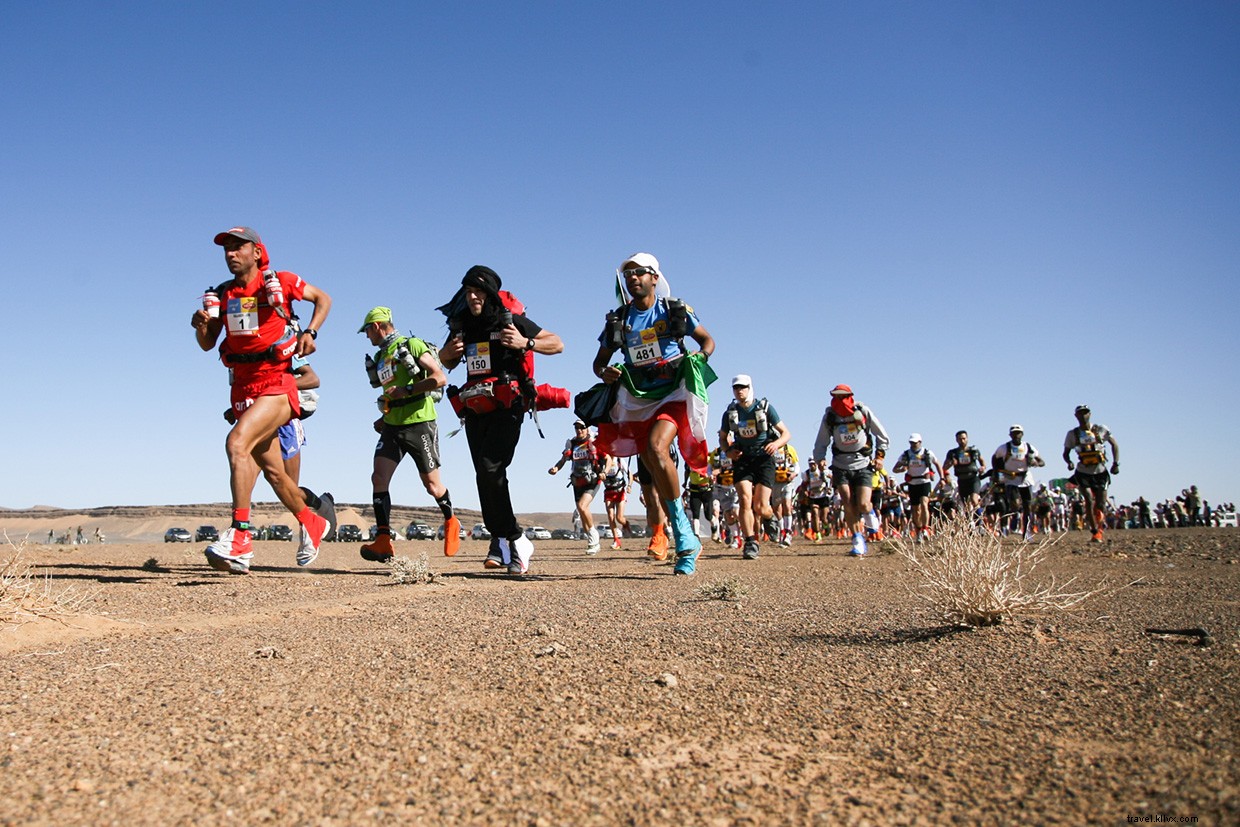
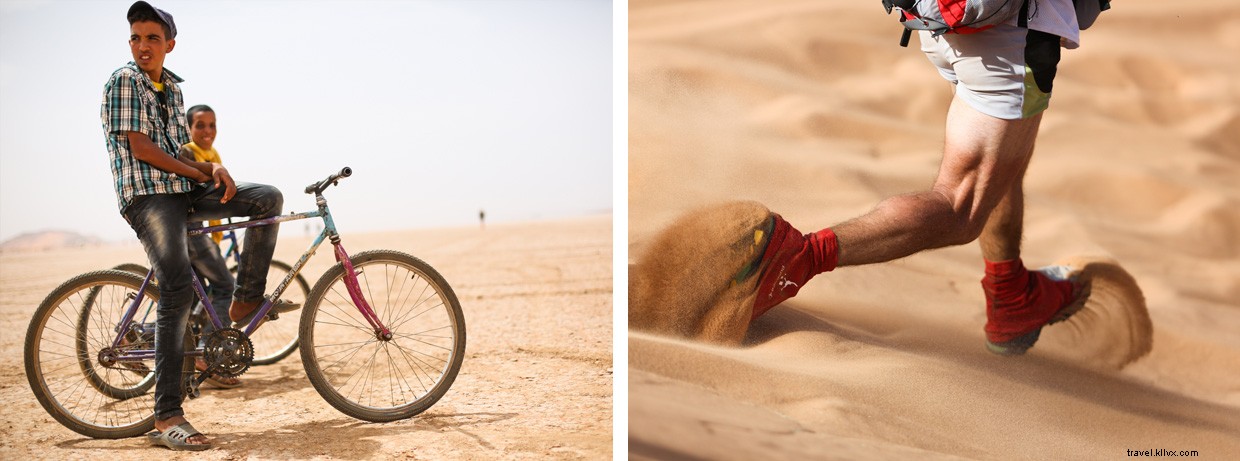
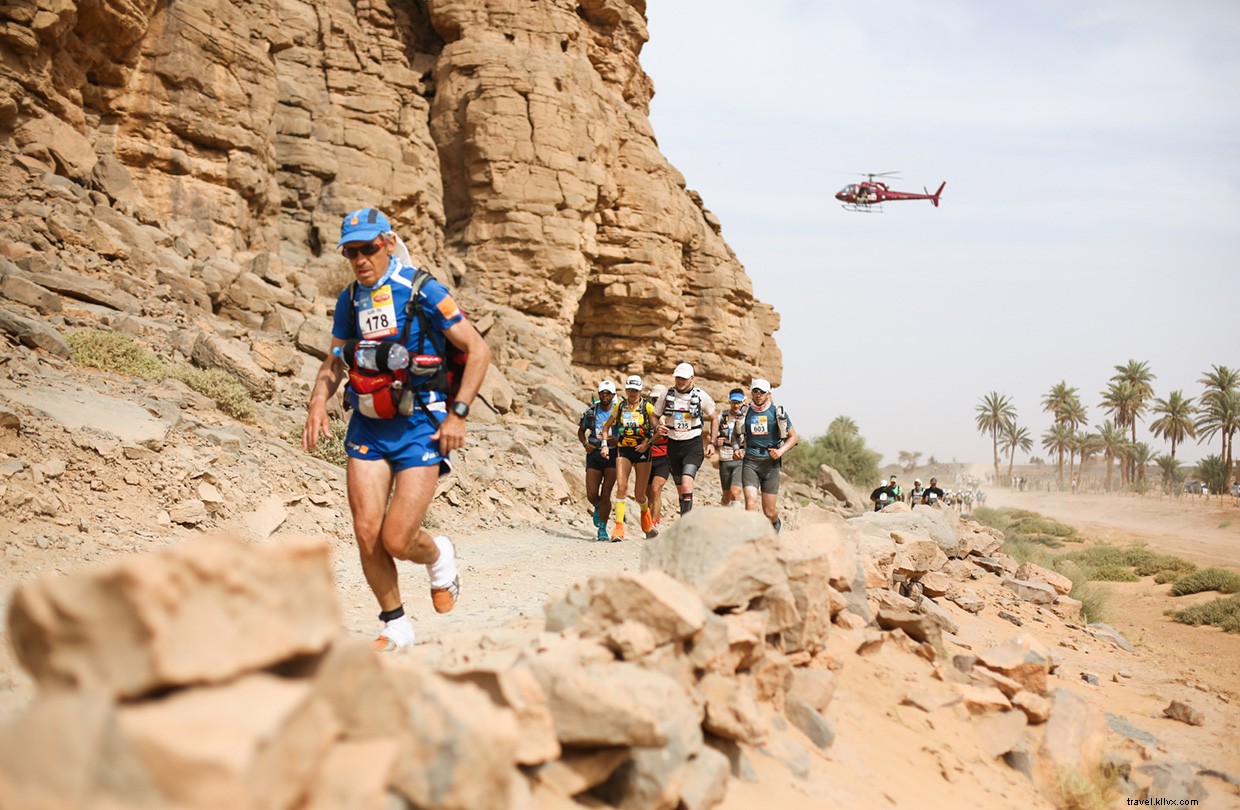
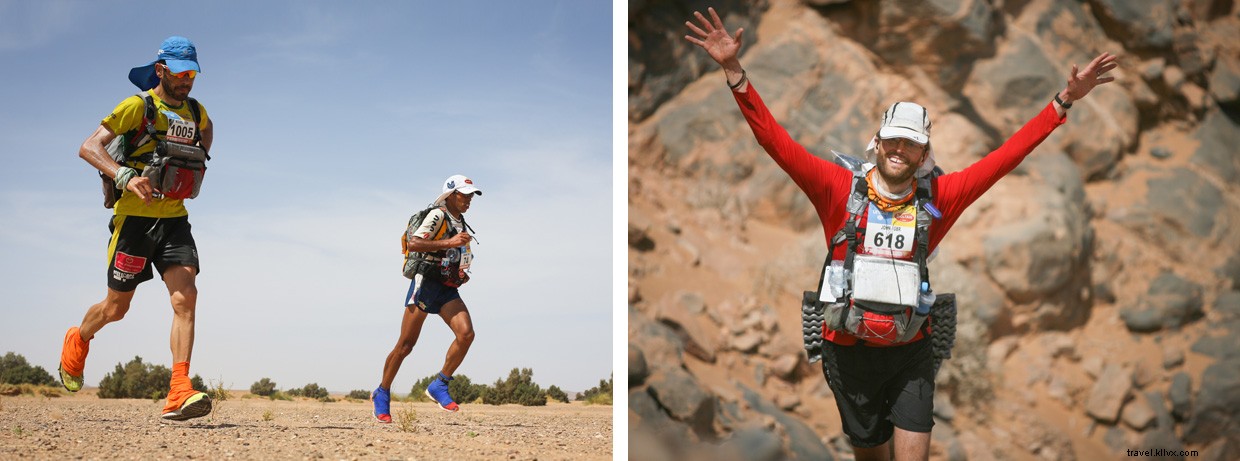
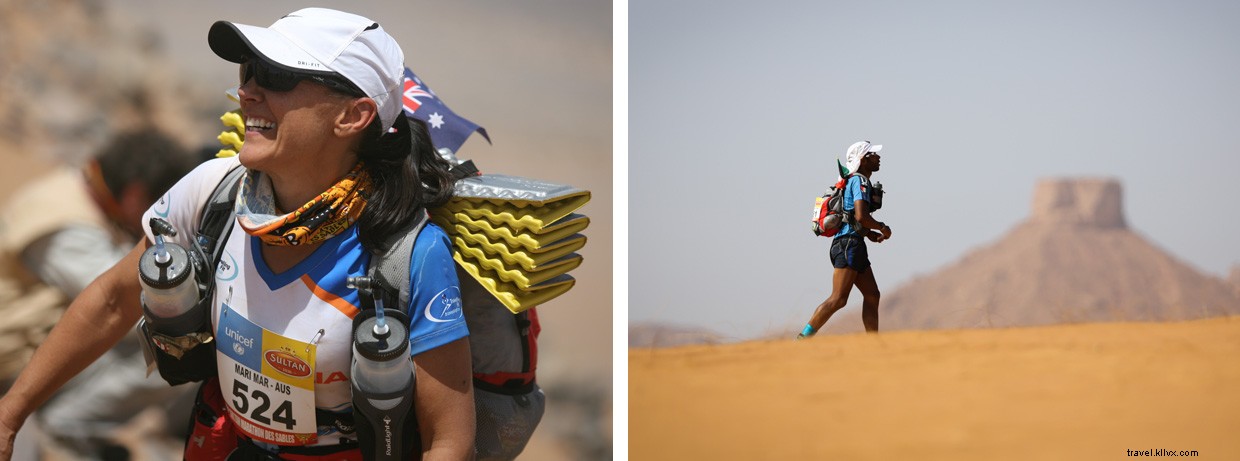
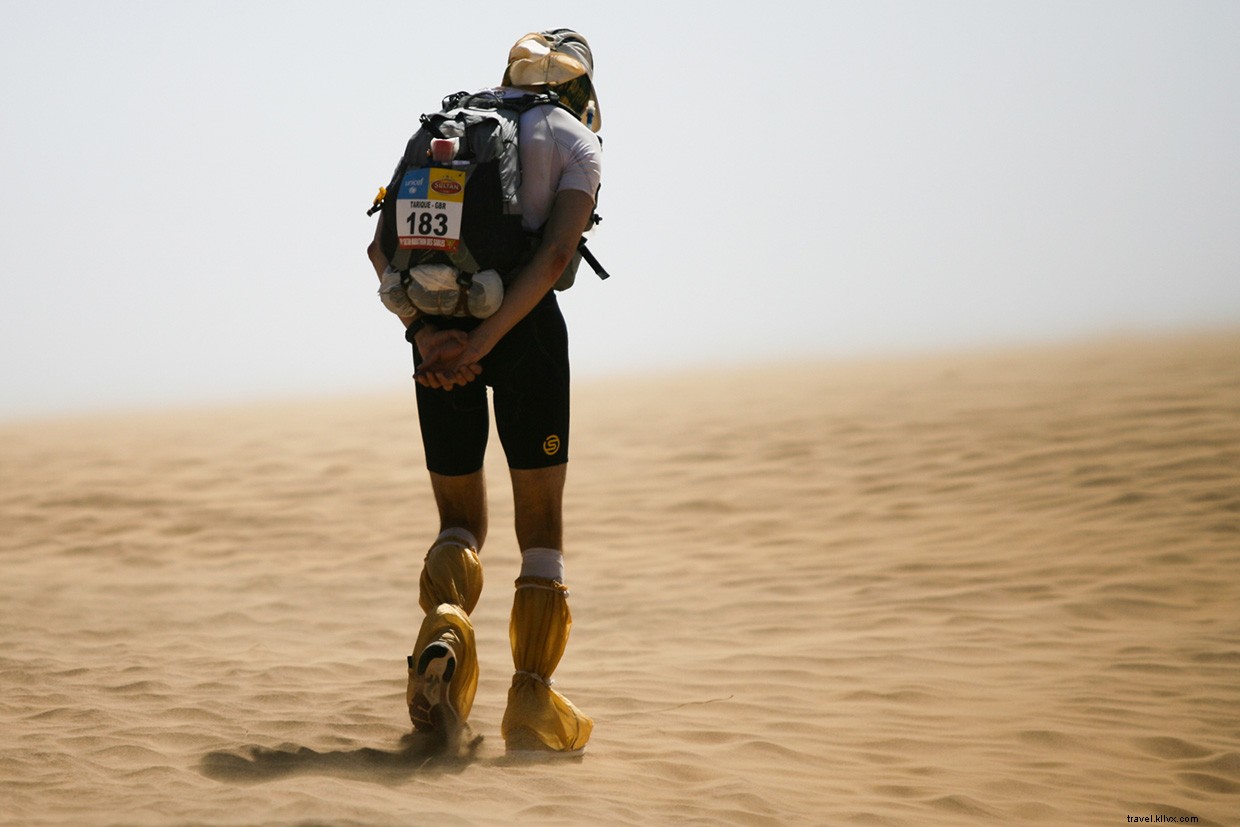
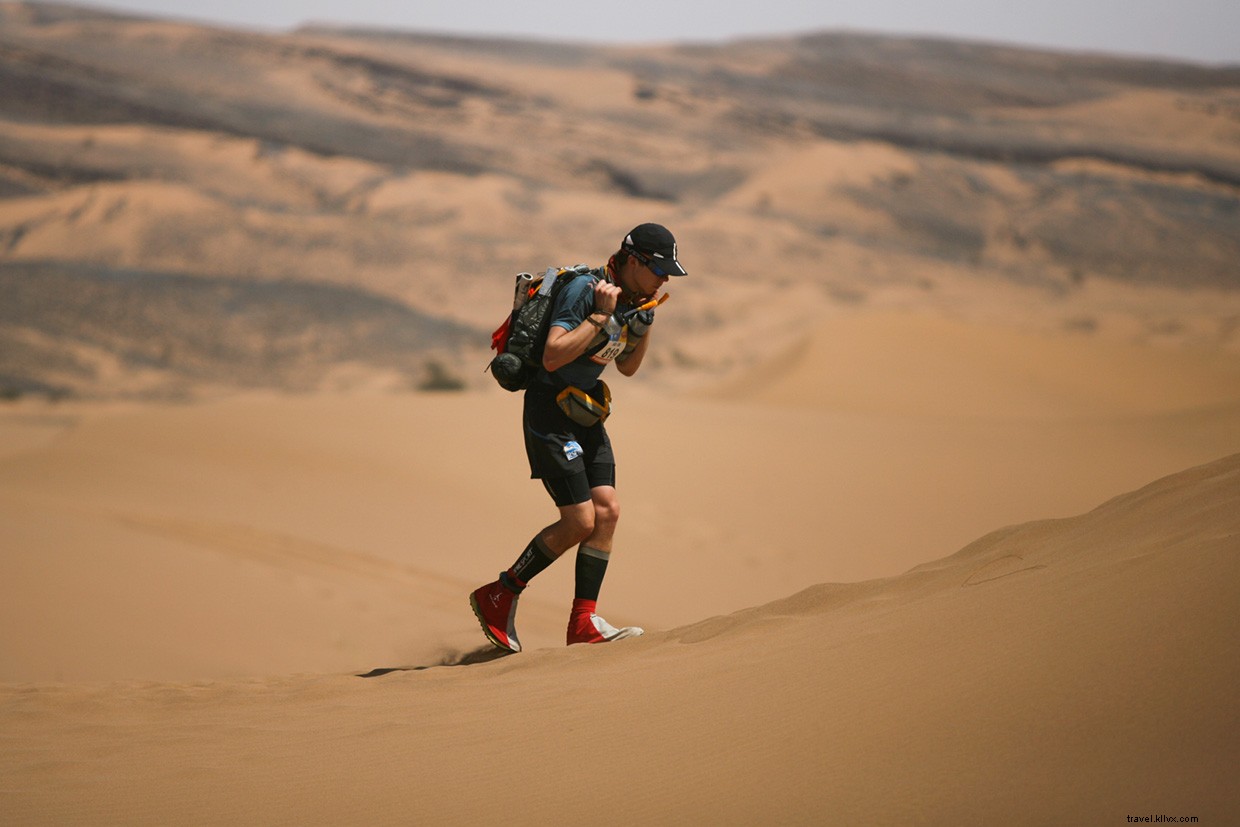 The apprehension turns to focus, as the desert begins to strip you raw. This trail throws up some of the toughest and most hostile environments to be found on the planet. Runners endure jebels (small mountains), sand dunes, wadi-beds of soft unrelenting sand and inevitably sand-storms that batter already tired bodies down even further.
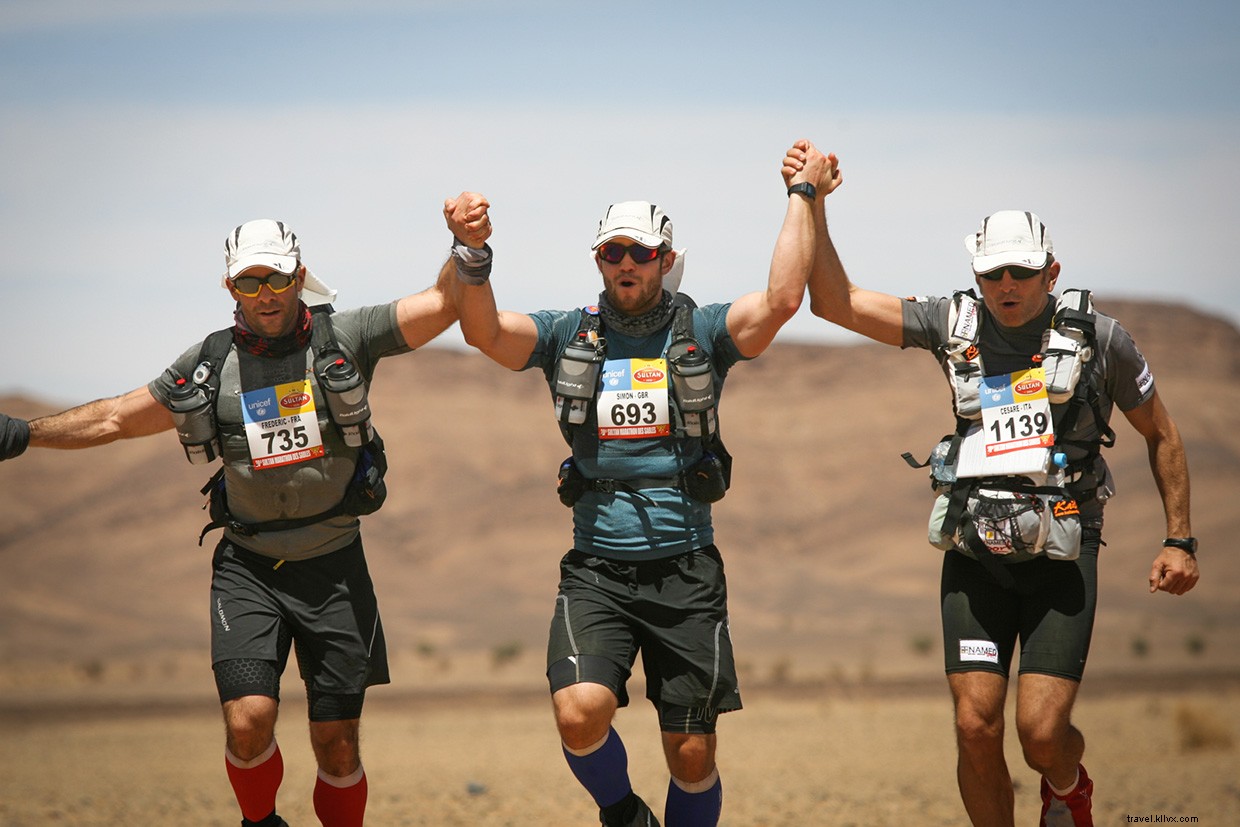
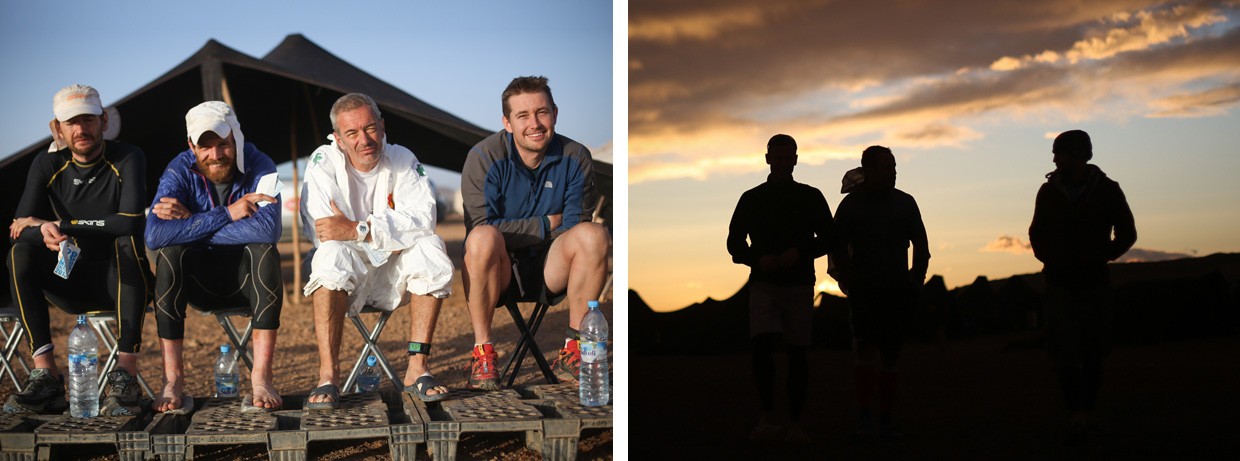
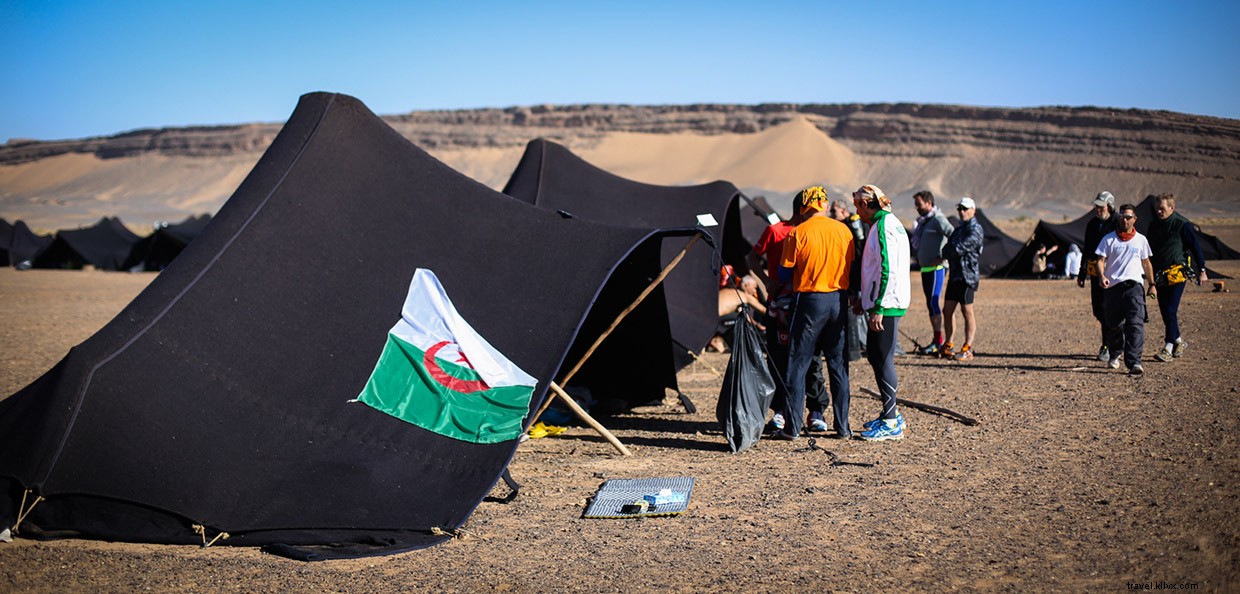
After each increasingly difficult stage the runners camp in berber-style tents. There’s usually eight to a tent and it’s these nights that are the real race-maker; a place where stories of the day are told, injuries and blisters are rested and repaired and life-long friendships are born.
The following morning the ritual is repeated, right down to Patrick Bauer’s pre-race briefing and the helicopter, rotor blades dancing above the runners’ heads as they prepare for yet another day in the blistering desert. It’s a truly inspiring, awesome, race for everyone involved.