Discover the True History of the Salem City Seal
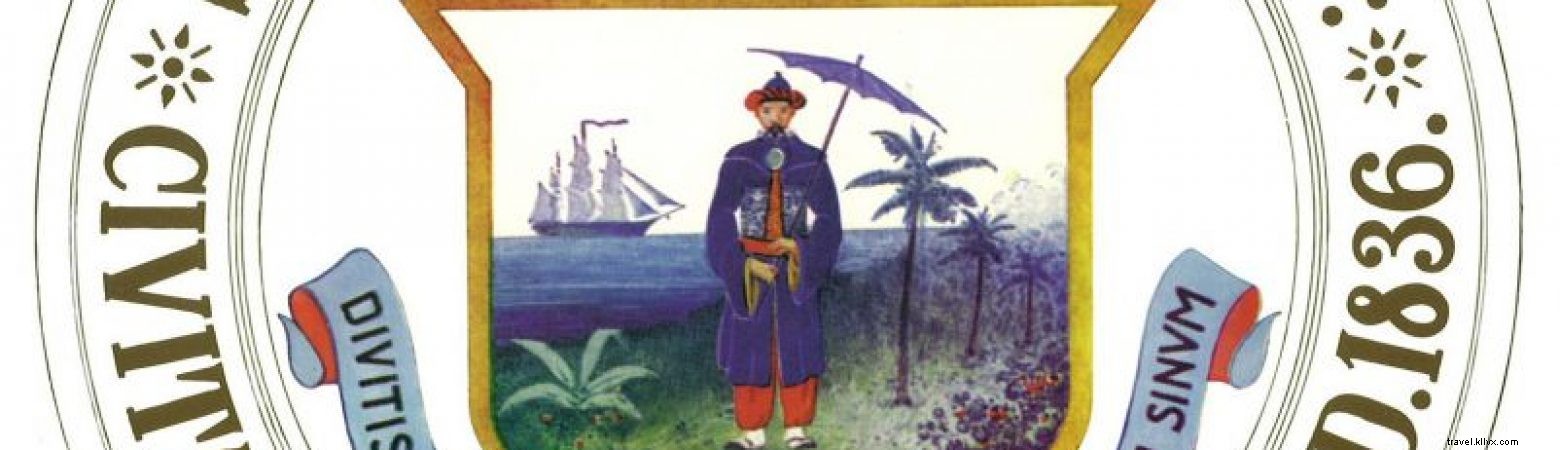
The Salem City Seal’s design is based on a very important aspect of Salem history, and it doesn’t have anything to do with the Salem Witch Trials of 1692.
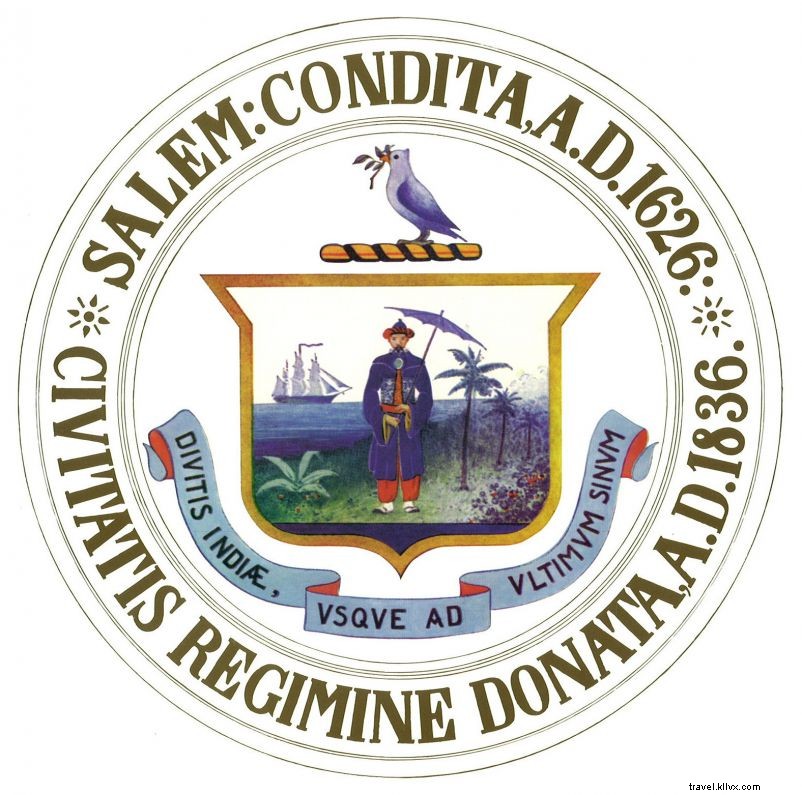
With a merchant dressed in colorful robes standing next to palm trees on an island, and a ship in the background under full sail, the seal is actually representative of Salem’s spice trade history. The merchant featured on the seal is not meant to portray a Salem merchant, but rather a local Sumatran, where the spice trade with Salem was first established. Below the imagery are the words “Divitis Indiae usque sinum,” which translates to “To the farthest port of the rich east.” Above sits a dove holding an olive branch, symbolizing Salem’s designation as the “City of Peace.” The seal also features two specific years: 1626 when the town of Salem was incorporated, and 1836 when the city was incorporated.
Salem’s spice trade began when Captain Jonathan Carnes became the first person to return to the United States with a bulk of cargo pepper from Sumatra. In 1793, Carnes learned that wild pepper may be available along the coast of Sumatra. In order to ensure that he would be the first to reach the spice, he kept this knowledge secret from most people in Salem with the exception of his uncle, Salem merchant Jonathan Peele, who helped him acquire a schooner quickly and would later help with selling the spices.
 Carnes returned from Sumatra with the pepper aboard his Schooner Rajah in 1797, following a series of unsuccessful attempts and shipwrecks in the years prior. The pepper was not only important to the people of Salem for the same reasons we use pepper today, but it was also highly sought after for its preservative qualities. Prior to modern preservatives, spices like pepper were especially helpful as meat preservative. It is estimated that the cargo of pepper that came to Salem aboard the Rajah was valued at about $125,000 (in 1797), meaning in today’s value the shipment would be worth about $1.5 million.
For approximately the next 50 years, the majority of the pepper used in many countries came through the port of Salem. By the early 19th century, Salem’s trade had helped the city become the wealthiest per capita in the United States. Though Salem’s trade with China and East Indian nations eventually came to include more than just pepper, with items like tea, silk, and porcelain, the Sumatran pepper voyages served as some of Salem’s first and most important ventures into international trade relations.
The seal was commissioned by the city to be designed by George Peabody in 1839. Peabody was a descendent of some of Salem’s greatest pepper merchants, and was himself a ship owner. Rather than depicting a scene of Salem, Peabody thought it fitting to draw a figure representative of a Sumatran merchant as a reference to where the pepper trade first began.
Since 1839, the seal has been used on official city documents and records. In addition, using the seal on anything other than documents pertaining to official City of Salem business is a violation of State law and Local Ordinances. A solid bronze plaque of the seal is currently on display in the reception area by the mayor’s office at City Hall, and the City hopes to eventually display it on the exterior of the new City Hall Annex Building at 90 Washington Street.