
Coastal Georgia's Rich History: Lecture Series Part 1 with Expert Buddy Sullivan
The Golden Isles of Coastal Georgia boast a profound historical legacy, spanning the Ice Age, Native American inhabitants, military conflicts, plantations, millionaires, U.S. Presidents, and beyond.
For 22 consecutive years, the Coastal Georgia Historical Society has hosted its acclaimed six-week lecture series, led by renowned local historian Buddy Sullivan. Known for his deep expertise on the Georgia coast and dynamic presentations, Sullivan captivates audiences with engaging insights into the region's past.
This recap draws from the opening weeks of the series, offering key highlights to inspire attendance at future sessions.
Week One: Ecological Foundations and the First 200 Years
Ecology provides essential context for Coastal Georgia's history, shaping island formation and influencing early inhabitants' lives through native flora and fauna.
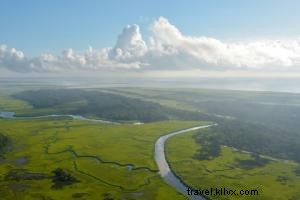 The islands originated during the Pleistocene Ice Age over a million years ago. Larger islands like St. Simons are estimated at 35,000–40,000 years old, while smaller ones, such as Little St. Simons Island, formed later at 5,000–7,000 years old.
By 1575, the Guale (pronounced "Wall-E") and Mocama tribes inhabited the coast. Evidence of their presence includes shell middens at Cannon’s Point Preserve on St. Simons Island and settlements near the St. Simons Pier at Mallery Park.
Spanish missionaries established coastal missions in Guale territory, including Santo Domingo de Talaje at Fort King George in modern-day Darien, later relocated to Cannon’s Point on St. Simons as Asao (inspiring the neighborhood name Mission Asao).
Artifacts from these sites are preserved at the American Museum of Natural History in New York City and Fernbank Museum of Natural History in Atlanta.
Week Two: Oglethorpe’s Influence
Georgia became the 13th original colony in 1732 as a proprietary venture managed by the Trustees of Georgia.
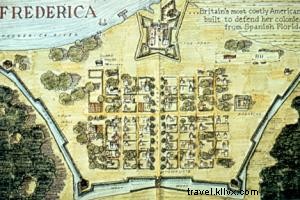
General James Edward Oglethorpe (1696–1785), with his military experience, led the settlement amid Spanish threats from Florida. The first settlers arrived in Savannah in 1733; by the 1730s, Oglethorpe expanded southward.
Fort Frederica and the town of Frederica were founded in 1736 on St. Simons Island, named for Frederick Louis, Prince of Wales. Fort St. Simons guarded the south end near the modern Lighthouse and Pier, while an outpost on Jekyll Island fell under Captain William Horton (ruins visible at Horton House).
In 1742, Oglethorpe's forces, aided by Scottish Highlanders from Darien, repelled Spanish invaders at Gully Hole Creek and the Battle of Bloody Marsh—minor but pivotal victories. Oglethorpe's strategic deception, feigning superior numbers and reinforcements, prompted the Spanish retreat despite their 3,000-strong force.
Peace with Spain followed, and in 1754, the Trustees surrendered control to the Crown. Forts disbanded; a 1758 fire razed Frederica, leaving it a historical ruin.
Week Three: The Plantation Era
Rice, cotton, and tobacco defined this period. Initially, slavery was prohibited, but post-Spanish peace and rice's profitability—mirroring Carolina success—prompted its legalization for labor-intensive cultivation.
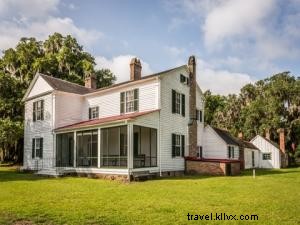 By 1860, Georgia and South Carolina produced 96% of U.S. rice. Hofwyl-Broadfield Plantation near Brunswick grew rice from the early 1800s to 1913; donated to the state in 1973, it is now a public historic site.
Estuaries enabled rice flooding via tidal rivers like the Altamaha and Ogeechee. Rice plantations thrived between Savannah and Darien.
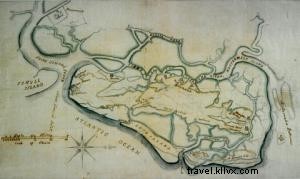 Cotton dominated St. Simons, starting with James Spalding's Orange Grove Plantation (now the Lodge at Sea Island). "Sea island cotton," from Bahamian seeds, flourished in the Isles' climate, yielding superior black-seed varieties. Up to 12 plantations operated at peak.
Slavery's harsh realities included the "task system" on rice plantations, assigning daily tasks by ability to improve productivity amid high mortality. Overseers like Roswell King at Pierce Butler’s plantation were notoriously severe.
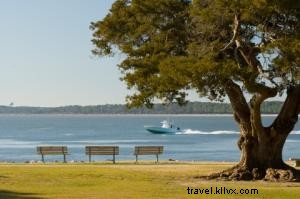 Yet personal bonds formed, as with Neptune Small of Retreat Plantation, who loyally returned his confidant Henry Lord Page King's body from Civil War battle to Christ Church. Grateful, the King family granted Neptune land, later partly becoming Neptune Park.
To learn more about our African-American history, click here.
Stay tuned for Part Two, covering lumber mills, wars, and the Jekyll Island Club Hotel.
To learn more about the Coastal Georgia Historical Society, click here.