
Coastal Georgia Historical Society Lecture Series: Part 2 – Plantations, Civil War, and Industrial Boom in the Golden Isles
In Part 1 of this series, we explored the Golden Isles' unique ecology, colonial beginnings, and the agricultural rise of plantations. The region's landscape has shaped life here since Native American times.
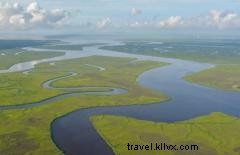 The timeless saying, "At the beach, life is different... We live by the currents, plan by the tides, and follow the sun," captures the essence of Golden Isles living. From the 1500s to today, tides, currents, and seasons have guided inhabitants: Native Americans timed hunts and fishing accordingly; colonial settlers navigated rivers and marshes; and planters relied on tidal flows for rice cultivation.
To read the first installment on Coastal Georgia history, click here.
Week Four: The Decline of Plantations and the Civil War
During the South's agricultural peak, 10-15 thriving plantations dotted the Golden Isles, producing rice, tobacco, and cotton, establishing the area as an agrarian hub in the 1700s and 1800s.
Most were managed by on-site families, but absentee owners like Pierce Butler oversaw Hampton Point Plantation on St. Simons Island and Butler Island near Darien from Philadelphia. (Recall that Butler employed Roswell King as overseer.)
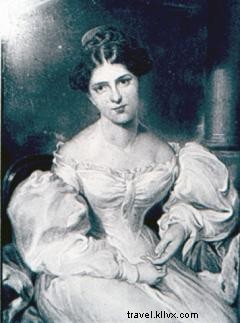 Pierce Butler's life was marked by drama. He and his brother John inherited the estate from their grandfather, changing their surname from Mease to Butler per the will. Enter British actress Frances "Fanny" Anne Kemble, whom Butler met during her U.S. tour. They married swiftly, but tensions arose: Fanny's family supported abolitionism, while Butler was Georgia's largest slaveholder.
Initially unaware of the wealth's source, Fanny visited Hampton Point and documented plantation life in her Journal of a Residence on a Georgian Plantation in 1838-1839, published after their bitter divorce. Butler used it to delay publication, threatening access to their daughters. He later faced debt, arrest, and death from malaria.
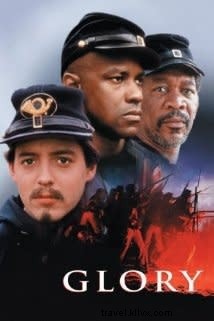
Meanwhile, national divisions escalated into the Civil War by the 1860s. Union forces occupied largely abandoned St. Simons Island, damaging Christ Church and the Lighthouse (both later rebuilt). The Golden Isles avoided major battles, unlike nearby Darien and Savannah. Sherman's March spared Savannah but captured Fort McAllister. Union officer Robert Gould Shaw, commanding the first African-American regiment, reluctantly burned defenseless Darien in 1863. This story inspired the film Glory, partially filmed here, naming Glory's Beach on Jekyll Island.
Week Five: Workers and Millionaires
Post-Civil War, the South lay in ruins, but the spared Golden Isles rebounded swiftly. Many freed slaves shifted from plantations; some entered sharecropping, sustaining rice fields for another 30 years, though never at pre-war levels.
With plantations waning, lumber emerged. Urbanus Dart's mill at Gascoigne Bluff on St. Simons was sold to the Dodge family, capitalizing on abundant yellow pine. By 1900, Darien and St. Simons mills shipped a record 112 million board feet annually, fueling a Reconstruction-era boom.
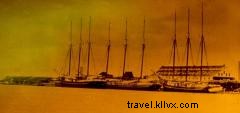 Global ships docked for timber; workers commuted to mills. Summer visitors built homes; the island's first hotel opened in the 1880s. Steamboats like the Ruby (operated by Captain Barney Dart in the 1870s) ferried passengers from Brunswick to the pier, then trolleys to hotels or mills.
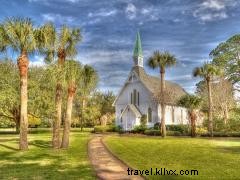 The St. Simons Lighthouse was rebuilt in 1872, Christ Church in 1884 by Anson Dodge (its first rector). Note: Lovely Lane Chapel (1880, Epworth by the Sea), also Dodge-built, is the island's oldest standing church.
Lumber declined by 1900 due to unsustainable harvesting; St. Simons mill closed in 1909, Darien's in 1915, amid World War I.
Meanwhile, Jekyll Island's John DuBignon sold it for $125,000 to elite industrialists forming the Jekyll Island Club (opened 1887). Vanderbilts, Rockefellers, and Morgans wintered there until World War II, after which Georgia acquired it in 1946.
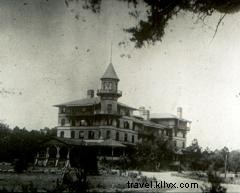
Week Six: The 20th Century
The 1900s introduced lasting industries. In 1910, Homer Yaryan built a rosin plant in Brunswick from lumber remnants; now Pinova, it bolsters the economy.
Sea Island Resorts arose in the 1920s. Howard Coffin, Hudson Motor Car founder, bought Sapelo Island in 1910, then Sea Island in 1926, commissioning The Cloister (opened 1928). The F.J. Torras Causeway, engineered by its namesake, connected the islands. Of Georgia's 15 barrier islands, only four are car-accessible—all three Golden Isles ones included.
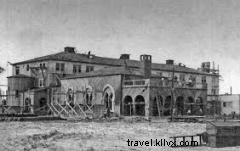 World War II saw Brunswick build 99 liberty ships (J.A. Jones Shipyard employed 17,000) and Glynco airships hunt U-boats. The King and Prince Resort became a naval base.
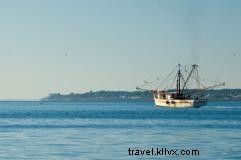 Post-war shrimping boomed; Brunswick earned "Seafood Capital" status. Harvests peaked at 16 million pounds by 1960 (now ~1.5 million due to imports and protections). Enjoy Wild Georgia Shrimp locally, honored at the Blessing of the Fleet and Jekyll Island Shrimp & Grits Festival.
The Golden Isles' history endures. Explore our sites and trace the past.
To learn more about the Coastal Georgia Historical Society and events, click here.
Thanks to Buddy Sullivan for several images.