
5 Sea Turtle Species Nesting on the Outer Banks (OBX): A Guide by N.E.S.T.
The Network for Endangered Sea Turtles (N.E.S.T.), founded in 1995 by Millie Overman, is an all-volunteer 501(c)(3) nonprofit organization. Dedicated to protecting and preserving habitats and migration routes for threatened and endangered sea turtles, N.E.S.T. is based at the NC Aquarium on Roanoke Island in the Outer Banks.
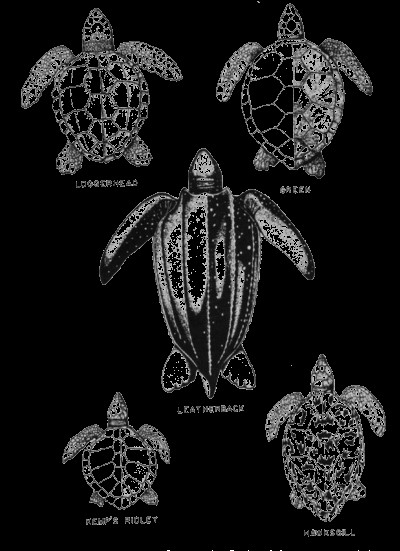
Five sea turtle species visit and nest on the Outer Banks: Loggerhead, Green, Leatherback, Kemp’s Ridley, and Hawksbill. Loggerheads are the most frequent nesters, accounting for over half of nests each season. Experts at N.E.S.T. identify species by size, coloration, scutes, and scales. The carapace (top shell) and plastron (bottom shell) consist of scutes—bony plates forming the shell.
- Adult Loggerhead sea turtles weigh 250–400 pounds and reach up to 3.5 feet in length. Their carapace is reddish brown, skin lighter tan or blonde, with 5 lateral scutes.
- Adult Green sea turtles weigh 250–450 pounds and grow up to 5 feet. Carapaces range from light brown to dark green or brown with vibrant stripes. Skin has a greenish hue as they are herbivores, featuring 4 lateral scutes.
- Adult Kemp’s Ridley sea turtles weigh under 100 pounds and measure 2–3 feet. Their gray carapace and tan or yellow plastron form a rounded shape, with 5 lateral scutes. Listed as “critically endangered.”
- Adult Hawksbill sea turtles weigh about 150 pounds and reach 2.5–3 feet. Their oval, brown carapace features yellow, orange, or reddish stripes. They have 4 overlapping lateral scutes and a pointed, hawk-like beak.
- Adult Leatherback sea turtles weigh 650–1,100 pounds and span 5–9 feet. Their dark gray or black carapace lacks scutes, covered instead in thick, leathery skin with ridges. The largest recorded exceeded 2,000 pounds—imagine a VW Beetle on the beach!
N.E.S.T. plays a vital role in protecting these threatened and endangered sea turtles. From May to September, volunteer ATV riders patrol 60 miles of beach daily, from the Virginia-North Carolina border to south Nags Head. Upon finding a nest, they alert a response team to identify the species, locate the nest, collect a DNA-sample egg, and protect the site. In 50–80 days, nest sitters monitor hatches nightly. Nests contain 80–120 eggs, but only 1 in 1,000 hatchlings survives to maturity (about 30 years for Loggerheads). Post-hatch, we guide hatchlings naturally to the sea, then excavate for data on hatched/unhatched eggs and remaining live turtles.
N.E.S.T. also rehabilitates sick or injured turtles at the Sea Turtle Assistance and Rehabilitation (STAR) Center at the NC Aquarium on Roanoke Island. Common injuries include boat strikes, entanglements, shark bites, fish hooks, and cold stunning—hypothermia from delayed winter migration to warmer waters. Volunteers rescue cold-stunned turtles, transport injured ones, document deceased turtles, and assist with necropsies.
If you spot a sea turtle on the beach—nesting, sick, or injured—do not touch or disturb it. Sea turtles only come ashore to nest or when in distress. Call N.E.S.T.’s hotline at 252-441-8622 immediately for expert assistance. Save the number now—you might encounter one of these magnificent creatures anytime!