Hitting the Sweet Spot: Premier Links-Style Golf on North Carolina's Outer Banks
By Bill Kamenjar in partnership with the Outer Banks Visitors Bureau.
Kitty Hawk, Kill Devil Hills, Nags Head, and Duck Woods form a captivating quartet of destinations on North Carolina's Outer Banks, the ultimate golfing hub. This milepost-lined stretch of seaside paradise offers endless outdoor adventures: lifeguarded beaches for swimming, marlin fishing, the Wright Brothers' first flight site, sunset views from Jockey's Ridge, or leisurely waterfront walks. Famous for its laid-back vibe and cooling breezes—thanks to those Ohio brothers who changed history—the Outer Banks beckons. After enjoying these summer highlights, it's time to tee off. The barrier island's golf heart is a true gem, like striking the perfect sweet spot for maximum impact.
 As golf thrives in the region, the Outer Banks' core trio endures: Nags Head Golf Links to the south, Sea Scape Golf Club in the center, and Duck Woods Country Club to the north. Unlike the pine-forested Duck Woods, the other two authentically replicate British Isles links-style golf.
Limited space means just a handful of championship courses on the island, making these exclusive. Nestled between the sounds and Atlantic Ocean, they harness shifting winds that transform play hourly. Duck Woods, the oldest, joins mature Sea Scape and Nags Head—designs with timeless pedigree that have aged gracefully.
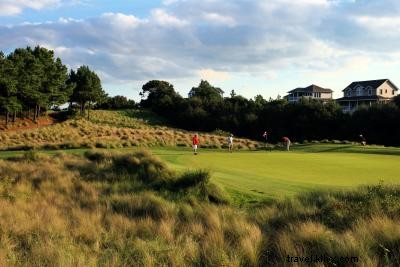 Opened in 1965, Sea Scape Golf Club carves through Kitty Hawk's maritime forest and signature dunes. Designed by Masters champion Art Wall Jr.—who birdied five of his last six holes in 1959 to dethrone Arnold Palmer—it blends rhythmic holes snaking links-style amid low forest, some with Atlantic vistas. Storms have sculpted its character, cementing its pioneer status in OBX golf.
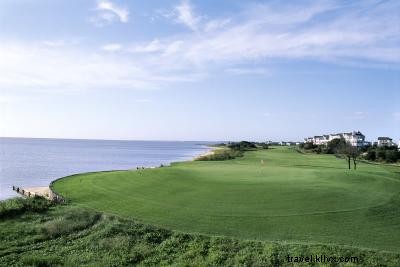 Farther south, Nags Head Golf Links dazzles along Roanoke Sound. Architect Bob Moore's intricate layout demands power and precision over natural contours. Miss the fairway, and undergrowth awaits—opt for accuracy over driver on windy holes. Finishing stretches on both nines battle fierce sound-side winds, while interior doglegs, tight lines, and dune mounds challenge throughout.
Renowned as a "lovely combination of coastal landscape, shifting dunes, sashaying sea grasses, and native wildflowers," with 17 ponds, pot bunkers, and scrubby vegetation, Nags Head delivers penalties aplenty. Yet conquering it—calm or howling winds—yields unmatched satisfaction.
Completing the trio, Duck Woods Country Club near Southern Shores was designed by Ellis Maples, Pinehurst legend. Narrower fairways lined by water and trees demand strategic play; stray slightly, and it turns unforgiving. Managed well, it's welcoming; precision is key.