Discover Historic Harbin: A Self-Guided Walking Tour of Russian and Jewish Heritage
Harbin, nestled in China's far north, is world-famous for the Harbin Ice and Snow World—a mesmerizing neon-lit wonderland of frozen castles and thrilling ice slides, evoking a real-life Narnia. Yet, the city's true historical allure lies in its early 20th-century Russian architecture, a remnant of when Russia built a railway through Manchuria to streamline the Trans-Siberian journey.
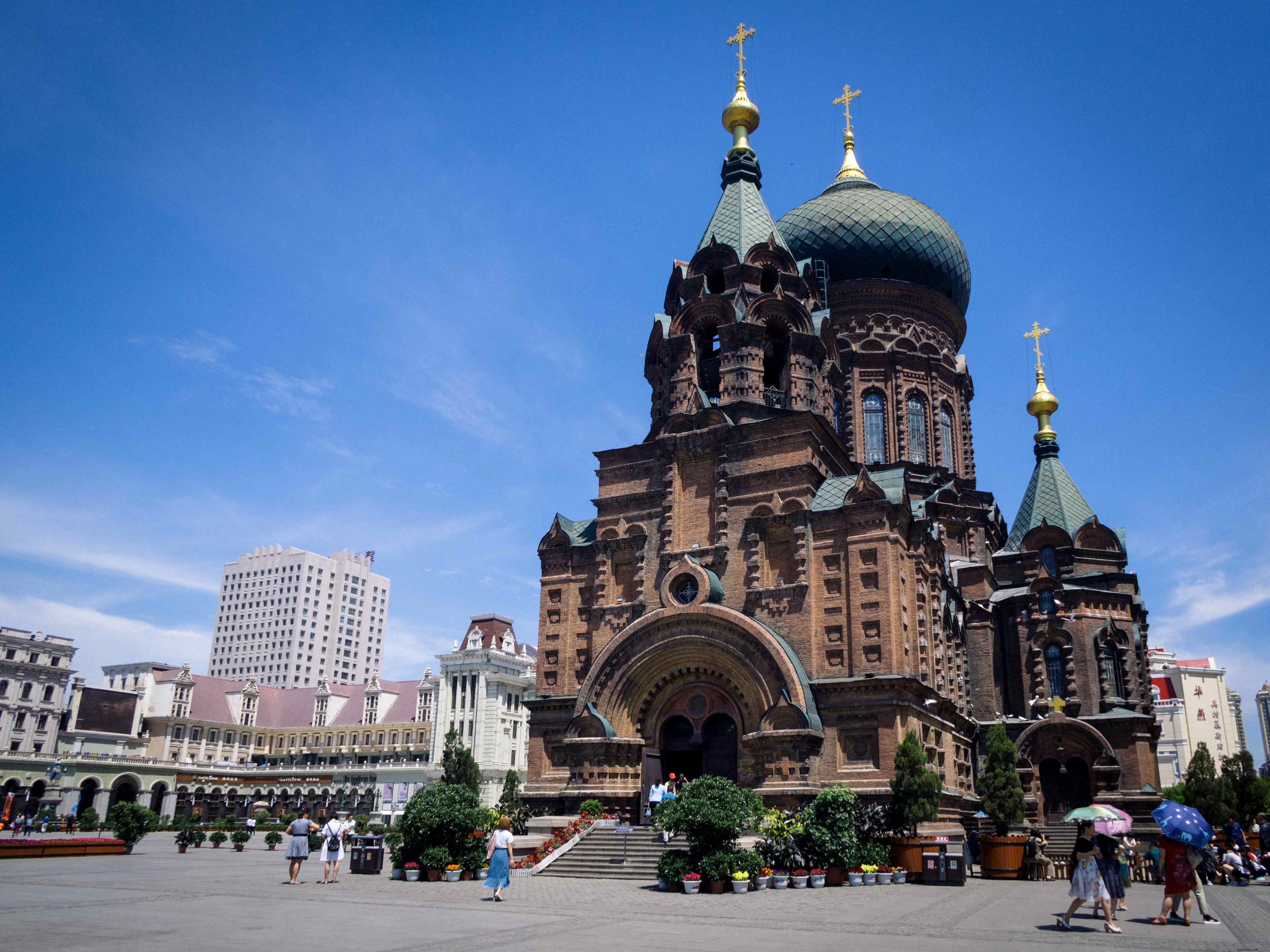
Remnants of Harbin's rich Russian and Jewish heritage endure, best discovered on foot during temperate summers—though bundling up makes any season viable.
St. Sophia: An Unorthodox Surprise
The Church of St. Sophia's emerald domes tower strikingly above surrounding malls and uniform sprawl, sparking curiosity: What brings a Russian Orthodox church to this spot? In the early 1900s, Harbin evolved from a Songhua River fishing village into a de facto Russian hub. Built in 1907 and expanded in 1932, it was the Far East's largest Orthodox church, serving 100,000 Russian railway workers and settlers. By the 1980s, encroaching buildings had engulfed it, reducing it to a warehouse. Private donations later cleared the plaza and secured its protected status.
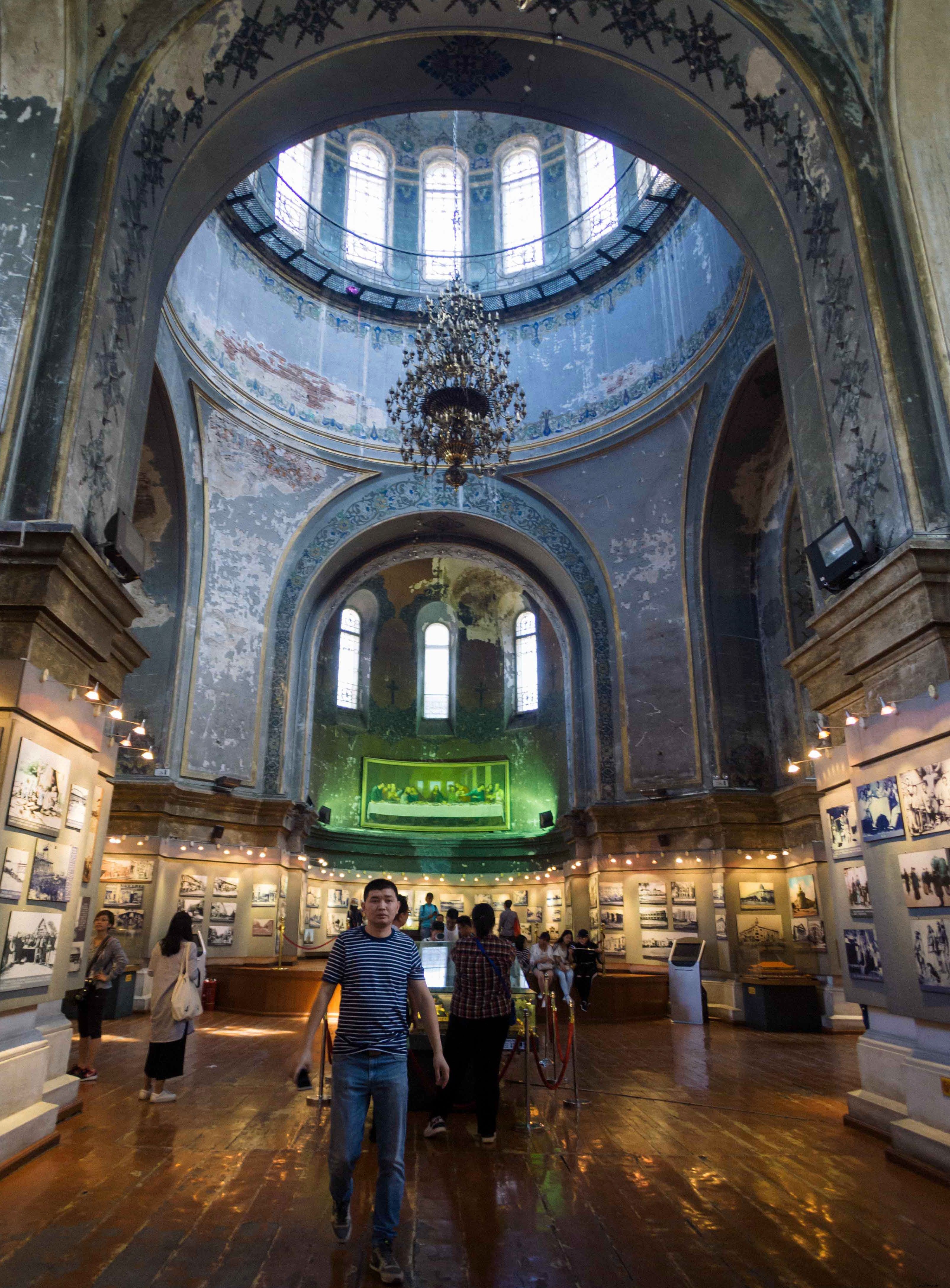
Inside, a photography exhibit illuminates old Harbin, once home to about 50 churches and synagogues. Sadly, most fell to development and Cultural Revolution destruction, now further threatened by gentrification.
After exploring, exit via the front steps and head southwest from the square. Proceed west on Toulong Lu, cross the old iron footbridge, continue to the cobblestoned Zhongyang Dajie, and turn right.
Harbin’s Grandest Street and Jewish Heritage
Zhongyang Dajie (Central Avenue), Harbin's iconic boulevard—once Kitayskaya Street ('Chinese' in Russian)—stretches a mile north to the Songhua River. While today's Baroque, Eclectic, and Art Deco facades house global chains, imagine a century ago: fur-clad shoppers alighting from cars, bankers bustling, literati at cafes like No. 58 (a former Jewish restaurant, now Uniqlo).
Jewish bakeries lined the street; No. 45 offers a close echo with bagel sandwiches, quality coffee, and a terrace overlooking the cobbles.
Detour right one block to Dongfeng Jie, then Tongjiang Jie. Spot the 7 Days Inn in a historic building. Across the street stand the grand Harbin Main Synagogue and Jewish Middle School.
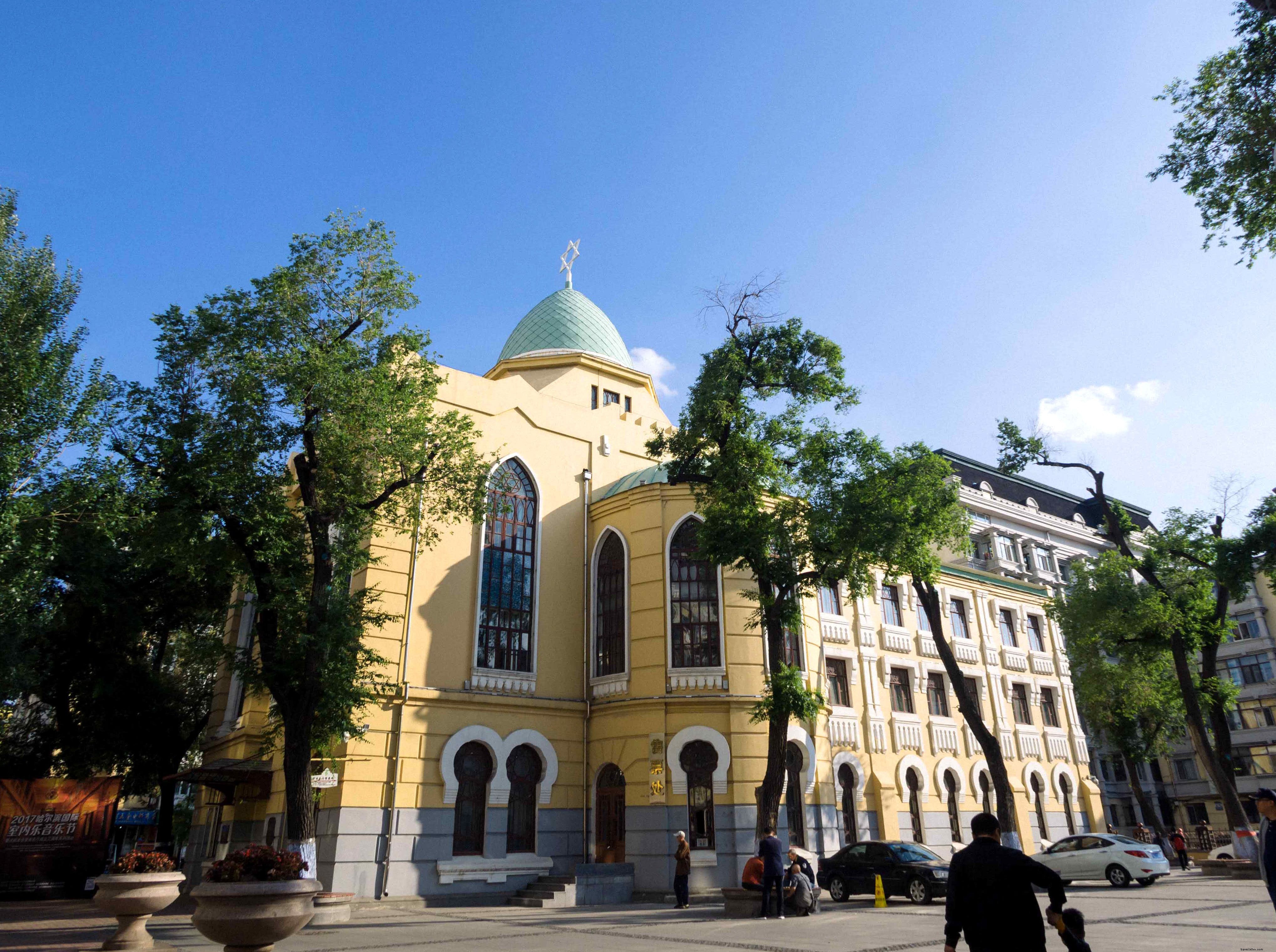
In the 1920s, Harbin hosted 20,000 Jews; this was their vibrant center. The synagogue, recently restored from a youth hostel, now hosts classical concerts. Next door, the school is a music academy welcoming visitors.
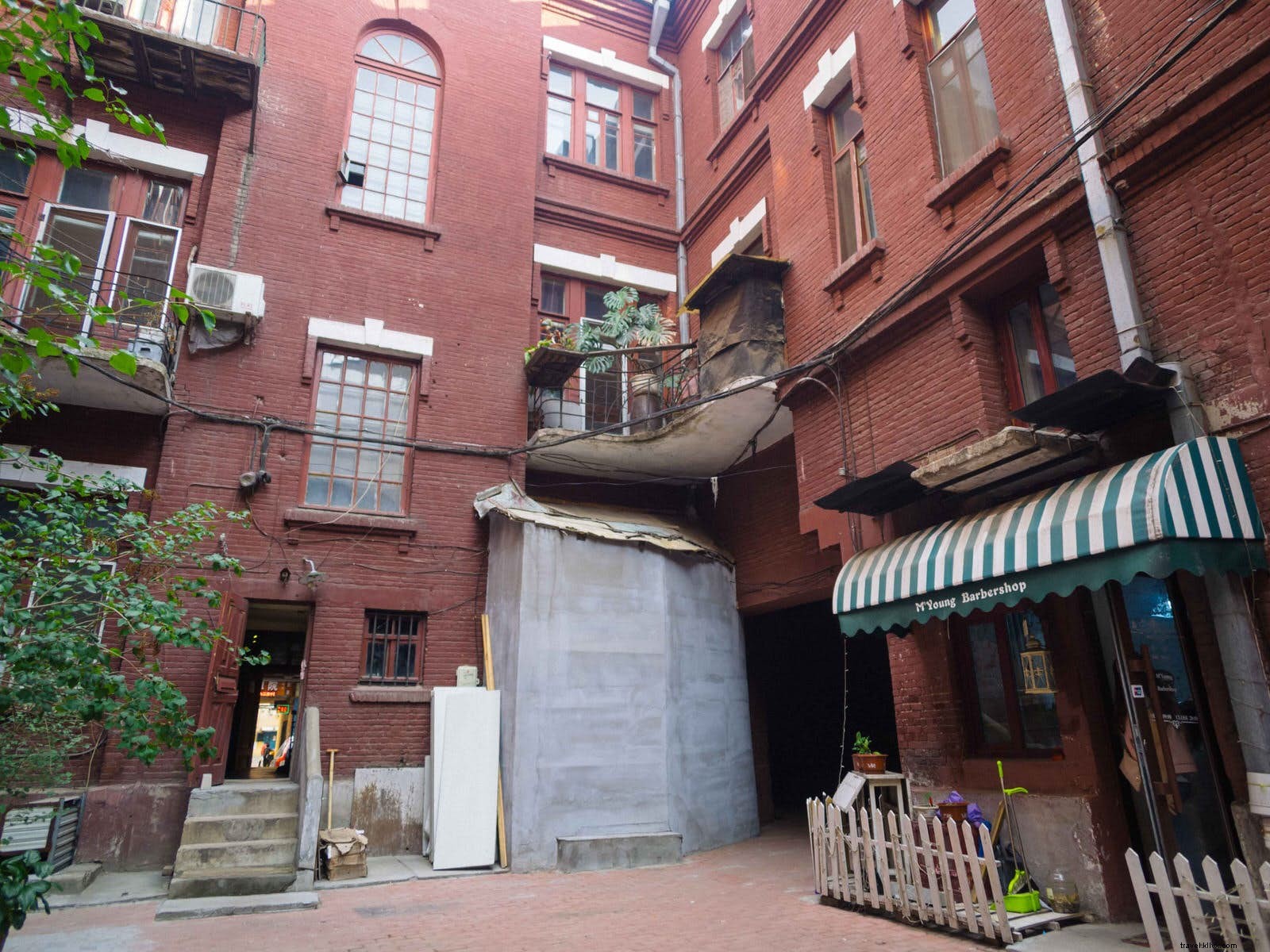
For deeper insight, walk 500m south to the New Harbin Synagogue's exhibits. Otherwise, head north on Tongjiang Jie past the splendid Turkish Mosque (exterior viewing only), then loop back via Hongzhuan Jie. No. 45 was a Jewish hospital; peek at the red-brick courtyard and Luyu Coffee's preserved charm.
Rejoining Zhongyang Dajie, note the Modern Hotel, then enter No. 120's Romanesque doors (with bare-breasted statues). Now the Harbin Tourist Center, ascend to original interiors, shops, and a silk boutique balcony with street views.
Adjacent No. 129, a tiny preserved Russian shop, sells bread, souvenirs, and chocolate.
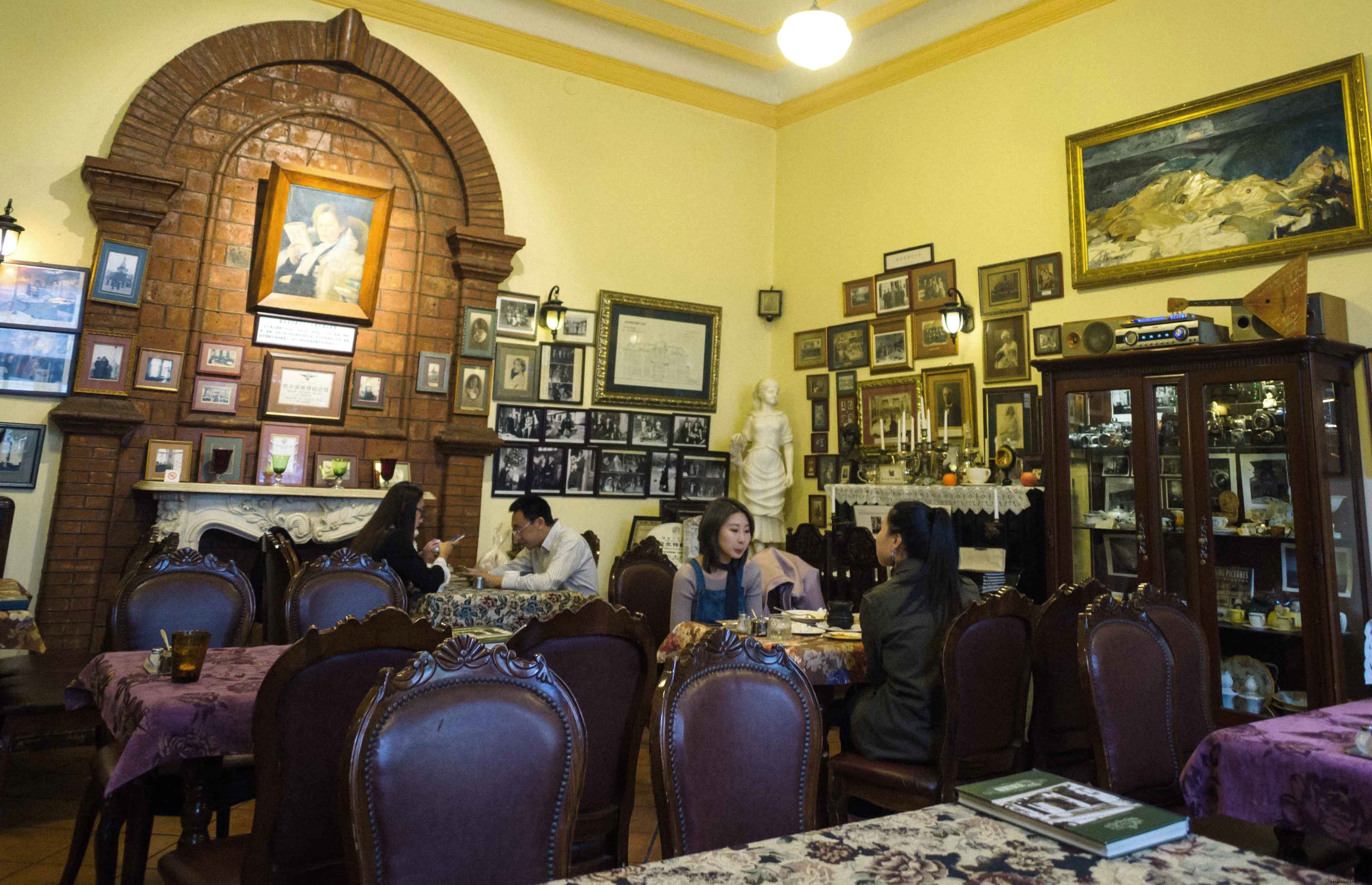
North to Xitoujiao Dajie, then east to Russia Coffee & Food—a time capsule of Nina's (1911–2001) life, displaying her piano, silverware, and photos. Enjoy tea (skip the food).
A Riverside Stroll
Exit via Youyi Jie underpass, glance at the tram station clock tower, reach the Flood Control Monument on the Songhua River's south bank—built post-devastating floods.
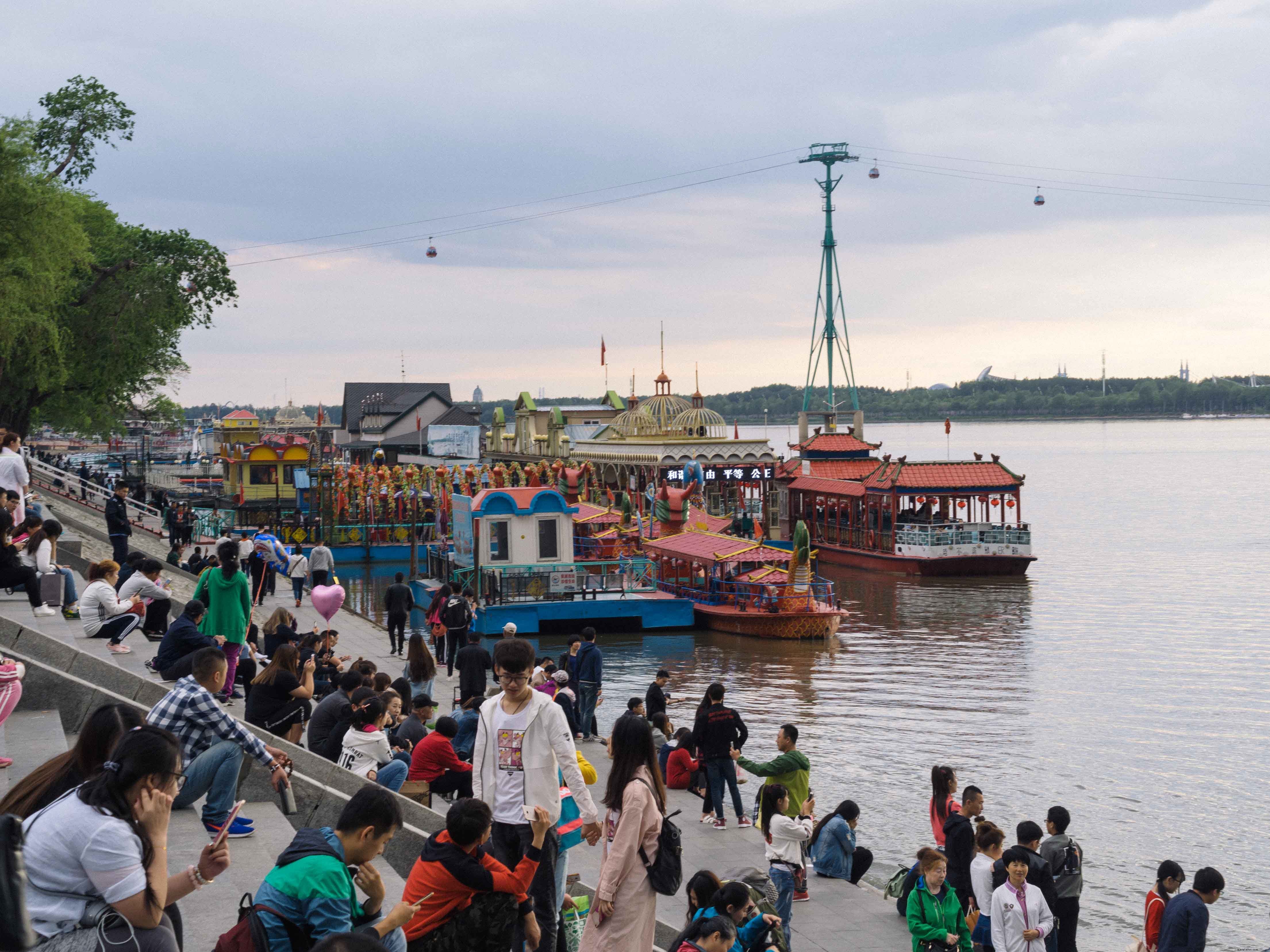
Savor Harbin Beer at riverside tents, then stroll Stalin Park (named for 1950s Sino-Soviet ties). Spot Manchukuo-era wooden eateries for a meal, or ferry/cable car to Sun Island for picnics or biking.
Subscribe to our weekly newsletter for more travel inspiration, tips, and exclusive offers.