Annual Palila Census: A Collaborative Conservation Effort
Every year, for a week in late January or early February a group of people from a variety of backgrounds from the USGS, University of Hawaii, Mauna Kea Restoration Project, Maui Forest Bird Recovery Project, Mauna Kea Watershed, Hakalau, Three Mountain Alliance, HVNP plus others get together to help census the Palila (Loxioides bailleui). This year, I was fortunate to be asked to help in the surveys.
This endangered Hawaiian honeycreeper formerly existed on the islands Kaua’i and Oahu and on the volcanoes Mauna Loa and Hualalai on Hawai’i Island, but now only survives in critical habitat on the western slopes of Mauna Kea in Mamane (Sophora chrysophylla) and Naio (Myoporum sandwicense) forests between 6,500 – 9,500 feet. Bones of Palila have been found near sea level on both Kauai and Oahu, giving us evidence of their presence on other islands in the past.
The Palila surveys are the longest running counts on a specific bird in the country and possibly the world. The first Palila surveys were in 1980 and continue annually.
There are 13 transects that run from approximately 9,500 feet to 6,000 feet with counting stations approximately 150 metres apart (see figure 1). Each transect is split up into 3 sections, upper, middle,and lower. There is a primary counter and a secondary counter who listen and look for 6 minutes at each station to try to detect Palila and other birds. They also record how many metres each bird is detected from each station. The distance the birds are from the station is very important because it helps statisticians extrapolate how many other birds are out there but are not being detected. The core transects which are thought to be more populated with Palila are counted twice on different days in good weather with the counts starting at dawn (figure 3) and finishing around 11:00am. If there is bad weather, the counts will be postponed (sometimes for days) until the weather clears. At each station we also estimate the wind with gusts and cloud cover during the six minutes. All the data collected is compiled by statisticians to help give us an idea of whether the population is declining, increasing or stable.
Before all the fun of hiking over lava rocks through brush, logs and trees to count the birds can begin, the team spends a full day calibrating so everyone is on the same page. We do mock counts, and exercises estimating bird distances, and we test our ears on the different calls and songs of the various birds found in the area. This pretty much takes up our whole first day.
On the first day on my transect, we detected only 4 Palila, and then on the next day, I was assigned to a different transect and we had 24 Palila detections.
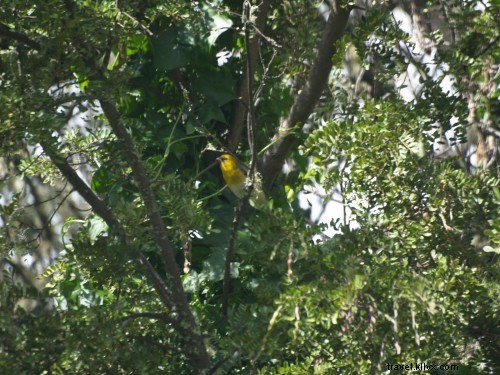
Palila
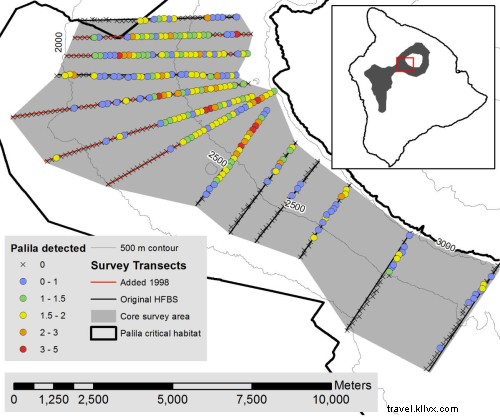
Figure 1. Area, transect and results of 2013-14 surveys.
Every day during the counts, we had to get up around 4:00-5:00 am from our cozy cabin in Mauna Kea Recreational park to arrive at our assigned transect for sunrise. It was very cold but warmed up as soon as the sun rose. We worked our assigned transect usually for four hours and then waited to be picked up or we hiked back to where we had left our 4×4, getting us back to the cabin usually by 1:00pm. For the rest of the day, most of us were free to do whatever we wished (ie., nap). Jackson Bauer of Mauna Kea Forest Restoration Project and Chris Farmer from USGS (Figure 2) had to organize the who, where, and when of the next day’s counts. This is no easy feat trying to figure out where 30 people are going and coordinating their drop-off and pick-up.
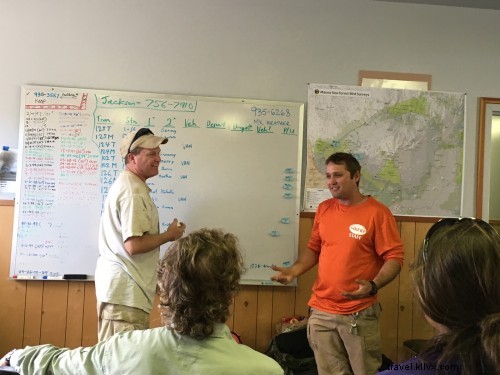
Figure 2.
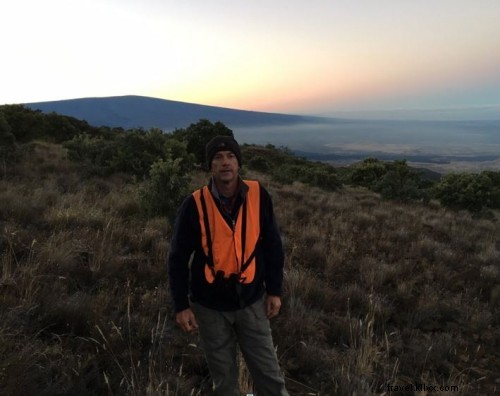
Figure 3. Garry at sunrise: Hiking to transect
All in all, it was a fun 3 days volunteering, eating, drinking, and talking with some of the leading people who do research on Hawaii’s native birds. There is so much to gain and learn from working and spending time with this fun group of professionals. I hope to volunteer for more bird counts in the future.
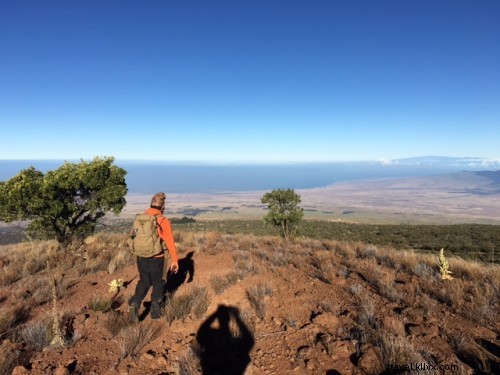
What a view!
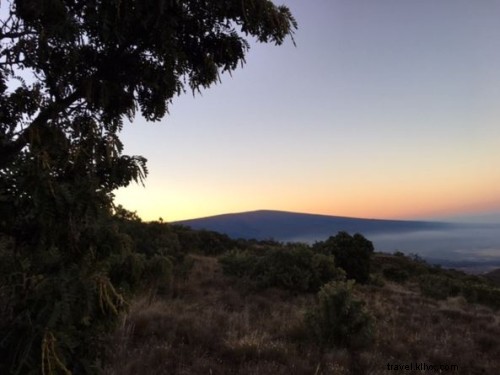
Mamane with Mauna Loa at sunrise