Ally's Expedition into the World's Most Remote Tribal Communities
Ally is a force. Founder of the Wild Born Project, which explores birth and pregnancy among women in the world’s most remote tribal communities, Ally has been exploring, documenting and experiencing life among isolated indigenous people since she was 17 years old, with her first solo trip deep into the heart of Papua New Guinea.
I met Ally through the Explorers Club, where she is a Fellow. Our connection was instant and deep and, as we live continents apart, unfurled primarily through social media and Skype. Last year, when she was seeking collaborative partners, I offered my support as a writer. We’ve been working together to tell Ally’s story ever since. In our upcoming book, Women at the End of the Land, Ally and I tell the story of Lena, the pregnant Nenets woman with whom Ally lived during her time on the Siberian tundra. In this interview for Sidetracked, Ally shares her experience during this arduous and rewarding expedition. You can read more about Ally’s expedition in Volume Nine of Sidetracked Magazine.
Kim Frank: What inspired you to study the Nenets?
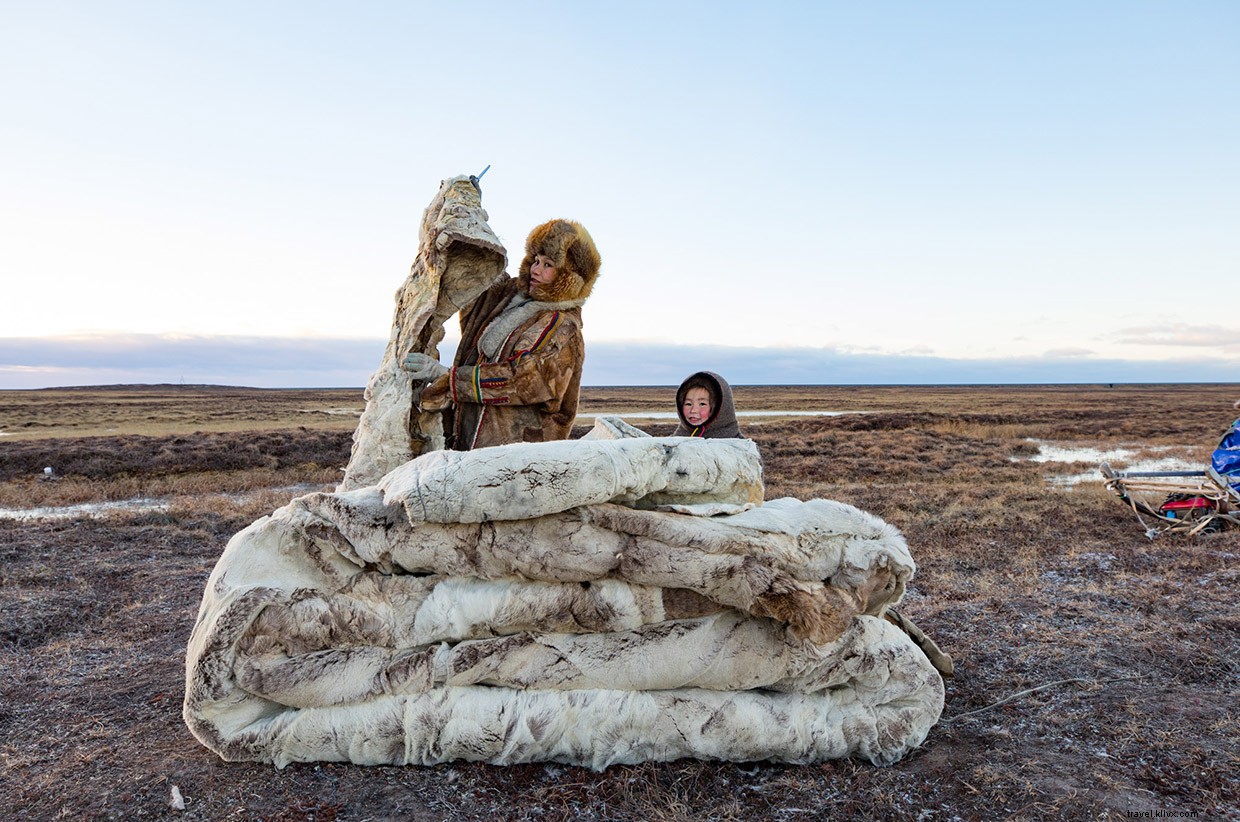
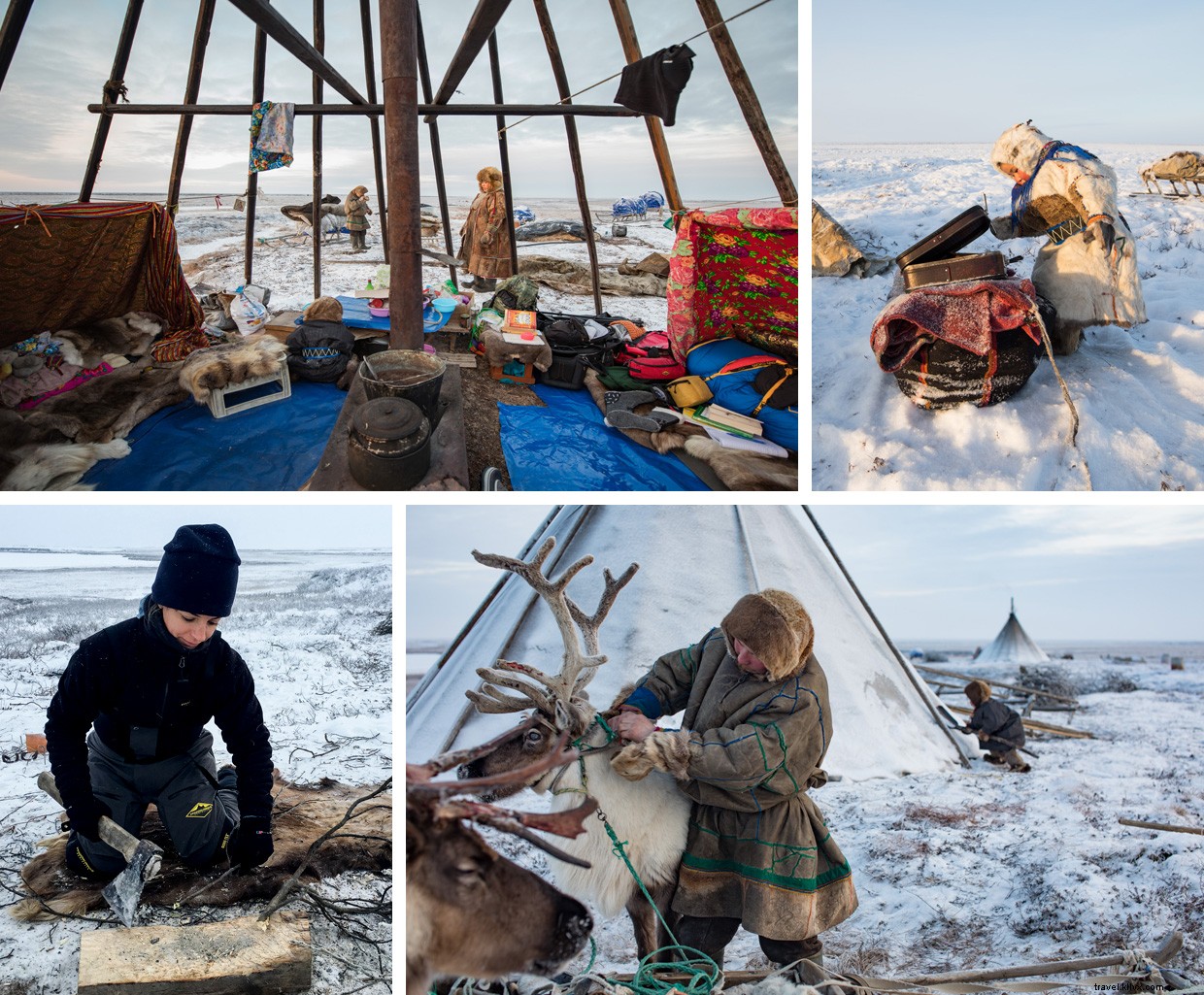
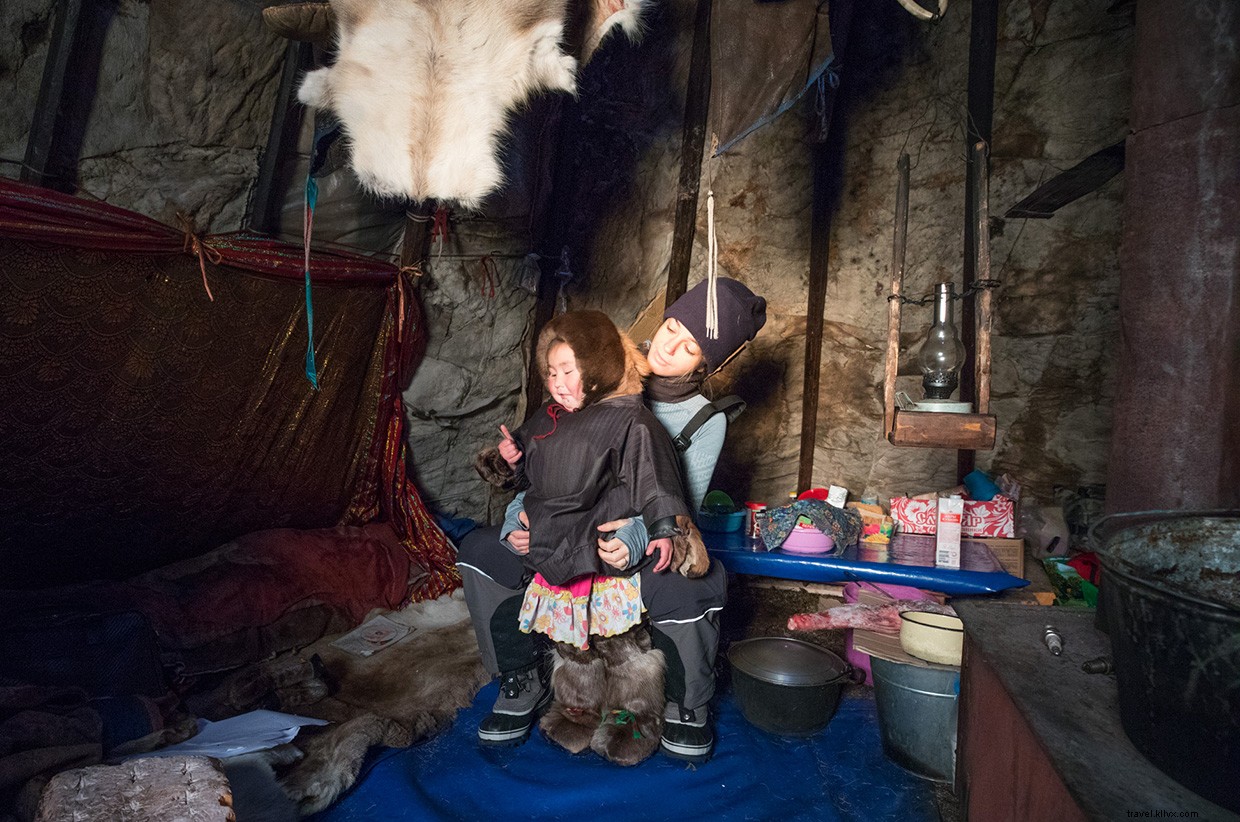
Alegra Ally: I was fascinated by the nomadic Nenets’ ability to live in one of the toughest, most unforgiving environments on Earth, their connection with the natural world, and their reciprocal relationship with their reindeer. It was difficult for me to imagine why any human being would choose to live in a place like that. My curiosity drew me to learn about these people and their ways of life. I wanted to experience the intensity of the Nenets’ lives and chose to join their migration in winter in order to learn the most I possibly could about the nature of their resilience, their symbiotic relationship with the tundra, and the way they view the tundra as a living spirit. With regards to Lena’s birth journey, I wanted to discover what it means to be a Nenets woman, to be nine months pregnant and migrating in winter with a newborn. How do Nenets women adapt to pregnancy in the context of their extreme environment?
This expedition presented significant challenges with extreme temperatures, isolation, arduous travel over difficult terrain and dramatic nutritional differences in diet. How did your experience over this six-week journey shape your personal growth?
Entering the tundra and sharing an intimate space with this family was to enter a vastly different and unfamiliar world. I had to learn and adjust each moment I was there. When I spend time with indigenous communities I like to immerse myself, to forget about the world I come from and to be present with the people, to try and experience their way of life as authentically as possible. This is not always easy, but is exciting – at every moment I learn, experience and feel something new. That experience evolves my previous understanding about the Nenets people and their way of life. You can do research and read books, but nothing can prepare you for the reality, and I now feel even greater admiration for the Nenets.
By living with this family over such a long period of time, I was able to see beyond, to start going deeper into their lives, their challenges and struggles. There is a certain intensity to their lives, stemming from the harshness of their environment and the ways they need to adapt to these conditions. They have no spare moment during the day in which they can just relax – every minute is dedicated to doing something important that directly addresses their needs. The Nenets are masters of sufficiency and efficiency. Yes, there were several weeks in which I couldn’t shower, or eat what I am used to eating, but this doesn’t matter to me. Observing and experiencing their life endurance makes you take things in perspective and not think about the privileges we have back home. There was no time to think about the privileges, just being authentic and present.
While you were in Yamal you experienced the change in seasons from late fall to winter, which eventually arrived in full force. The temperatures dipped to -50˚C including wind chill. Nenets are raised in this environment; you, however, were born and raised in warm climates. In this coldest place on Earth, how did you manage to stay warm?
Thankfully I was sponsored by Mountain Designs, an Australian outerwear company who outfitted me with expedition-weight, Artic-tested technical clothing. Also, the Nenets have carefully made costumes and they gave me one to wear. Wearing the traditional costume was a great learning experience as I could identify and understand how it can keep the Nenets warm through winter. The costume required me to get used to its limitations, especially while using the camera. I just couldn’t use the costume on a daily basis – it was very heavy. To put it on, I had to be helped. They had to hold the costume and put it over my head; the head came first or I would choke. The main piece came all the way down to my ankles, below the knees.
The boots go all the way up to your upper leg and tie with a piece of rope through the knots at your hip so they don’t fall off. Like the real cowboys and their chaps, you know? They were very challenging to walk in because it was so slippery – they are reindeer hide, no treads, and I was walking on ice and packed snow. I had to be so cautious and I kept falling all the time, so clumsy and pathetic! Obviously I was not born there; it was just so funny and they thought so too.
Overall, the costume was very restrictive. I couldn’t really move my neck and it was so heavy around the shoulders and arms I could barely lift my camera. The first time I wore it, I was taking photos, and helping to disable the chum and preparing for migration, for three to four hours. The next morning the muscles all over my body ached like you would not believe.
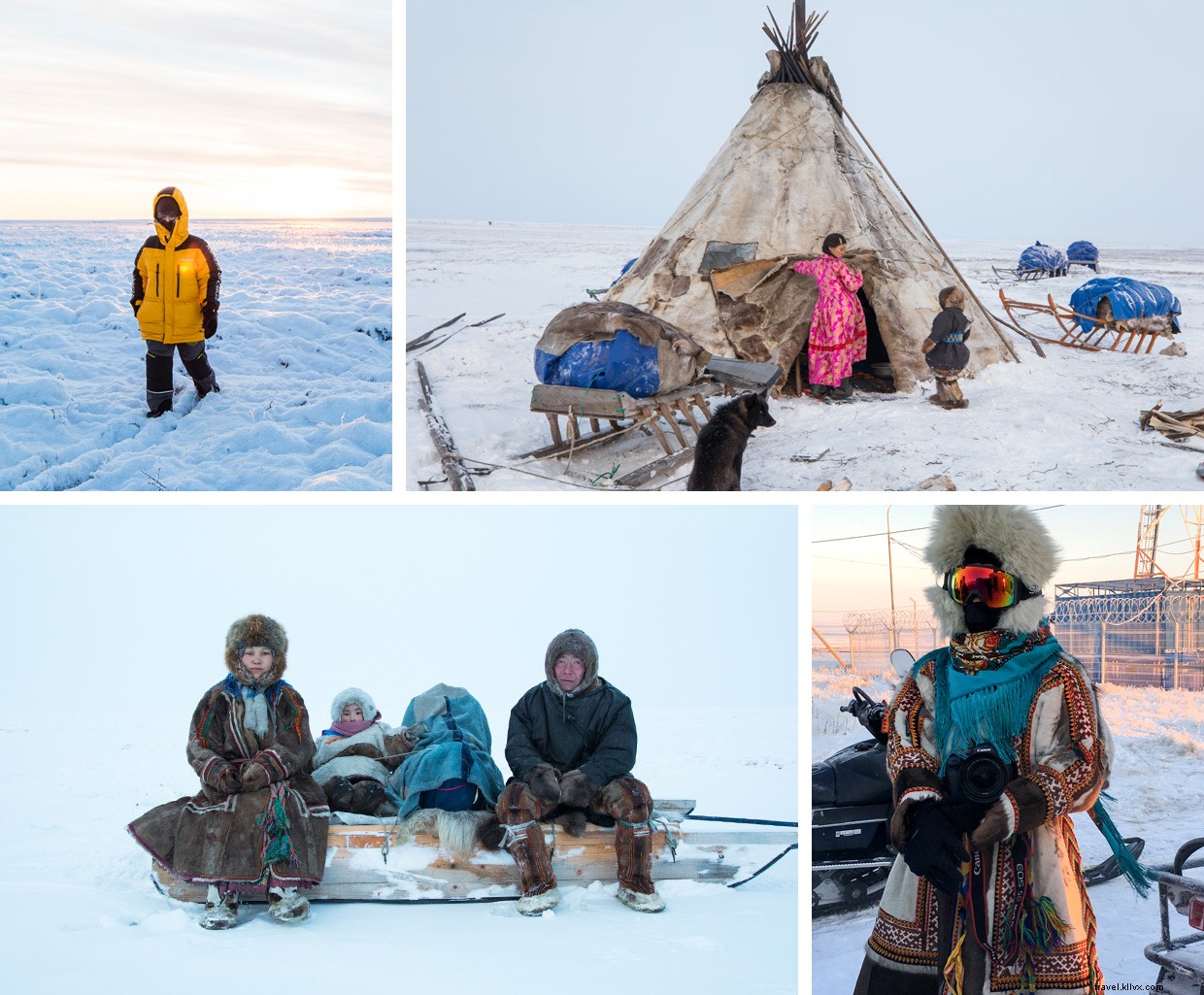
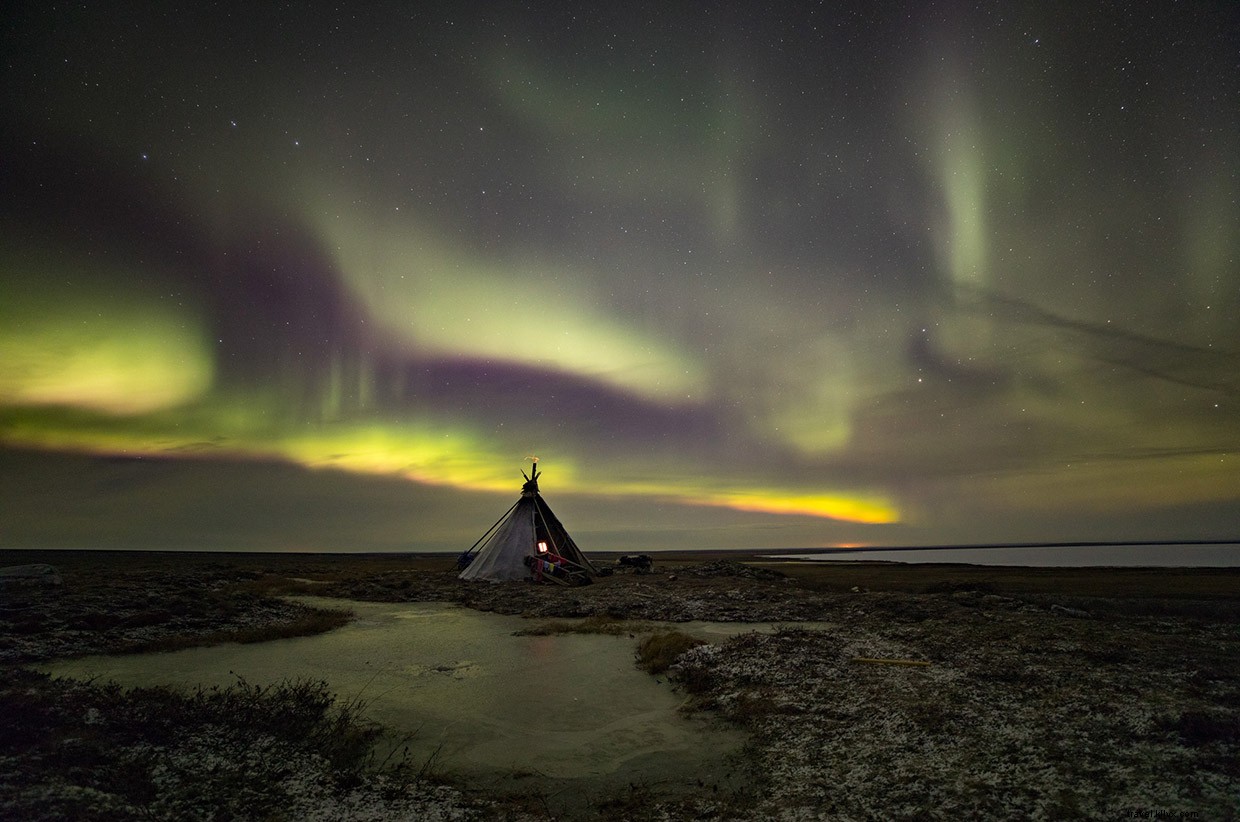
The Nenets are rarely visited, much less photographed and videoed. It is extremely unusual for a Western woman to live among a single family for several weeks – in fact, you are certainly among few to have done this. You witnessed and recorded the adaptation to so many pressures from modern civilisation, climate change, and the unique study of pregnancy and birth. What are your goals for the work you’ve accomplished?
The material will be used for education, research, and raising awareness about Nenets culture in schools, museums, and other institutions. Specifically, the Artic Museum in Salekhard will be archiving my research, photographs and video. Our Wild Born Project website will also have an archive with materials available to academics and students across the globe.
We are currently working on a book that will feature my photographs and short stories from the expedition. The book will follow one Nenets family as they prepare for migration, experience the tundra change in seasons, and Lena’s birth journey. I’m also working on a short film and some articles that focus on gender roles, climate change, and birth rituals among this traditional Nenets family on the Yamal Peninsula.
Through my documentation of the journey in film, photography and media engagements, I hope to raise awareness of the imperative issues facing these communities – and, specifically, mothers – today. Oral traditions of ancestral knowledge within indigenous societies are disappearing. Gathering traditional heritage also enables indigenous communities to record their historic presence on the land and their cultural and spiritual connections with it. In many cases, this record can also support efforts to uphold their rights when facing development pressures that might radically alter their natural environments and their ways of life. I’m honoured to have earned the trust of these families and women whom I’ve lived with. It’s important to me that the resulting body of work will help them, and others who seek to understand them, as we navigate our changing world.
Read more about Ally’s extraordinary journey in Sidetracked Volume Nine.