Patagonian Expedition Race: Journey to the World’s Most Remote Frontiers
The PATAGONIAN EXPEDITION RACE is described by its organisers as “a true expedition, taking teams of four through lands previously unknown to the human eye.” It is probably the wildest, most remote race on the planet, exploring some of the most isolated and breathtaking landscapes known to exist. It was created by geologist Stjepan Pavicic in 2002 when he shared a dream with an international team of specialists who had both the expedition and project management experience to create something truly remarkable.
Adventure racing itself is multi-disciplinary and requires proficiency in navigation, trekking, mountain biking, paddling, and climbing, in order to cover a variety of uncompromising terrain. Generally, teams comprise four people and must include both men and women. Expedition-class races typically take between three and eleven days. Often there are no hours of darkness, meaning racers themselves choose if, or when, to take rest. Teams are required to pass through mandatory check points along the way. If there is to be a change of discipline, such as mountain biking to kayaking, teams will change their equipment at these points, called ‘transitions’, taking what is needed for the next leg and carrying it with them.
In the Patagonian Expedition Race, which normally covers around 650-700km, the route remains a secret. Maps and route books which only contain broad, landmark-oriented instructions are supplied in a meeting with the teams the night before the race begins. Racers receive minimal assistance as they trek, climb, kayak and mountain bike across the plains, mountains, glaciers, native forests, swampland, rivers, lakes and channels of southern Patagonia. Frequently, hundreds of kilometers will pass without any of them witnessing another soul. And every race features a unique route. Past racers have found themselves in the Southern Continental Ice Field, the Strait of Magellan, Torres del Paine, Tierra del Fuego, the Beagle Channel and Cape Horn.
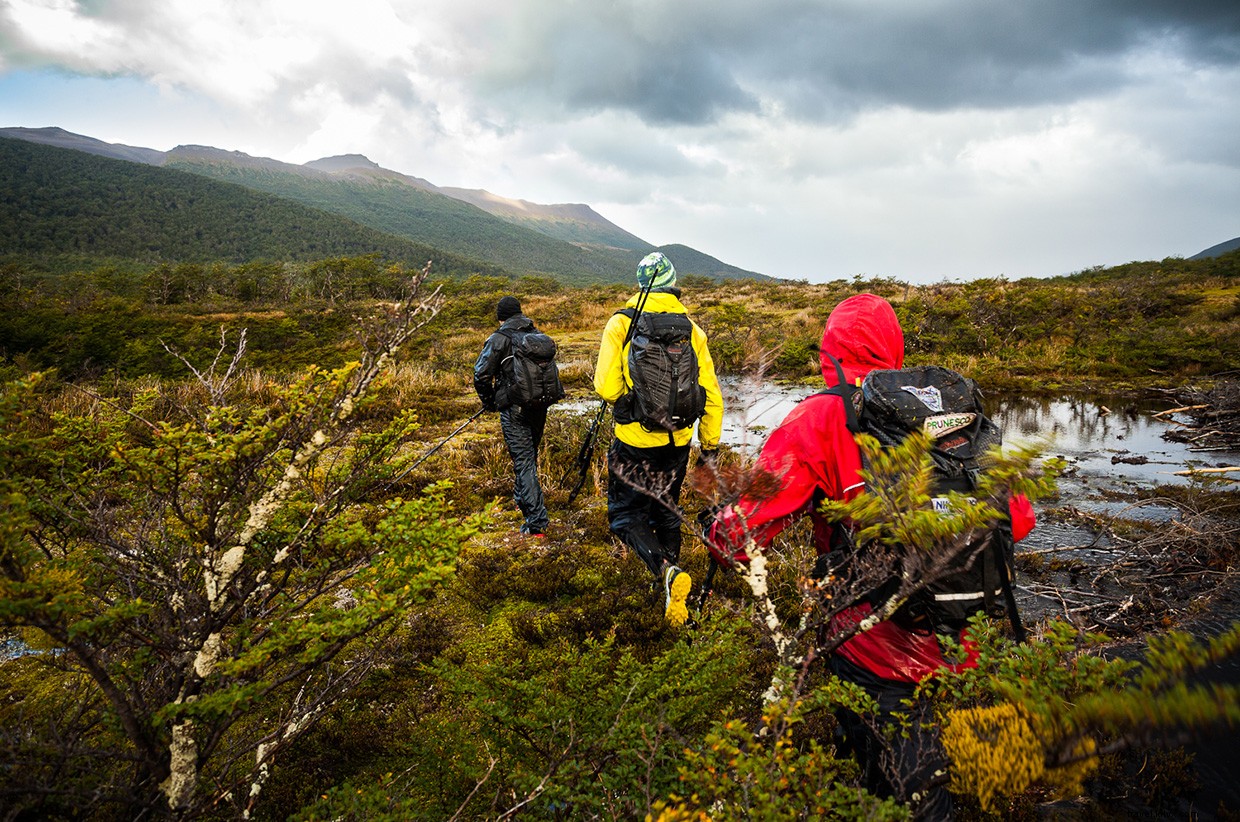

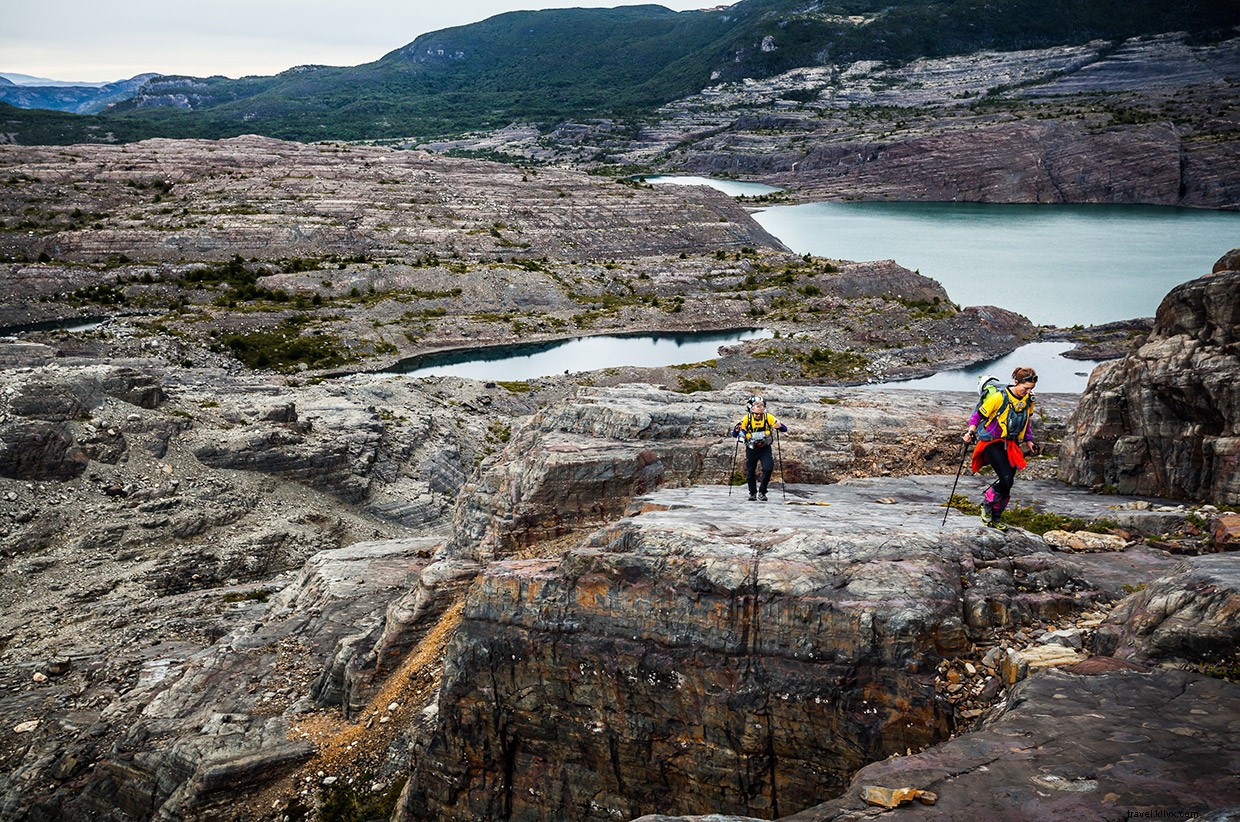
Athletes from every corner of the globe compete. Nick Gracie is the Captain of the Adidas Team. He also the current Adventure Racing World Champion. Coming from a London city background, he started adventure racing in 1998 when he entered Eco-Challenge. In his first race he and Warren Bates came dead last. Just over a decade later, both would still be racing together and in 2009 became world champions. Bates’ own story also has fairy tale elements. Desperate to find a female member of the team, a requirement for adventure racing, they met a wonderful girl in New Zealand who agreed to race with them. Bates’ now has the honour of being her husband. Adventure racing has changed his life. He now lives in New Zealand, when not competing, and organises adventure races. Gracie is similarly evangelical about the whole thing. A professional athlete, he identifies giving up drinking as one of the key elements to his success. He had more time to train and training is why he is so good at it. Oh, and no hangovers, he laughs as he tells the story. At 41, Gracie thinks he has a great team with him. This year promises to be one of the best ever. He has three children and a very understanding wife – proving that anyone, in almost any situation, with the right resolve and determination, can succeed.
Gracie fell in with Adidas around the time he became world champion and loves their Terrex range. It had just come onto the market and Adidas’ approach did not take much thinking about. Gracie acknowledges that adventure racers need to take the money where they can get it. It’s not a cheap sport when you consider all the flying around the world these guys do.
He loves the Patagonia Expedition Race precisely because it so remote, wild and utterly bewitching. Sometimes, racers are hundreds of miles from the nearest road, let alone civilisation. Sometimes, even sat-phones don’t get a signal! It is a magical place, he says. The tip of the world. A massive, full-on race, with snow-capped jagged mountains, huge flat planes, dense forests and amazing waterfalls. The backdrop, he explains, is breathtaking. Nothing else comes close. And the locals are super friendly, he says. Yet, it’s also a very close-knit race. It is less competitive as many of the bigger teams don’t attend – there is no prize money. And it is considered to be vey long – twice as long as the World Championship course. So it feels less commercial to Gracie, something he loves about it. It’s ‘old school adventure racing’.
There is mandatory gear to take – waterproofs, fleece, sleeping bag, tent, sat-phone, GPS and, of course, a ton of food. Specialised equipment can be left at transition stages. Gracie estimates they consume 12,000 calories a day and the food they take needs to at least come close to that. They eat dried meat, cheese, chocolate, energy bars, nuts – all in huge quantities, because they are high in calories. And they take freeze dried meals too – usually eaten cold. Tents are lightweight – Gracie still loves their Big Agnes Copper Spur. He uses a Marmot bag which he swears by. At this level, kit needs to be perfect.

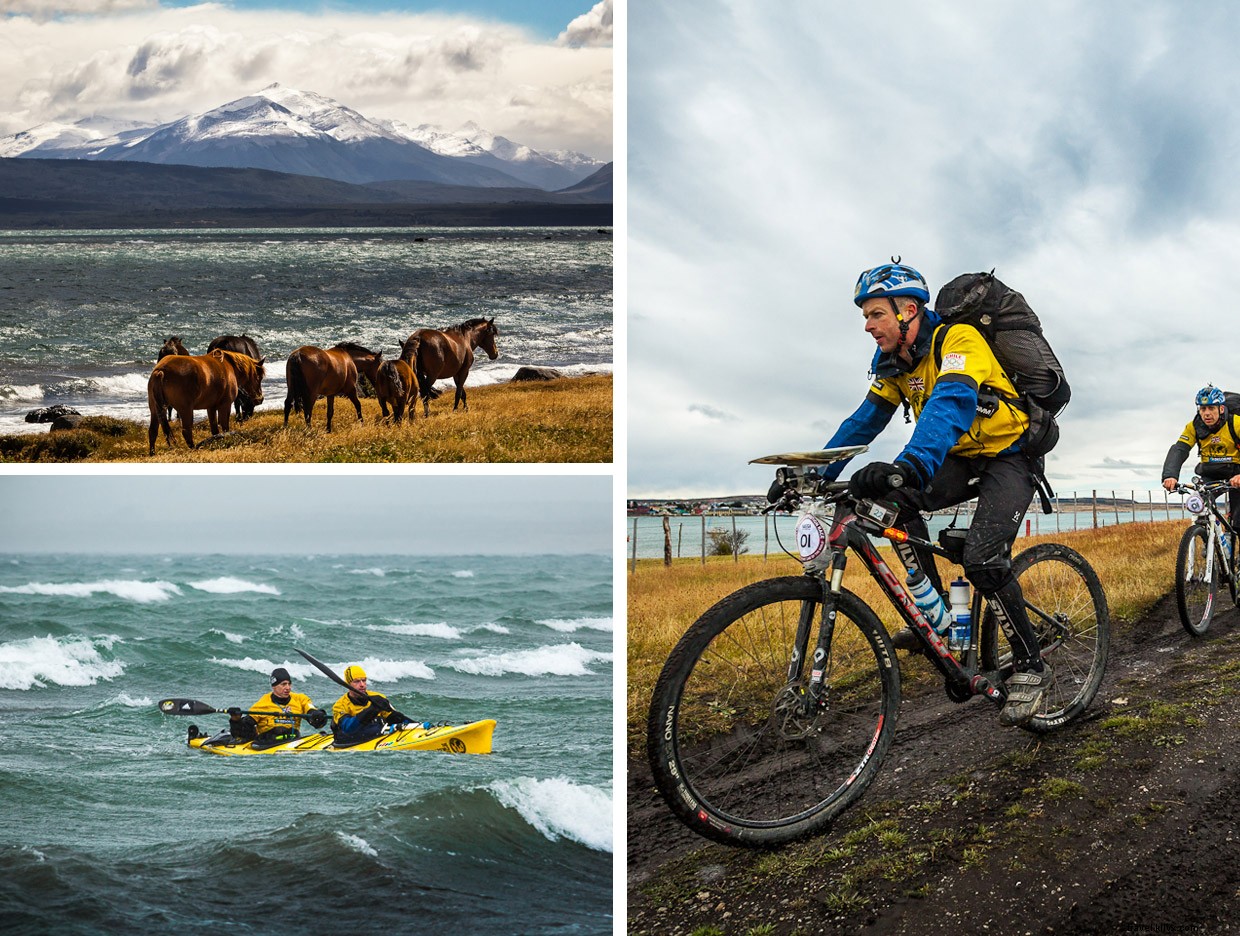
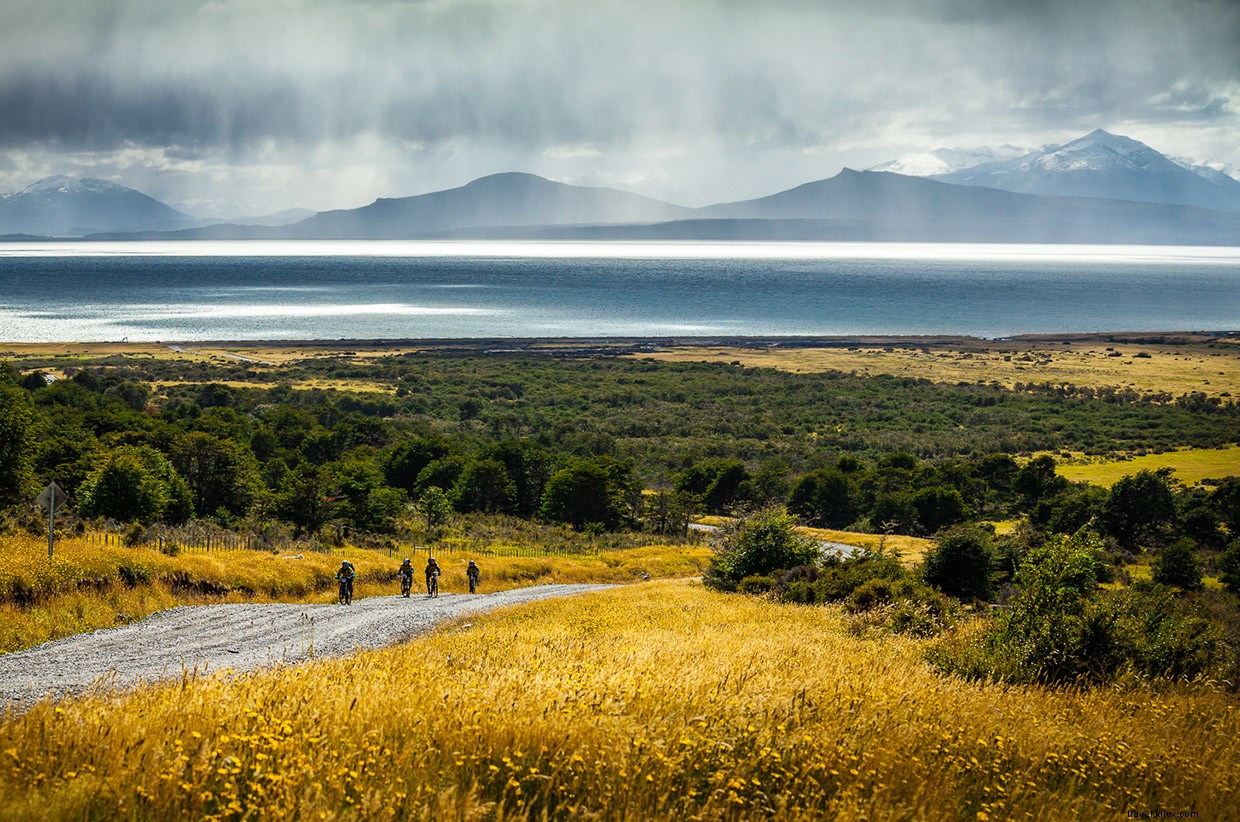
In 2013, adventure photographer Ulrik Hasemann followed the teams for much of the race. His wonderful images accompany this feature. He travelled to Patagonia to photograph the race as a consequence of his love of adventure, wild landscapes and, in particular, mountains. The challenge of the photography appealed to Hasemann. Fascinated by Patagonia for many years, this seemed an incredible opportunity to experience the region in a different and very impressive way that he felt was impossible otherwise.
The distances within the race were huge, he explains, and, coupled with the difficult transport logistics in the area, it was sometimes very hard to find the teams. When he found or followed a team, he faced the same rough terrain as the racers but also had to think about how to tell the story and show the environment through the camera. Besides his photo gear, he also had to carry essential outdoor kit as he was usually just as far out in the wilderness as the teams. This meant tent, sleeping bag, waterproofs, food and a very basic emergency kit. All very lightweight as he had to keep up with the racers. He kept camera equipment to a minimum with one DSLR and two lenses (a Canon 5D Mk II with a 17-40mm f/4L and 70-200mm f/4L). Because of the challenging logistics, he needed equipment packed and ready at all times as it was often about going with the opportunities as they arose and being ready if a team suddenly arrived.
In general, Hasemann agrees with Gracie that many of the teams travel all the way to Patagonia for this race because it is wild and remote. There are many adventure races in amazing locations all around the world and many with much tougher competition but the experienced teams, who have raced all over the world, say that this race is the wildest and that it’s the longest continuous race. So, Hasemann insists, it’s more about the experience than the competition, when compared to other races. The long distances between the check points, as well as the less ‘organised’ feel give the race a more ‘out there’ feeling. The changeable weather and rough terrain all combines to make it really wild.