Ultimate Guide to Greek Cuisine: Must-Try Cheeses, Wines, Olives, and Iconic Dishes
Travelers arrive in Greece with sky-high expectations, yet the country consistently exceeds them. As someone who recently explored Greece firsthand, I can attest: it's every bit as magical as imagined—perhaps more so. The food and wine stand out, but the deep cultural roots of its cuisine truly captivate the soul.
Greek eateries abroad introduced me to the flavors, but nothing prepared me for the transformative experience of authentic Greek food. It's like the difference between a video call and face-to-face time with a loved one—infinitely more vibrant. Greece's culinary world bursts with freshness, vitality, and profound simplicity. I'd return just for the meals (and wines). You could easily build an entire itinerary around them.
This guide highlights four essential categories to savor on your Greek adventure, delighting your palate and enriching your journey.
Cheese
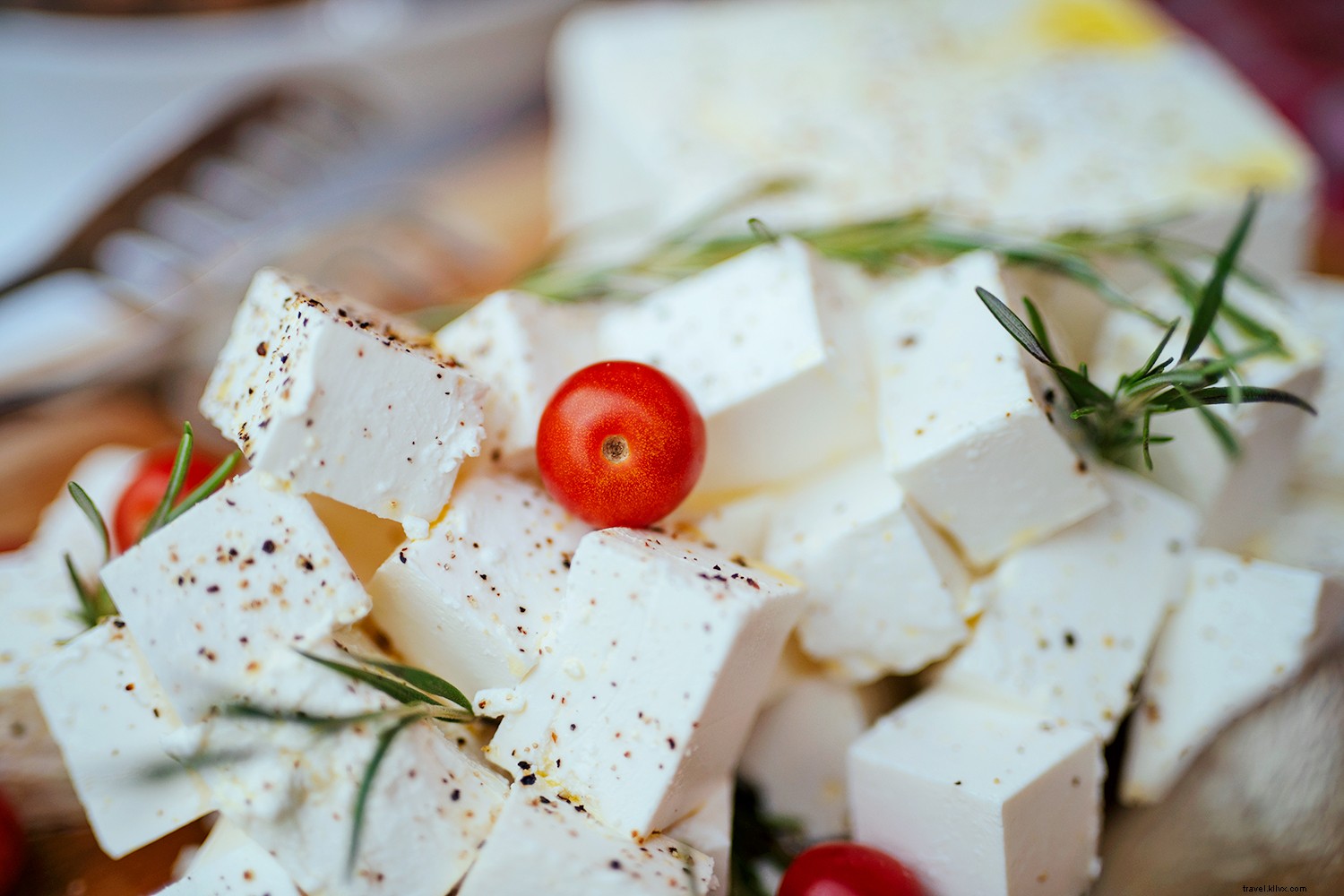
Greek mythology credits Aristaeus, son of Apollo, with learning cheesemaking from nymphs and sharing it with humanity. While origins are debated, Greeks have mastered cheese production since at least the 8th century BC.
Cheese is a cornerstone of Greek diet and culture today. Expect it at every meal—breakfast to dessert—which explains Greece's top rankings in per capita cheese consumption.
Feta, tangy and salty, is Greece's signature cheese and a protected designation of origin (PDO) product, made exclusively in Greece via traditional methods from sheep's (sometimes blended with goat's) milk, aged in brine. Goat-heavy feta is milder; sheep-dominant versions sharper. Enjoy it on meze platters, in tyropita (flaky cheese pie), Greek salads, sautéed with vegetables, or with summer watermelon.
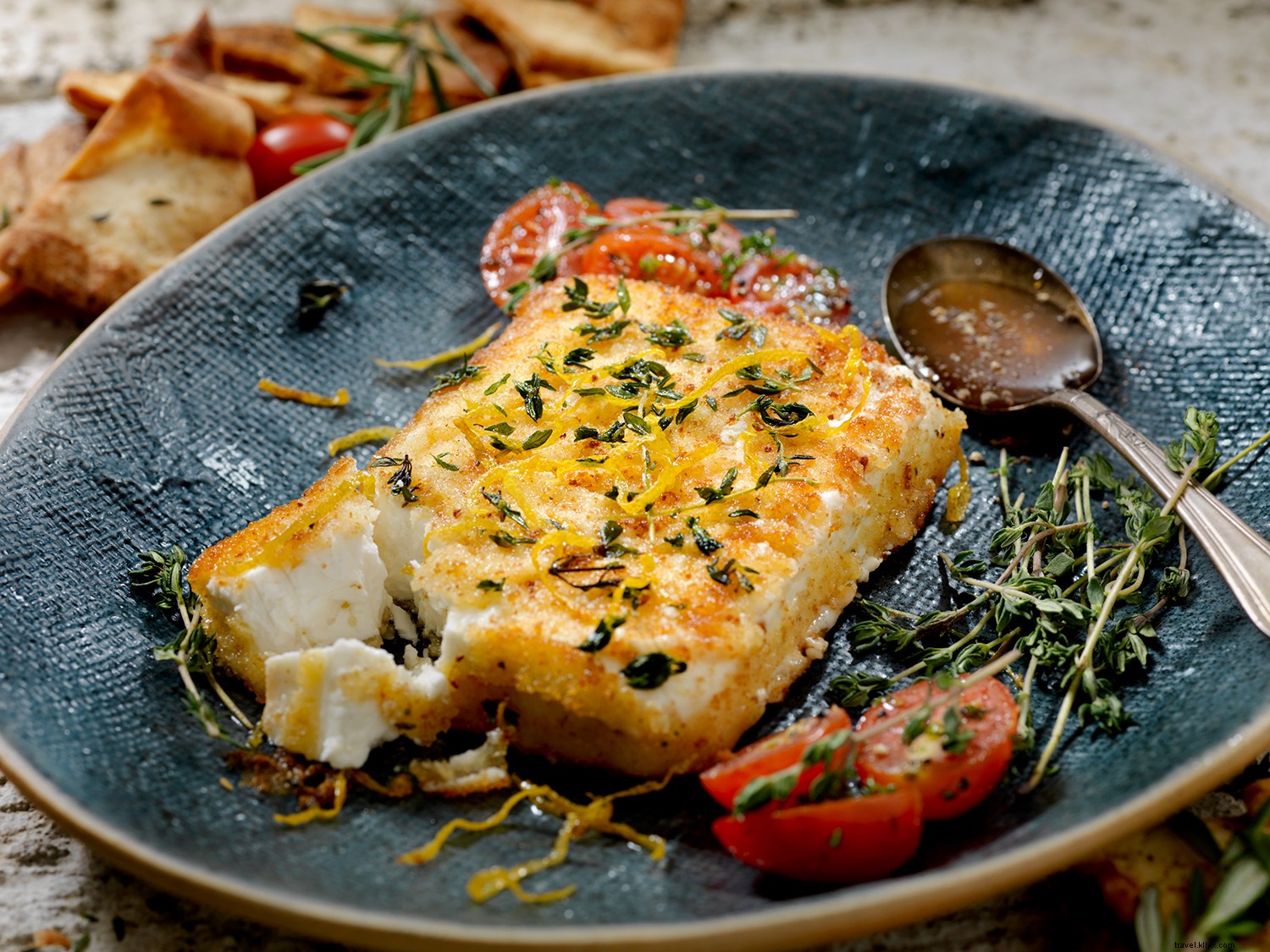
Graviera, from sheep's, goat's, cow's milk or mixes, evolves from sweet-buttery when young to nutty-spicy with age. Seek regional specialties from Crete (caramel notes), Lesvos, Amfilochia, and Naxos (cow's milk only). Try it baked, on charcuterie, or as saganaki—pan-fried and lightly battered.
Manouri, a semi-soft whey cheese from feta production, is creamier and milder. Perfect for dessert alone or with fruit. Authentic versions hail from Macedonia and Thessaly, but appear on Athens menus too.
Wine
Plan wine tastings—and pack an extra suitcase. Greek wines are exceptional and budget-friendly.
Greek wines are acidic (tart), tannic (dry), with modest alcohol and earthy, herbaceous, mineral notes from volcanic soils—distinct, complex, and far from soft. Discover lesser-known grapes that make tastings thrilling.
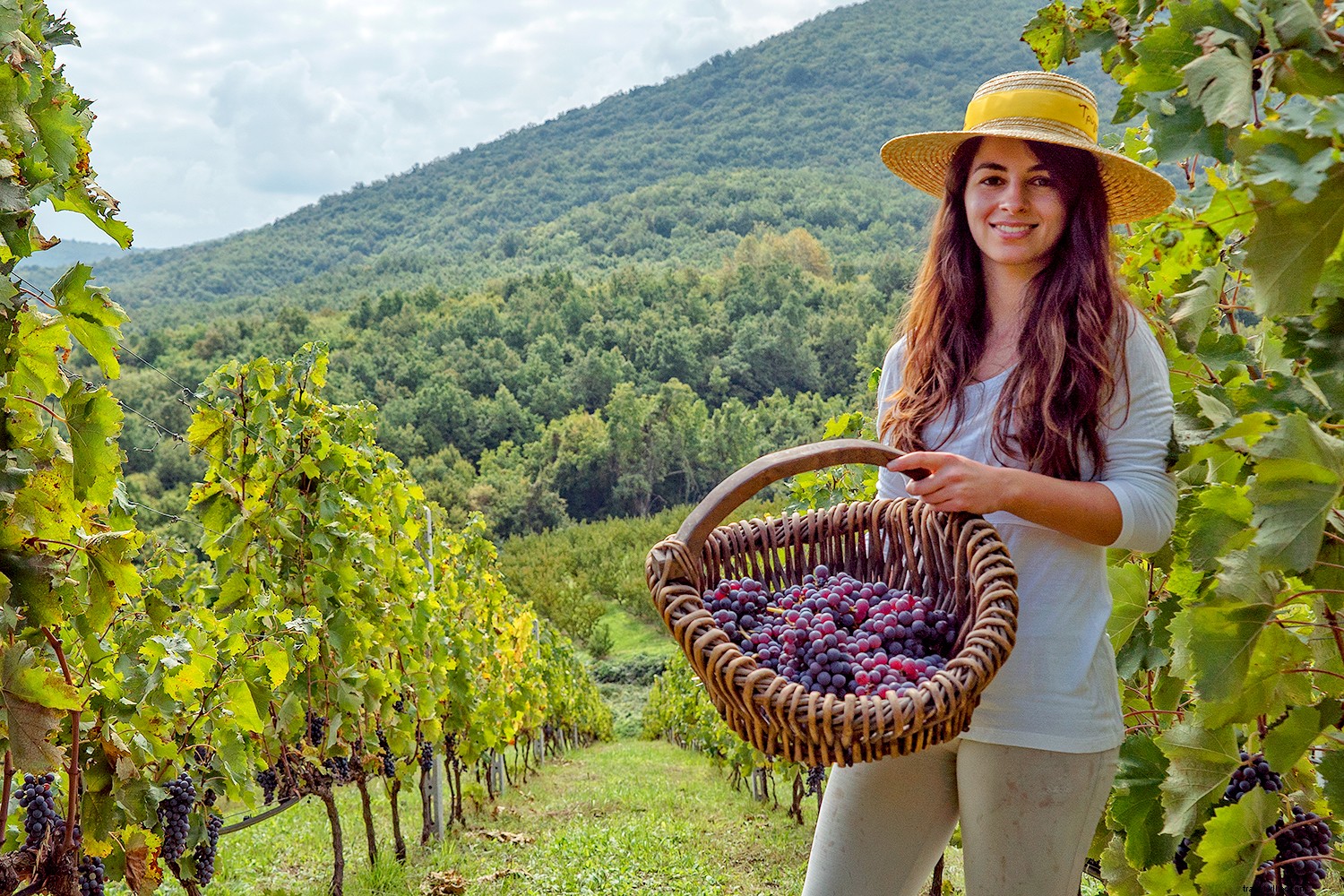
With winemaking roots over 6,500 years old, Greece's modern scene surged recently via innovative producers reviving indigenous grapes and adopting organic methods that align with traditional viticulture.
Wine pairs seamlessly with meals via the “grows together, goes together” philosophy. Island seafood matches local whites and light reds.
On Crete, vines shield amid olive groves. Key grapes: Vilana (citrus-floral white for white meats/salads), Mantilari (red blender), Kotsifali (spicy red for meats/cheeses).

Santorini's volcanic soil yields deep-rooted vines thriving on sea mist, producing salty whites and smoky reds. Assyrtiko (80% of production) is briny-acidic; pair with feta, sardines, grilled fish, calamari. Reds like aged Mavrotragano suit spicy lamb meatballs.

Near Athens, Nemea—Greece's premier red region—hosts 40+ wineries. Star: versatile Agiorgitiko, from rosés to bold fruity (raspberry-blackberry, spice) reds for roasts.
Olives

Olive groves glow under Mediterranean sun, leaves glossy year-round—a testament to their cultural primacy, from Athena's gift to ancient Olympic wreaths.
Groves dominate Peloponnese and Crete, but span everywhere. Olives appear in meze, salads, breads, pies, sauces.

Famed black Kalamata olives (from Kalamata) brine in vinegar-oil for meze, bread, salads. Green Nafplion olives (regional) brine with spices for salads.
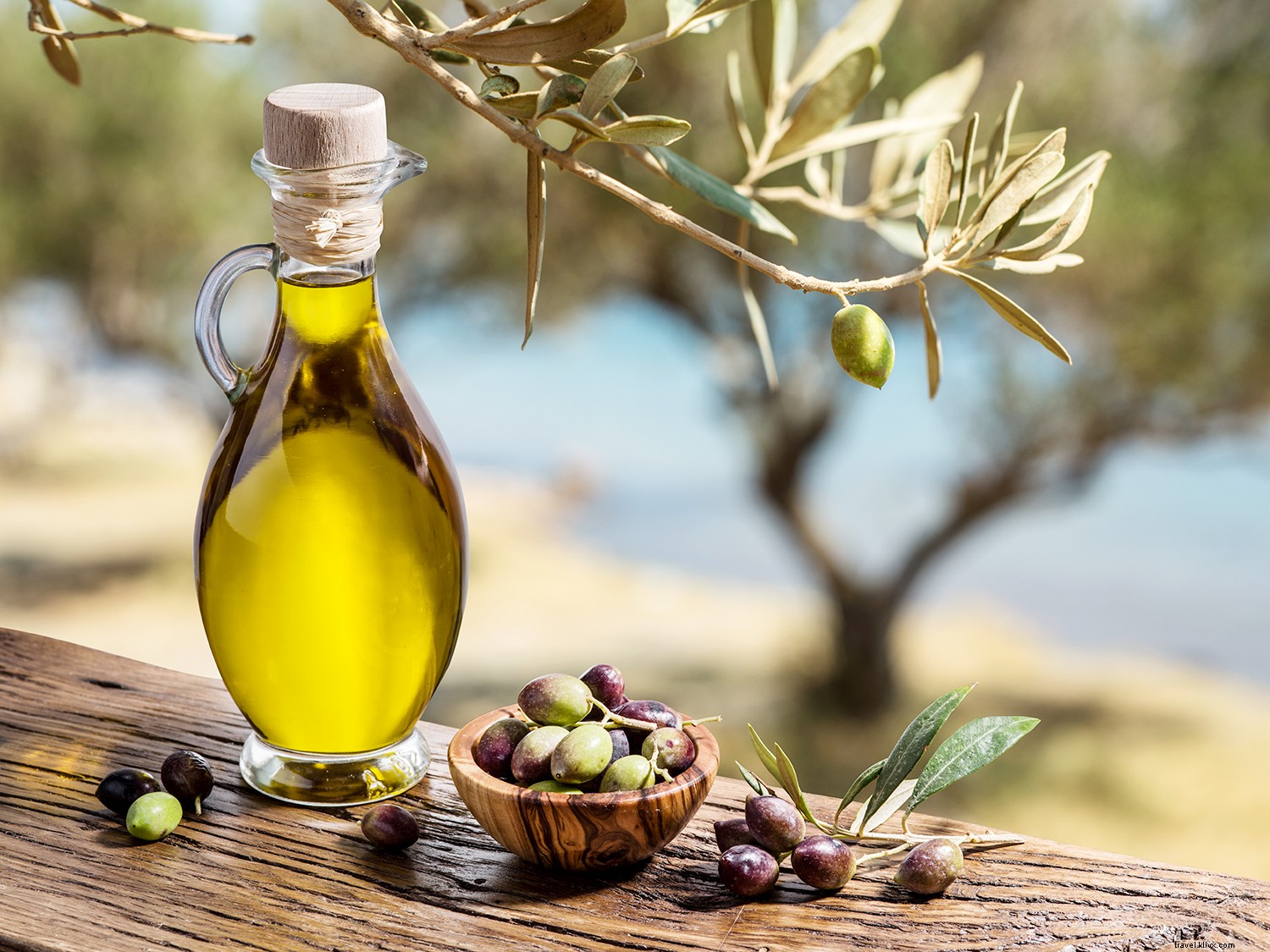
Olive oil, a millennia-old staple, finishes dishes with fruity-peppery notes: eggs, pasta, steaks, cheeses, dips, soups, even chocolate. Visit olive museums for history.
Main Dishes
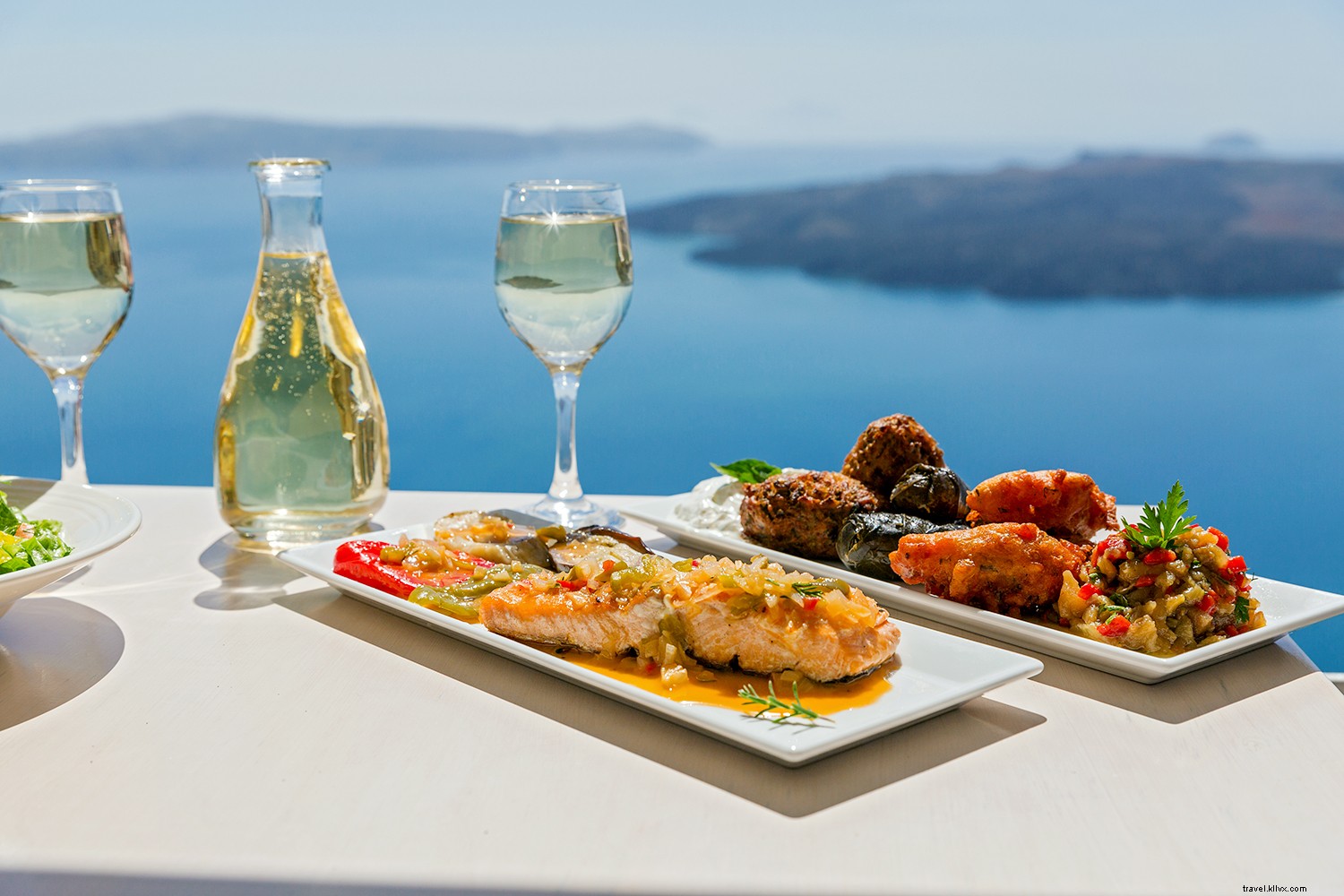
Freshness defines Greek mains: seasonal produce, daily catches, local meats—varying by location and season.
Meat plays supporting role historically, reserved for feasts. Try ladera ("oiled" veggies like beans, lentils sautéed simply—stunning colors/flavors).
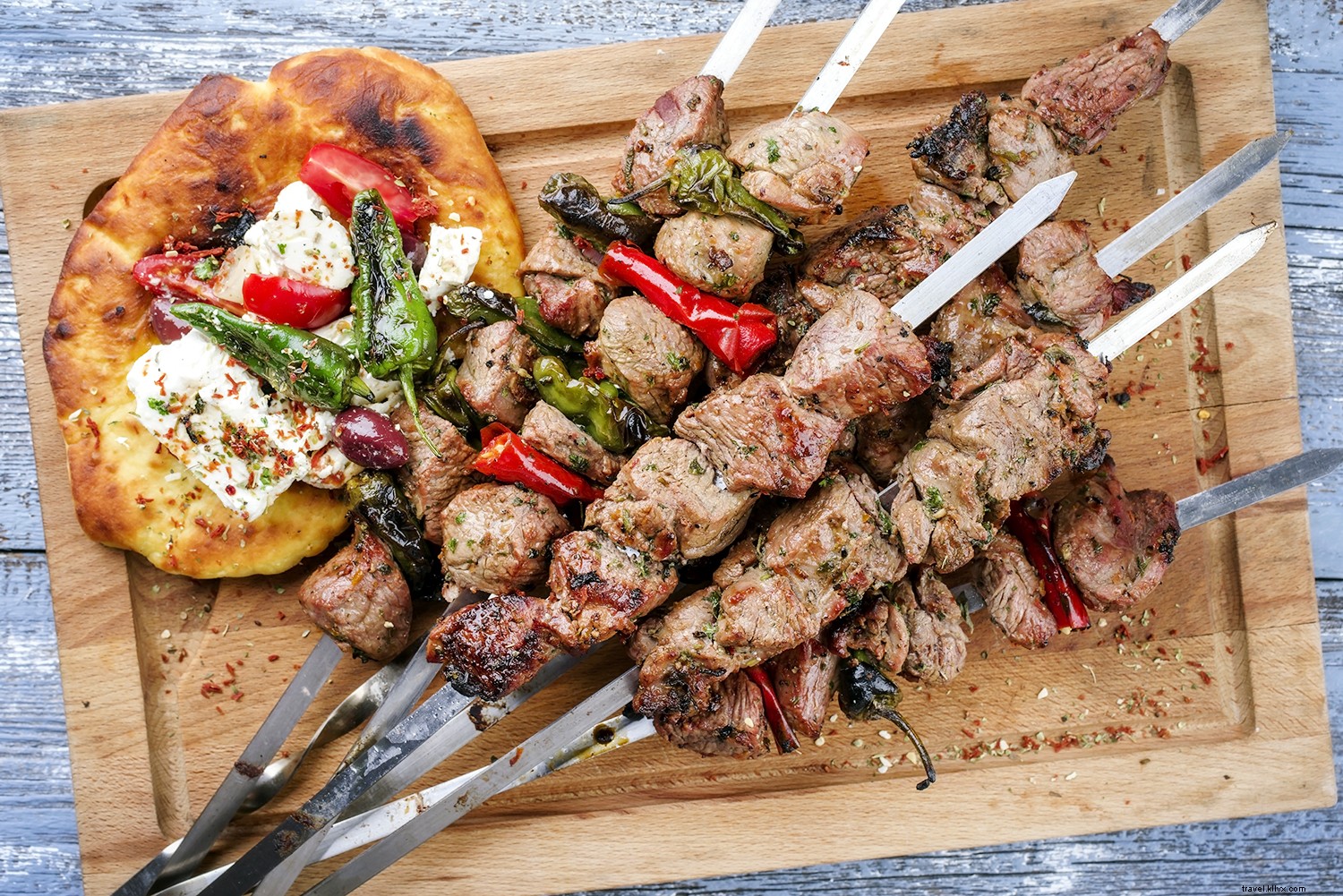
Souvlaki: spit-grilled marinated pork (pita kalamaki with fixings or plain with toast).
Islands shine with fried calamari, grilled octopus, seafood simply seasoned.
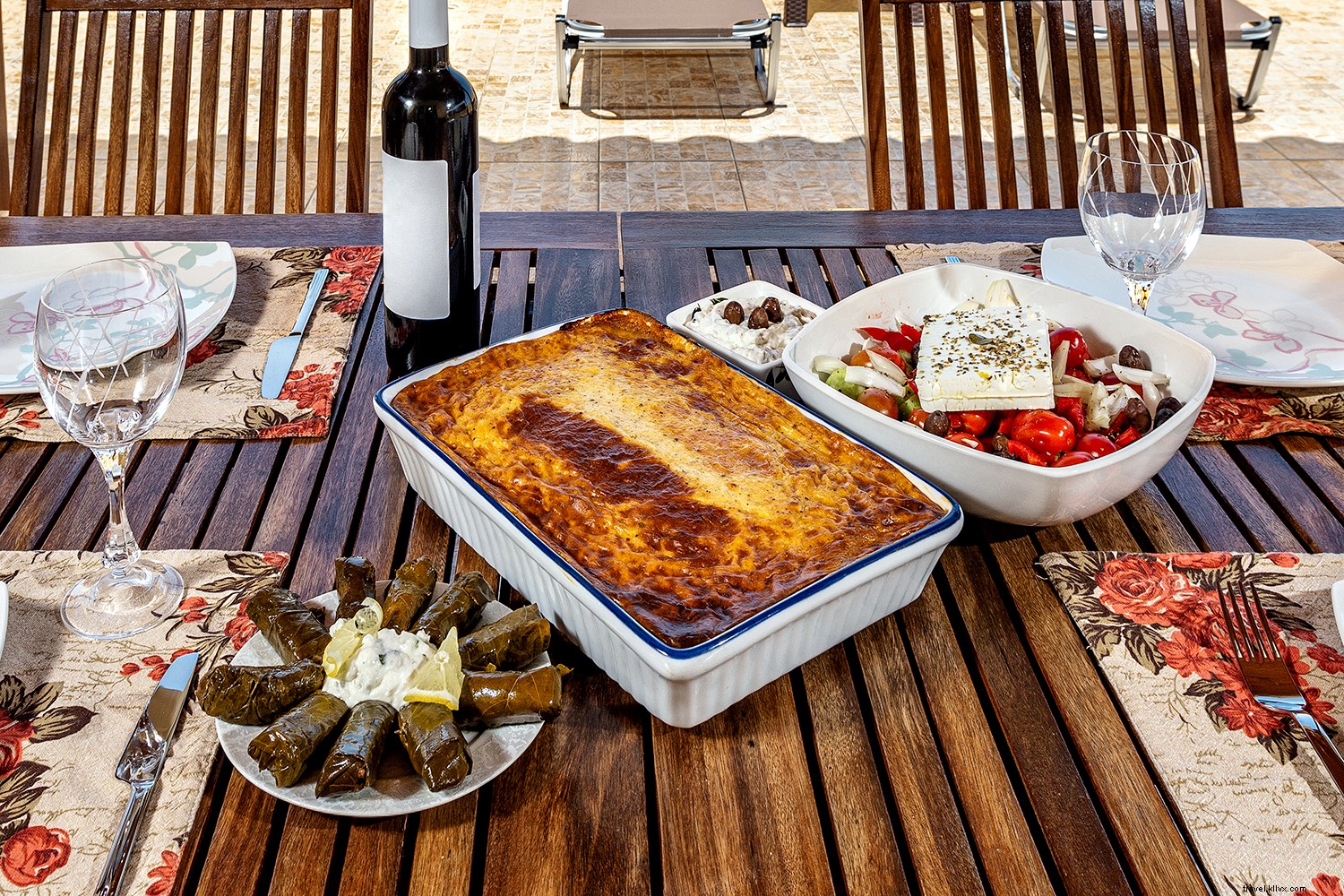
Mousaka: layered eggplant, potato, minced meat in tomato, topped with béchamel—lasagna-esque.
My Greece trip reshaped my habits: savoring slowly, embracing multi-course meals (olive oil abundant), simplicity, and wine. Hungry? Greece welcomes U.S. travelers. Get inspiration, culinary insights, travel tips.