
Authentic Cuban Garbanzo Stew Recipe: Hearty Potaje de Garbanzos from The Cuban Table
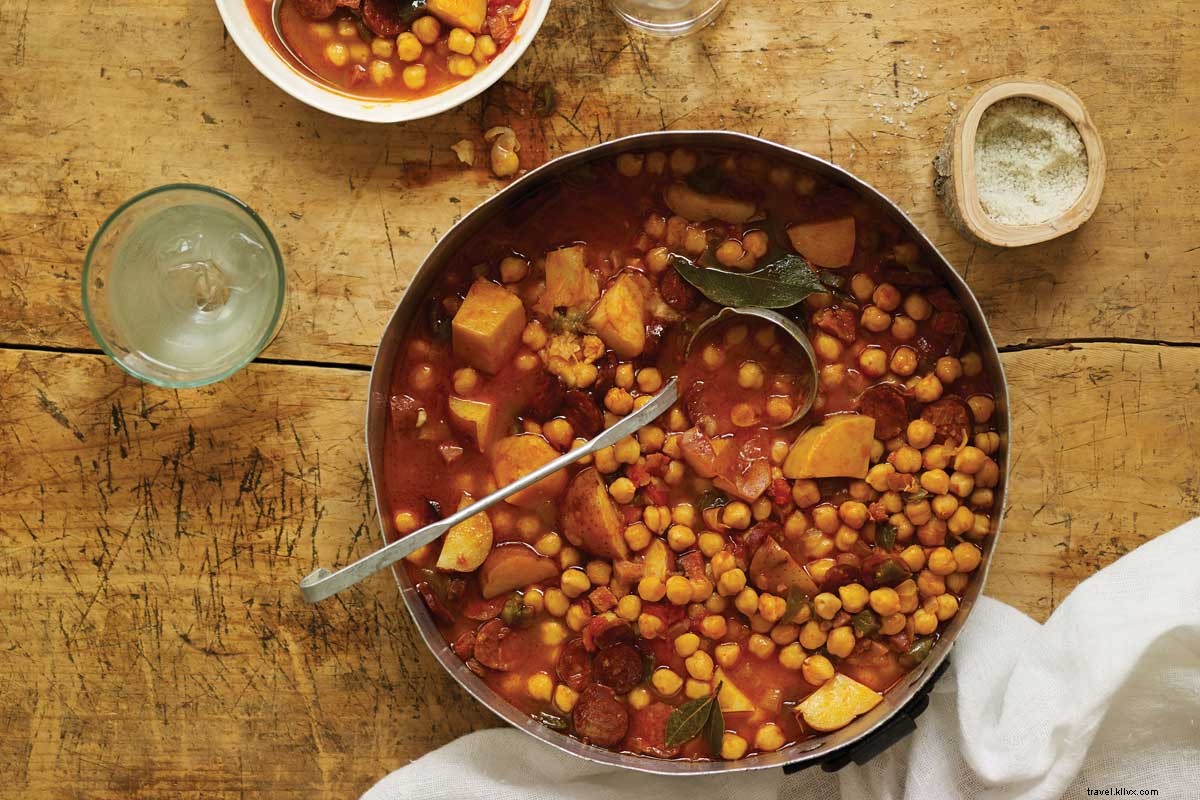
For Chefs Travels week, we're featuring new cookbooks that transport us all over the world. This recipe for potaje de garbanzos (chickpea stew) is from The Cuban Table: A Celebration of Food, Flavors and History, text by Ana Sofia and photos by Ellen Silverman. Don't miss Ana's guide to her favorite Cuban spots in Miami and Ellen's porfolio of Cuban food and culture. In the meantime, winter is a great time for a nice, rich soup.
I learned how to appreciate potaje de garbanzos on my first trip to Havana when I tried Nena Rodríguez’s garbanzo stew. Made with smoky cuts of ham, spicy chorizo, and pillowy malanga, I loved how the rich broth wrapped itself around the chickpeas. On my second trip, her family taught me how she did it.
POTAJE DE GARBANZOS (CHICKPEA STEW)
Serves 6 to 8
INGREDIENTS
For the beans
1 lb. dried chickpeas, rinsed well
1 lb. bone-in cooking ham or ham hock
For the sofrito
1/4 c. extra virgin olive oil
1/2 lb. semi-cured Spanish chorizo, casings removed and sliced into 1/4-inch rounds
1 medium yellow onion, diced
4 large garlic cloves, peeled and diced
2 tsp. kosher salt
1/2 tsp. freshly ground black pepper
1 c. tomato purée (see note below)
1/4 c. dry white wine
1 tsp. pimento (Spanish-smoked paprika)
1 dried bay leaf
1 lb. small red baby potatoes, quartered
1/2 lb. white malanga, peeled and cut into 1-inch cubes
1 large red bell pepper
PREPARATION
1. Place chickpeas in a large mixing bowl in plentiful water to cover overnight, 8 to 10 hours. Drain chickpeas and rinse well.
2. Combine chickpeas and ham in a 6-quart heavy pot with 8 cups of fresh water. Bring to a boil then lower heat to medium and simmer beans until just tender, checking regularly and skimming the foam that forms on top, 30 to 45 minutes.
3. Remove the ham, debone, trim any excess fat, and cut it into 1-inch cubes and set aside.
4. In the meantime, prepare the sofrito. Heat oil in a 10-inch skillet over medium heat. Add chorizo and cubed ham and cook until lightly browned, two to three minutes. Add onion, garlic, salt, and black pepper and sauté until the onion is soft and translucent, about five minutes.
5. Add sofrito to the pot with the beans. Stir in tomato purée, wine, pimentón, and bay leaf and simmer an additional five minutes. Add the potatoes and malanga, return to a simmer, and cook, covered, until the vegetables are tender, 20 to 25 minutes. Adjust the seasonings to taste.
6. In the meantime, roast the red pepper. Preheat the broiler. Place the red pepper on a baking sheet lined with aluminum foil and set it directly under the broiler, turning it every couple of minutes until it is charred and puckered on every side, three to five minutes. Remove the red pepper and wrap it in the aluminum foil or transfer to a plastic bag for a few minutes to “sweat.” When cool enough to handle, remove the red pepper and peel off the skin. Slice the red pepper into long strips.
7. Add the sliced red pepper to the beans and serve as a soup or allow to cook a little longer, uncovered, for a thicker stew, about 15 minutes.
Variation: Arroz con Garbanzos (Rice with Chickpeas)
1. Simmer beans with ham until completely cooked through, 45 to 60 minutes.
2. Drain beans and reserve three cups of cooking water. Prepare sofrito as directed.
3. Combine beans, cooking water, and sofrito in pot and bring to a hard simmer over medium heat. Stir in tomato purée, wine, and bay leaf and simmer an additional 5 minutes.
4. Omit potatoes and malanga and add two cups of extra-long white rice or converted rice instead. Return to a simmer, then turn down the heat to the lowest possible setting and cook, covered, until the liquid is absorbed and the rice is tender, 20 to 30 minutes. Remove from heat and allow rice and beans to rest, covered, 15 minutes before serving. Garnish with roasted red pepper.
Variation: Garbanzos Fritos
1. Reduce the amount of chickpeas used to 1/2 pound. Soak overnight with water to cover then drain and rinse well. Simmer the chickpeas with the ham in a heavy pot with 4 cups of fresh water until completely cooked through, 45 to 60 minutes. Drain the beans and reserve 1 cup of the cooking water. Prepare the sofrito as directed in a deep, heavy skillet.
2. Stir in roasted pepper followed by tomato purée, wine, pimentón, and bay leaf and simmer an additional five minutes. Add beans and cooking water to skillet and bring to a simmer. Omit potatoes and malanga. Keep at a steady simmer over medium heat, stirring constantly, until liquid is largely absorbed, 15 to 20 minutes. Serve as a side dish or appetizer.
PURÉ DE TOMATE (TOMATO PUREE)
Makes 4 cups
Though canned tomato purée is a pantry staple, making it at home is a great way to take advantage of abundant summer tomatoes and add in your own blend of spices. This recipe is adapted from Delicias de la Mesa—Manual de Cocina y Repostería (1925) by María Antonieta Reyes Gavilán y Moenck.
INGREDIENTS
4 lb. ripe plum tomatoes
1 Tbsp. sugar
1 Tbsp.kosher or sea salt
1 tsp. ground ginger
1/2 tsp. ground cinnamon
1/2 tsp. ground mustard
1/2 tsp. ground nutmeg
2 Tbsp. extra virgin olive oil
PREPARATION
1. Fill a large mixing bowl with ice water and set aside.
2. Bring a large pot of boiling water to a fast simmer. Score the bottom of each tomato with an X and trim the stem end. Working in batches, blanch tomatoes in boiling water and remove when peels begin to pull away, less than a minute. Immediately remove tomatoes with a slotted spoon and transfer to ice water. Repeat with remaining tomatoes.
3. When tomatoes are cool enough to handle, peel tomatoes and discard skins. Combine peeled tomatoes, sugar, salt, and spices in a blender or food processor and pulse until smooth. Strain the purée through a fine-mesh sieve, discarding the solids.
4. Simmer the purée in a large heavy pot over medium heat until slightly thickened, 10 to 15 minutes. Adjust the seasoning to taste. Allow to cool completely and pour into sterilized glass jars. Cover with olive oil and seal.
TIME TO START COOKING
Buy The Cuban Table: A Celebration of Food, Flavors and History, by Ana Sofia Pelaez and Ellen Silverman
BUT WAIT, THERE'S MORE
A Cuban Food and Love Story
Where to Find Cuba in Miami
Fathom Miami Guide
Fathom Cuba Guide
From The Cuban Table: A Celebration of Food, Flavors and History, by Ana Sofia Peláez and Ellen Silverman. Copyright © 2014 by the author and photographs copyright © 2014 by Ellen Silverman and reprinted by permission of St. Martin's Press, LLC.