Chinati Foundation: Donald Judd's Iconic Minimalist Art Haven in Marfa
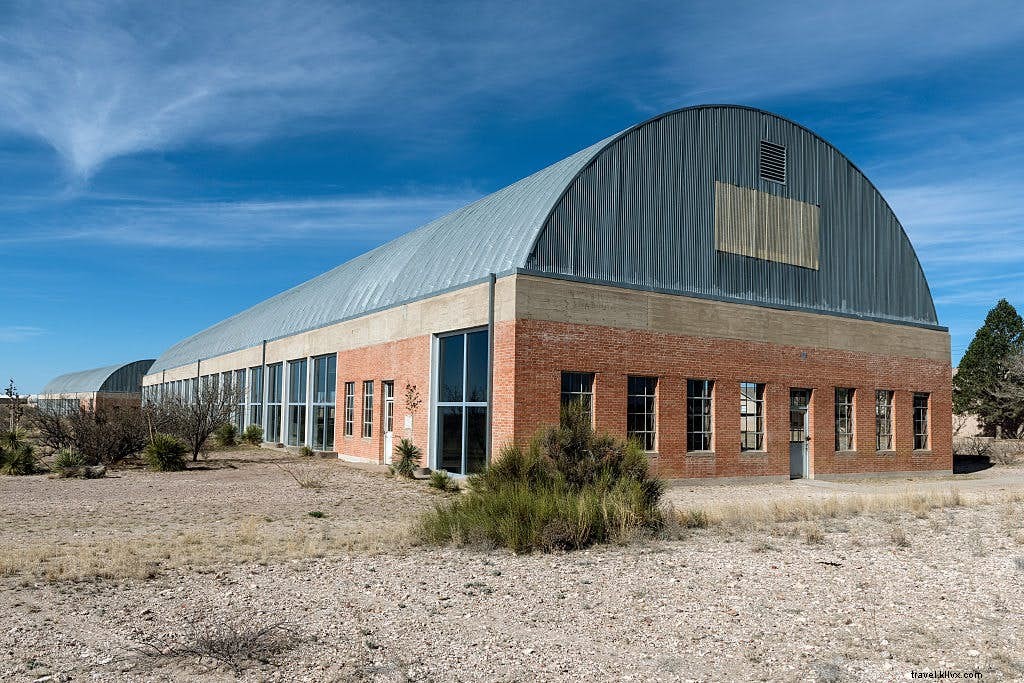
Step into the historic artillery shed, where towering windows frame sweeping desert vistas and sunlight illuminates gleaming aluminum boxes—the magic of Marfa's art scene comes alive. Renowned artist Donald Judd established this museum on a former U.S. Army post, transforming its grounds and structures into one of the world's largest permanent collections of minimalist art.
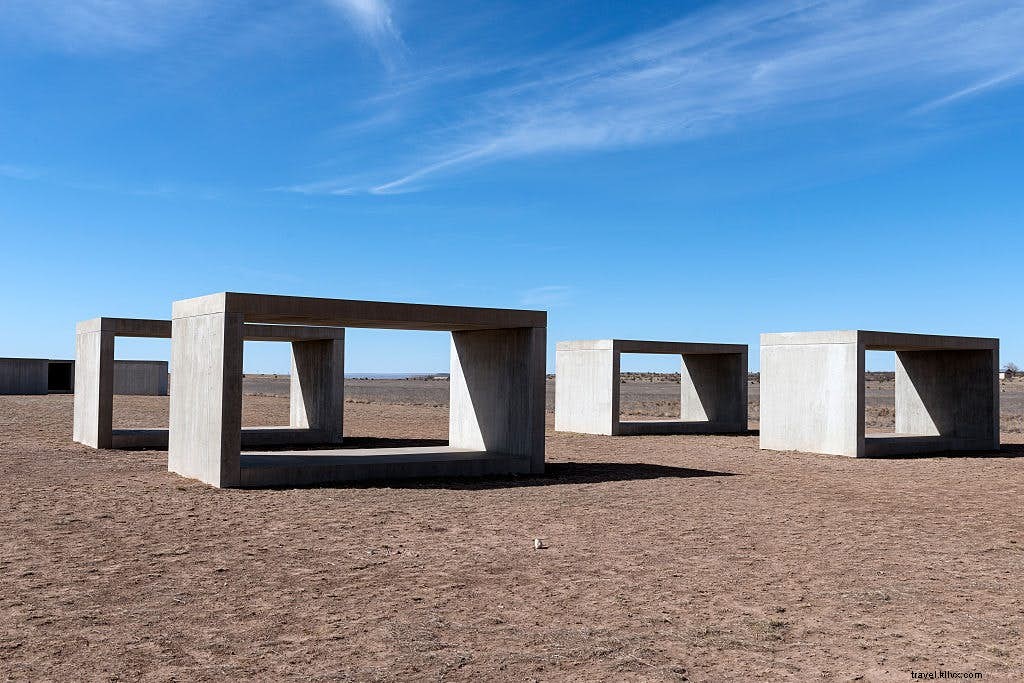
This immersive site masterfully blends art, architecture, and landscape. The optimal way to experience Judd’s vision is via guided tours, offered Thursdays, Fridays, and Saturdays at 9 a.m. and 10 a.m. (90 minutes each). These visits include the artillery sheds housing 100 untitled aluminum works, 16 untitled plywood pieces, and the Arena. Post-tour, explore Judd’s 15 untitled concrete works independently. Specialty and full-collection tours feature additional artists.
Short on time? Take the 1.6-mile self-guided tour to Judd’s concrete installations, set against vast grasslands that enhance their stark beauty. It also passes Claes Oldenburg and Coosje van Bruggen’s Monument to the Last Horse. Guided tours: $25; self-guided: $15.
The independent Judd Foundation preserves Judd’s downtown Marfa studios and library, with guided tours available for $25.
Donald Judd
A pioneer of minimalist installations known for their stark precision, Donald Judd was also an architect, furniture designer, essayist, collector, critic, and fierce advocate for artistic integrity. Born in Missouri, he served as a U.S. Army engineer in Korea during the mid-1950s before studying art history, philosophy at Columbia University, and painting at the Art Students League in New York City. Early in his career, he painted and wrote influential art criticism.
Shifting to three-dimensional works, Judd operated from his Manhattan studio at 101 Spring Street. In 1973, he acquired properties in Marfa, eventually prioritizing West Texas over New York. Embracing expansive spaces and industrial materials, he created permanent site-specific art. In 1979, he bought a 400-acre former army base with 32 buildings near Marfa, founding the Chinati Foundation in 1986—named for the nearby Chinati Mountains—to showcase his works and those of international artists. A visionary advocate, Judd passed away in 1994 at age 65.
Permanent Collection
The crown jewel is Judd’s 100 untitled mill aluminum works in two adapted artillery sheds, featuring custom squared windows and vaulted roofs. Arranged in precise rows of three, each sculpture shares dimensions but boasts unique interior forms. Natural light floods the space, framing endless desert horizons.
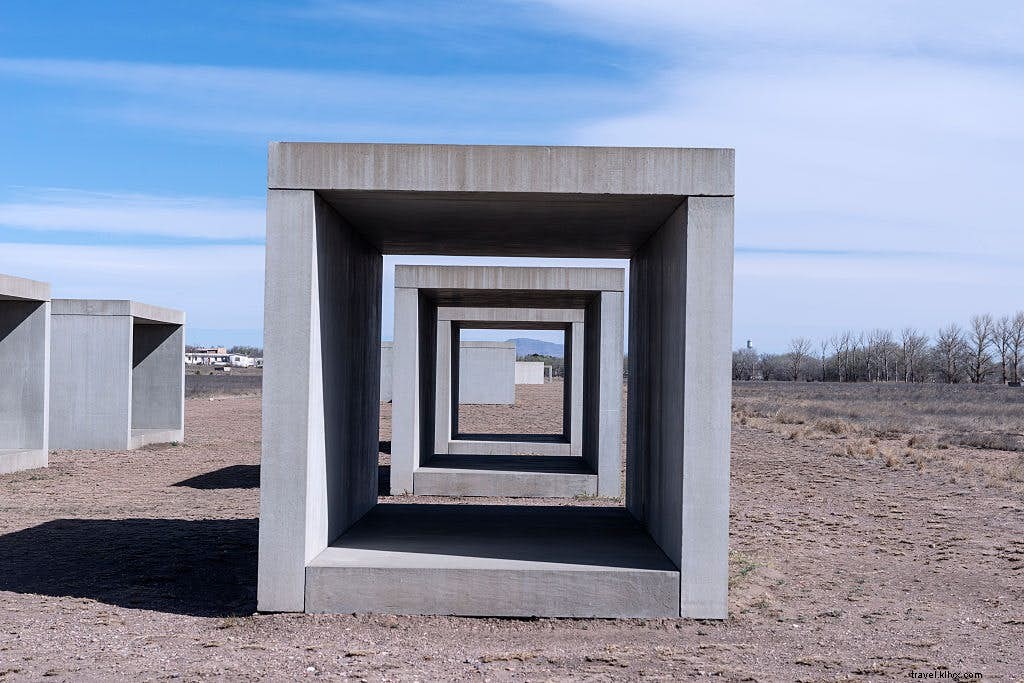
Created from 1980–1984, the 15 untitled concrete works invite visitors to walk among open boxes on the high plains. The restored Arena—a former gymnasium and horse arena—features minimalist bands of concrete and gravel. Other highlights include Dan Flavin’s fluorescent lights, Ilya Kabakov’s recreated Soviet schoolhouse, Robert Irwin’s immersive hospital installation, and Oldenburg and van Bruggen’s Monument to the Last Horse, inscribed Animo et Fide – Spirited and Faithful, honoring the fort’s last cavalry horse.
Plan Your Visit
Reservations are mandatory for all tours; note that guided tours currently cover select Judd indoor exhibits. Located in the high desert (Central Time Zone), expect intense sunlight—wear sun protection, comfortable closed-toe shoes. El Paso (Mountain Time) is one hour behind.
Things to Do in Marfa
This high-plains cattle town with an artistic edge serves as an ideal West Texas base. Chase the enigmatic Marfa Lights from the viewing area 9 miles east on US 90/67. Stay at eclectic El Cosmico in trailers, yurts, or tipis. Savor Marfalafel at Food Shark or burritos at Marfa Burrito—check hours, as many spots close early weekdays.