The Reality of Visiting Maya Bay: Why Our 'The Beach' Dream Trip Fell Flat
“You hope, and you dream. But you never believe that something’s gonna happen for you. Not like it does in the movies. And when it actually does, you want it to feel different, more visceral, more real.” — Richard, The Beach
Visiting Maya Bay, famously known as “The Beach” from Alex Garland’s novel and Leonardo DiCaprio’s film, was a bucket-list item during our Thailand trip. Inspired by its stunning, secluded portrayal, we were thrilled to see it in person. Unfortunately, the reality left us deeply disappointed, wishing we had skipped it.
The True Experience of Visiting “The Beach”
The scenery is undeniably breathtaking, and many would dream of being there. However, our visit revealed significant issues that overshadowed the beauty. Here’s what we encountered.
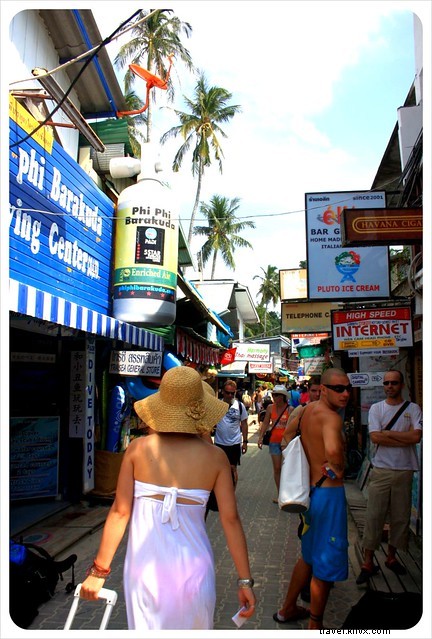
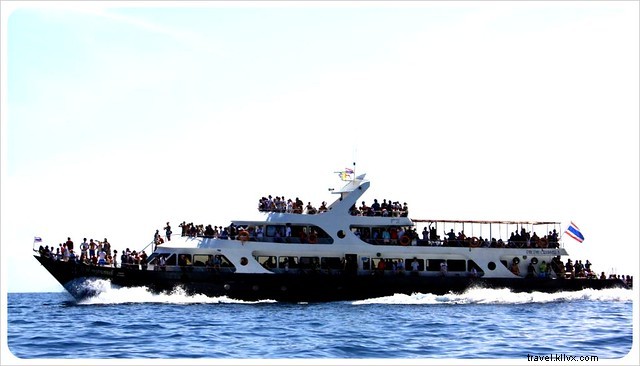
After taking the ferry from Koh Lanta, we navigated the crowded streets of Koh Phi Phi. Far from a tropical paradise, the area was packed with budget hostels, overpriced guesthouses, souvenir shops, dive centers, internet cafes, tour operators, and Western-style restaurants. Locals seemed scarce, and most visitors appeared to be young backpackers under 30. This was not the authentic Thai experience we anticipated.
 We weren’t naive—our ferry carried over 200 people, signaling that Koh Phi Phi and Phi Phi Leh were far from undiscovered.
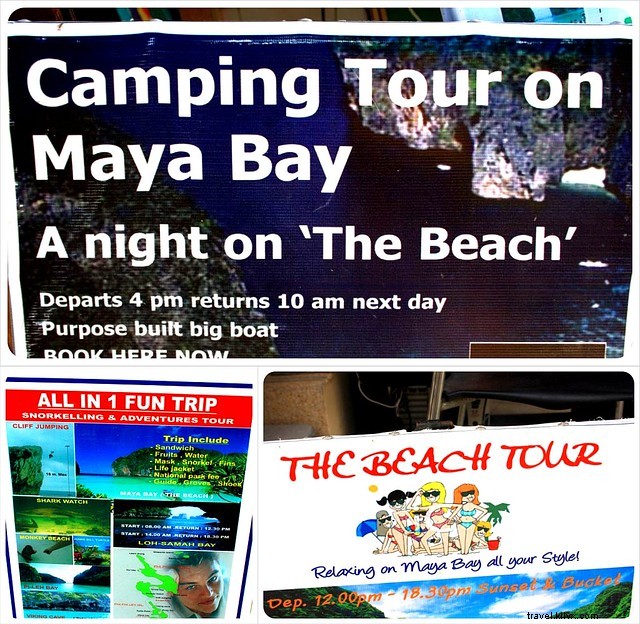
 Still, we hoped for a glimpse of the romance and isolation described in the book’s hand-drawn map from a Bangkok hostel. Instead, Koh Phi Phi was lined with tour agencies hawking trips to Maya Bay, complete with Leonardo DiCaprio posters. Determined to see it, we booked a snorkeling tour around Phi Phi Leh, including the mandatory Maya Bay stop.
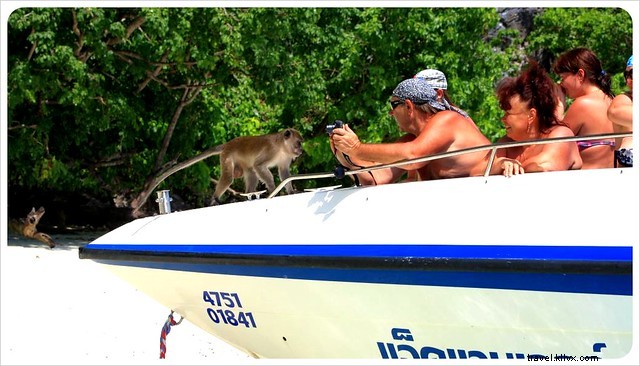
 Our first stop was Monkey Beach, a stark example of irresponsible tourism and animal mistreatment. Monkeys swarmed our boat upon arrival. Rather than appropriate food, our guide tossed chips overboard and discarded the empty bag on the beach. Visitors fed them from the water, and one was bitten—the guide casually noted 35 bites the previous day.
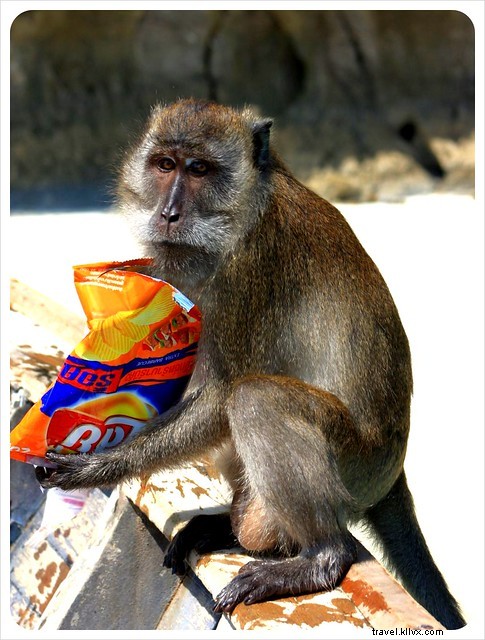 We wished for a prior warning.
 The snorkeling site was equally disheartening: over 20 boats created congestion, the water reeked of gasoline, litter was discarded casually, and while we spotted some fish, the coral was damaged.
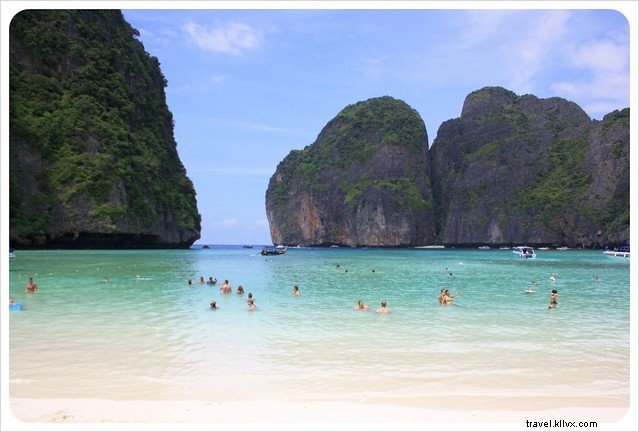
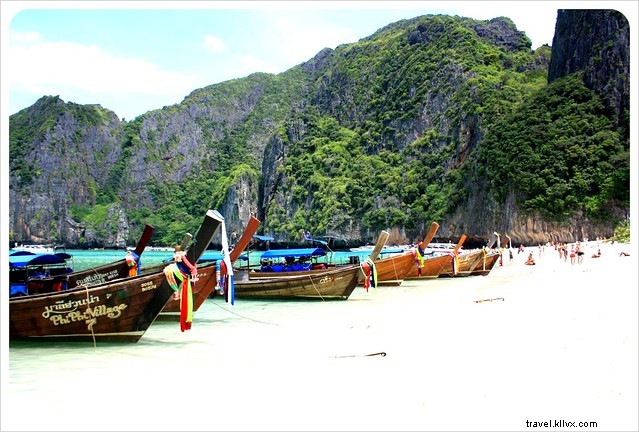
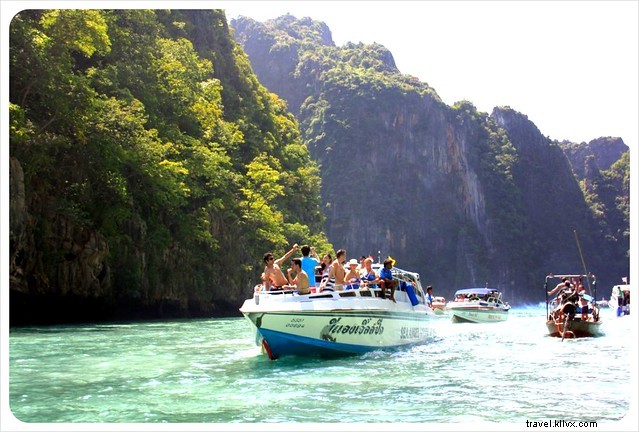 Finally, we reached Maya Bay. The film’s isolated cove is only visible from one angle; otherwise, it’s open to the sea. Speedboats and long-tail boats occupied two-thirds of the shoreline, forcing hundreds of tourists into the shallow water. It felt more like a crowded European resort than the idyllic escape from the movie.
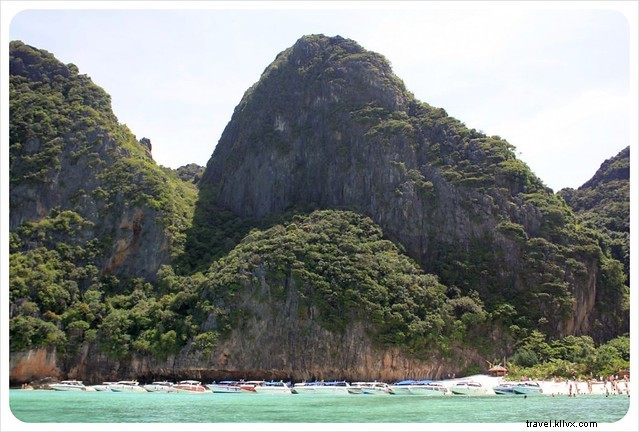 We had an hour to swim, photograph, and buy snacks amid the throngs—many fellow fans of the film or book.
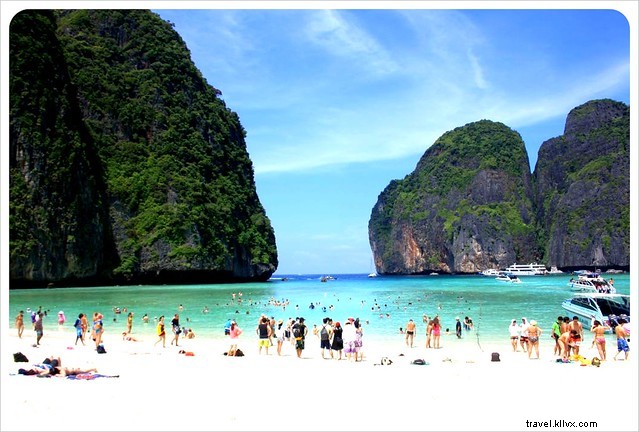
Maya Bay: The Antithesis of “The Beach” Fantasy
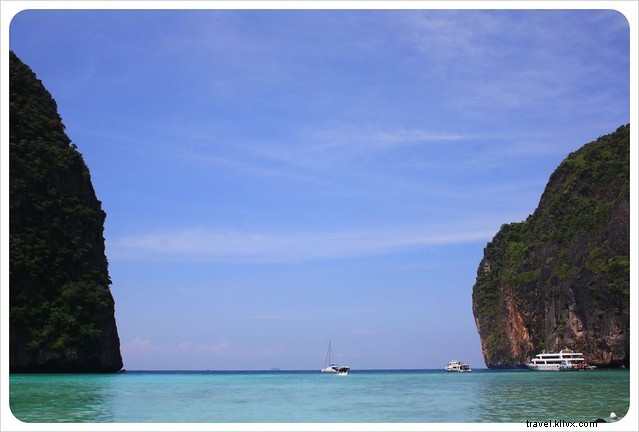
We don’t fault author Alex Garland, who set the story in the Gulf of Thailand, or the location scout who chose Phi Phi Leh perfectly for filming. The images confirm its cinematic beauty—we’re not ungrateful. Yet, it starkly contrasted the book and film’s romantic vision.
 No single entity is to blame for the overcrowding, pollution, and wildlife issues. Rapid tourism growth often prioritizes profits over sustainability. We hope future destinations prioritize eco-friendly practices. Our lesson: reality rarely matches fiction.
Have you visited Maya Bay? Share your thoughts below.