Rishikesh: From Ancient Yogis' Haven to Thriving Tourism Hub
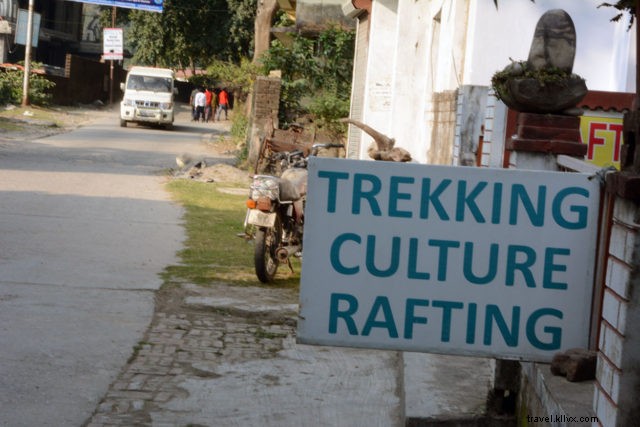
If you turn from the main road that leads to Shivpuri (not for beer in Rishikesh but something else) and walk along the many small, you will find a place swirling with all kind of adventure sports companies, alluring tourists to partake into its cultural destruction.
For those who can see its invisible forces and sense the unseen currents in its air, Rishikesh is a magical world. It is one of those places where you would want to come to regain your inner consciousness and learn about maintaining harmony with the world – by staying close to the Ganges and under the undiluted purity of the Himalayas.
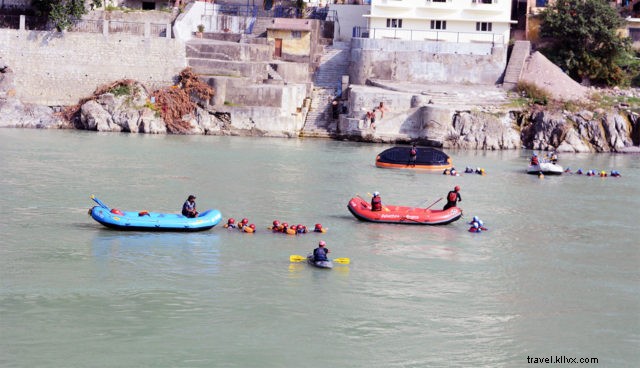
Yet for many, the town has become a place for enchantment, for having a few pints of beer in Rishikesh and enjoying the current of Ganges, rafting, and kayaking. But that’s not what Rishikesh’s real charm is, at least not in its real sense.
I’ve some personal attachment to this place, some affection, this is where I once spent two months taking spiritual lessons and learning my inner peace.
Read: My Sivananda Ashram Rishikesh Experience
And time and again, Rishikesh calls me and makes me want to come back to its cosy, almost mythical streets, yearning for self-discovery, for answers about life and all those things I am not fairly connected with. And no, I’m not alone. This has always remained the land of rishi-munis, of sadhus, of those learned men who’ve travelled across India, in search of a place, almost untainted, to practice meditation and seek the higher truth, but only ended up retiring here.
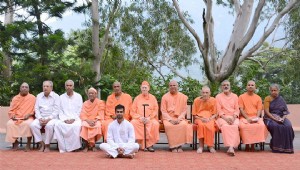
From Swami Vivekananda to Swami Shivananda and their uncountable followers – Rishikesh has acted as the fatherland for people to walk on their spiritual journey. No wonder, Rishikesh is a place to practice spirituality and not adventurism.
Rishikesh is no less than a holy place for me, and for those who discern a different sense of warmth from it. It has some sort of force full of magic, and if it is, it speaks for the magic that is only pushing back and forth the clear daylight world of reason. Those born with a higher sense of knowledge seldom have to go back to the world for it. Yet here, all these ideas are upended.
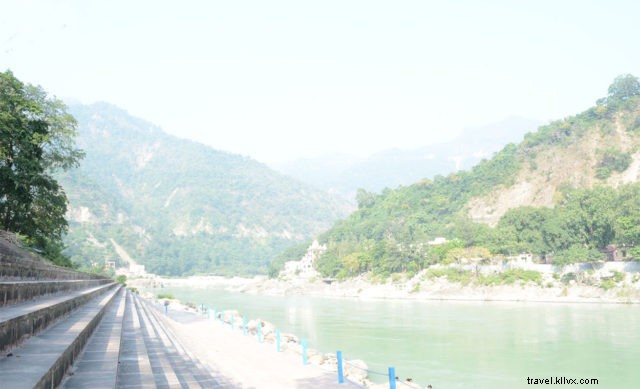
Here, in Rishikesh, people come back inquiring those questioning, stretching their sense of understanding, again and again. After all, this is where holy Ganges bids farewell to the colossal Himalayas.
But now, Rishikesh is quickly transforming from being a spiritual destination to a place that preaches materialistic and money hoarding. From drinking beer in Rishikesh to trying river rafting, new experiences are taking over the old charms.
When I was in Shivananda last year, in 2015, trying to “be good and do good” as Swami Shivananda always taught people, I realised that the new and fancy businesses, stretching their boundaries around its little walkways are deteriorating the very essence of this place.
And with each visit, I get a sense as if this place is moving faster than ever to become one of those quintessential Himalayan towns, with a strip of shopping centres and tourist shops.
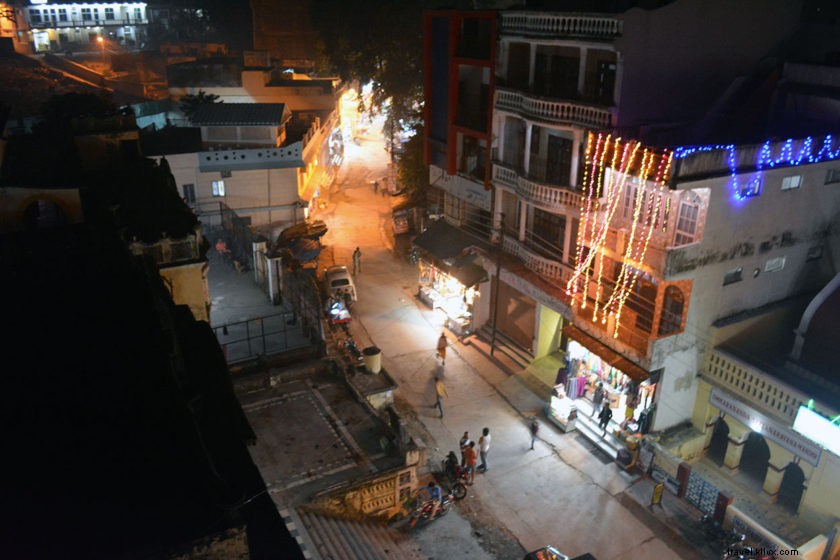
There are some places that are better left untouched, if only we don’t want to see ourselves regretting, years later, for not doing anything to save their cultural significance, and let them transform into just another tourist town around us – or let’s say, into yet another Lhasa – lost in the translations of the world.
And that’s what happening to Rishikesh, slowly, but evidently!
Most people don’t find Rishikesh having such high religious significance, as they otherwise do while speaking of Kedarnath or Badrinath. But for me, it is. And sadly, it also is one of those (unfortunate) consecrated lands around the world that are going through a never-ending cultural makeshift.
Rishikesh is calling us every minute, to take our first step towards preserving its true identity, before it’s too late.
From Hrishikesh to Rishikesh
Fondly known as Hrishikesh (which today has become Rishikesh) is a partnership land between the four districts of Uttarakhand – Pauri, Tehri, Haridwar and Dehradun. By the combination of these four districts Hrishikesh is made. It is also known by the name of “tapobhoomi”.
- This spiritual place has been the tapobhoomi of Swami Sivananda, the one with whom yoga is spread not just in India but across the world.
- It was in Hrishikesh where Swami Satyananda Ji has also done yoga. And opened the first yoga university in India, popular by the name of “BIHAR SCHOOL OF YOGA”.
- It is in Hrishikesh where the Ganga flows straight out of the land, doing good for the whole region and destroying the sins (as believed by the Hindus).
- Hrishikesh is the place which has also been the karmabhoomi of maharishi Mahesh yogi.
- It is Hrishikesh that is considered to be the abode of Mahadeva and is under the chain of Kedarnath.
- It is here that the aarti of the Ganga during the evening and the chanting of the Vedas make the area go into meditation.
- This is where a man comes and feels peace and ends up his old misdeeds after he has bathed in the Ganges.
- This is the place where the oldest Sanskrit colleges are located and where Sanskrit learning and yoga are studied according to tradition even today.
- Hrishikesh is the place of origin of mahakumbha.
- Rishikesh has, since ages, been chosen by Yogis to live and to do their sadhana
- Hrishikesh is the name of Lord Krishna which is called Yogeshwar and is considered as “the door of Himalayas”.