
Cueva de la Peña Colorada: Inside a 8‑Day Caving Expedition
Mirek Kopertowski and I had been in the cave for eight days, and were desperate for some sunshine and a cold beer. There were six of us still in the cave. Dane Motty, Gilly Elor, and Mirek were shuttling gear through Sump 3. Matt Vinzant and Zeb Lilly were assisting them at the vertical drop over Sump 3, and I was running laps between Sump 3 and a half-submerged cave passage known as the Grand Lagoon to get the remaining cave packs. When I arrived at the Grand Lagoon for the final run I sat down to have a brief rest in this stunning part of the cave.
Suddenly the cave went from absolute silence to thundering noise, as if someone had switched on massive water turbines. I got nervous, grabbed the remaining pack, and ran back to meet the others at Sump 3. Once I arrived Zeb was just coming up the rope over the sump, and told me that the water level in Sump 3 had just come up by almost a metre. The thundering noise at the Grand Lagoon and the fast-rising Sump 3 meant big trouble. My face must have looked worried, and Zeb, who has probably spent more time with me in remote cave passages beyond sumps than anyone else, must have known exactly what was going through my mind at a glance.
At this point we were already six weeks in to this two-month-long expedition, the third of an annual series of expeditions which Zeb and I organise. Our big dream is to descend Sistema Huautla, located in the Mexican state of Oaxaca, one of the world’s most spectacular deep caves with over 85km of passages reaching 1.5km vertically into the mountain, and continue through its many sumps – cave passages that are fully submerged and can only be explored using dive gear – to explore the full length of this underground streamway until it re-emerges in the 10km-distant Santo Domingo Canyon. If successful, this would make for the deepest and most spectacular cave through-trip on the planet.
This year our goal was to push the seventh sump in a cave known as the Cueva de la Peña Colorada. It’s thought to be the overflow resurgence to Sistema Huautla, and might provide us with a shortcut into the mountain. In 1984 this cave was explored by a team led by American caving legend Bill Stone. Over three months the team pushed 5km into the mountain, through six sumps, using two subterranean camps to make it to the end, until they hit their logistical limits in the seventh sump. Sump 7 was located in the most perverse setting imaginable – at the bottom of a 55m vertical drop without any ledge to gear up for diving. This sump also immediately went deep, to over 50m, beyond where the team could explore using air as breathing gas and the open-circuit dive gear available at the time.
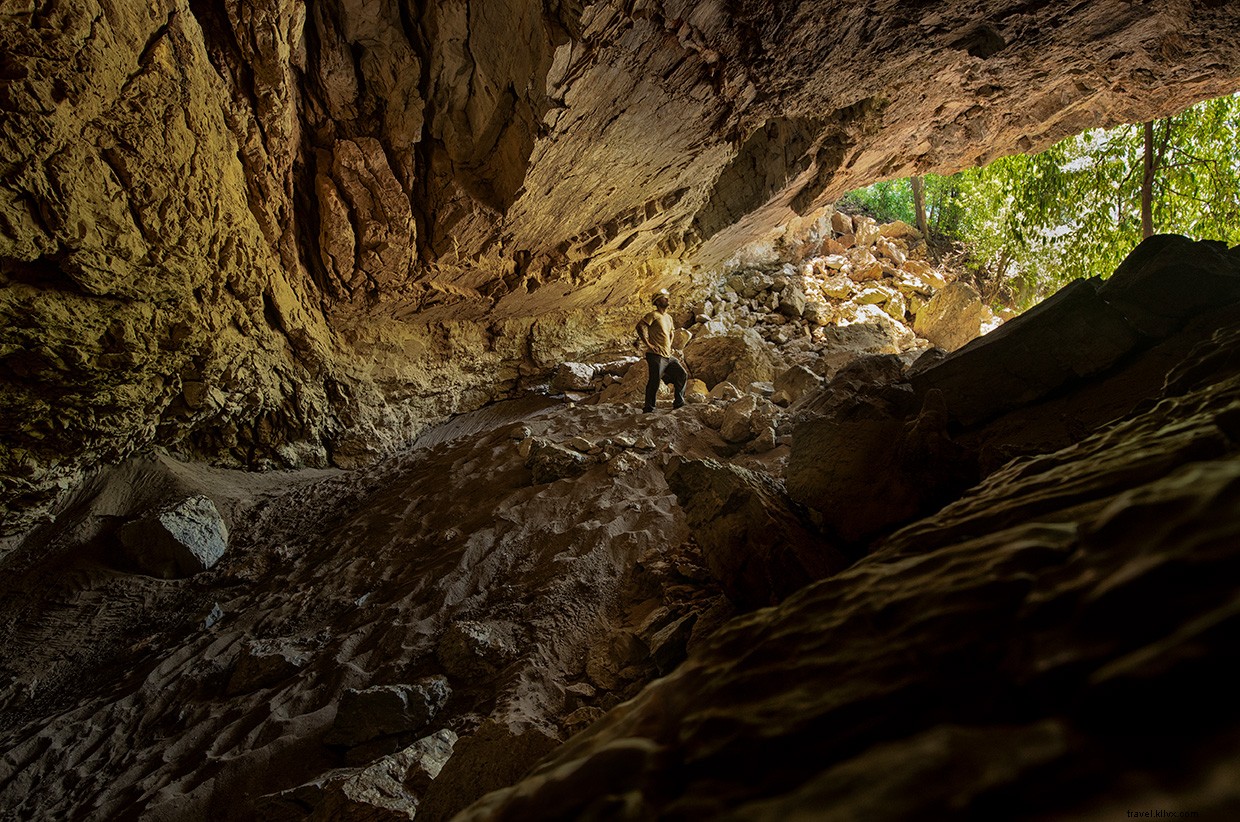
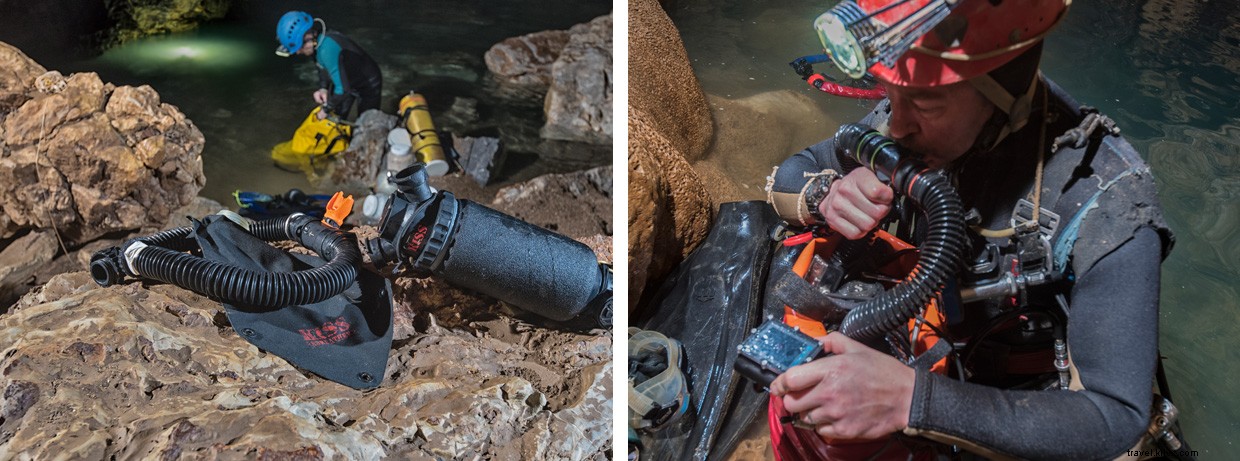
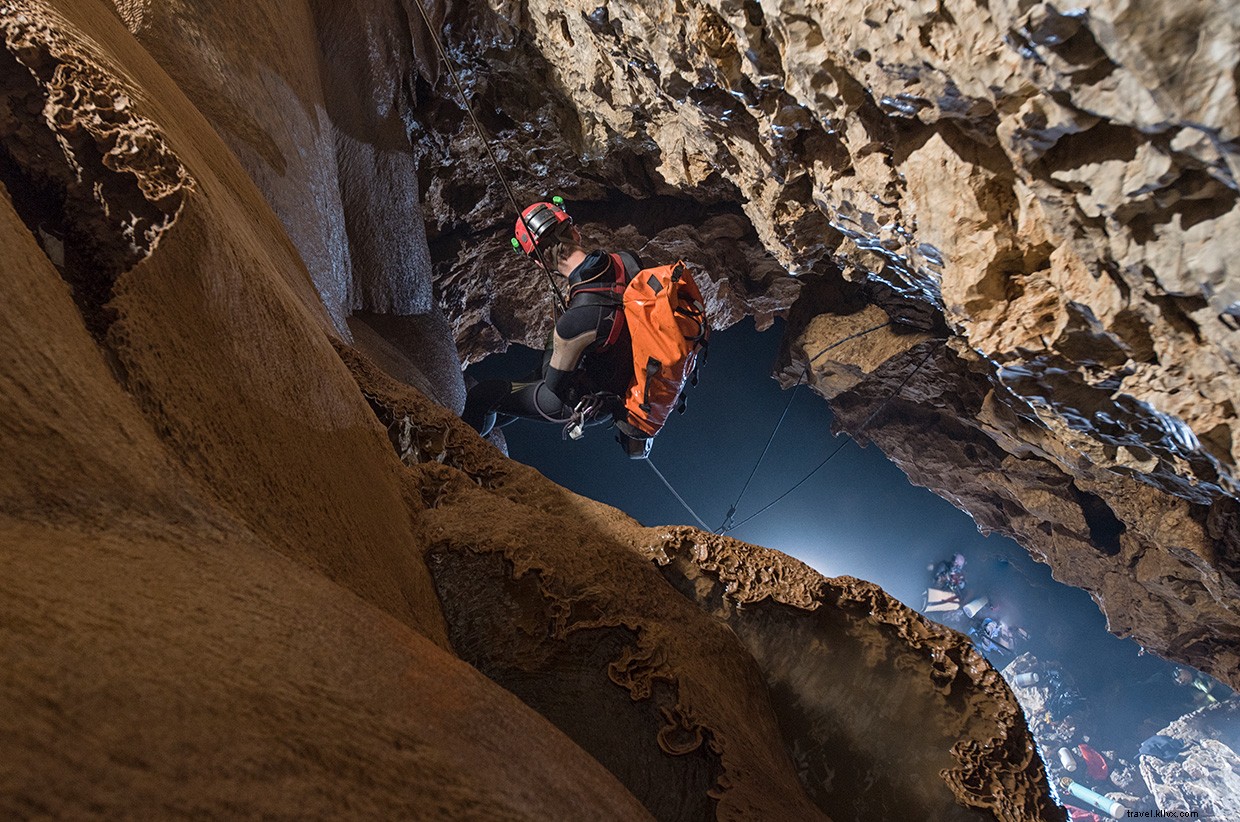
No team had returned to attempt this logistical challenge in 34 years. Zeb and I spent over a year planning, putting together a team of experienced cavers and cave divers, finding sponsors and supporters, and acquiring cutting-edge dive gear such as lightweight rebreathers, mixed gases, and dive scooters, which would allow us to push on where Bill Stone’s team had to turn. We drove two vehicles loaded with three tonnes of gear to Mexico. Much of this gear had to go into the cave, which was located over 700 vertical metres below where we could drive to, in a steep-sided canyon full of poisonous snakes. It took us three weeks to establish two camps in the cave and carry enough dive gear to Sump 7 to put the first two divers into the sump.
Now, 34 years after the first expedition, it was finally time to find out where Sump 7 went. The first divers in the water were Brits Connor Roe and Chris Jewell. Using lightweight rebreathers and composite dive tanks, and an aluminium platform to gear up at the bottom of the 55m vertical from above the sump, they finally headed off – but excitement quickly changed to disappointment when, after negotiating a tricky section, a collapsed pile of boulders blocked the way. Sump 7 was a dead end. Nevertheless, Zeb and I returned to the cave several days later to have another look – maybe Connor and Chris just missed something.
I entered the cave with Mirek Kopertowski, and soon met Tomasz Kochanowicz – who had come into the cave with others the day before – at Sump 3. Together we continued to Camp 1, and the day after to Camp 2 to get ready to dive Sump 7. Zeb, together with Gilly Elor and Charlie Roberson, entered a day later, with Zeb then continuing on to meet me at Camp 2. Once Zeb and I were at Camp 2, it was finally time to find out if Connor and Chris had missed the way on. The next morning we descended the rope down the 55m drop to the platform and checked our rebreathers before hitting the water. Visibility was pretty bad in the sump to start off with, but it improved once we descended past a restriction at around 20m depth. Ahead we could see an amazing cave passage. But although we followed Connor and Chris’s line, and then looked beyond, we could not find a way past the boulder pile. Not wanting to give up after so much effort to get to this point, and with some of Zeb’s gear playing up, I then went for a solo dive a couple of hours later to have one final look. On that dive I finished some mapping of the deep part of the tunnel, but again, there was no way on.
The next day it was time to get all the gear back out of the cave and up the canyon – the hardest part of any expedition. To achieve this we usually split into separate groups with small teams diving laps through the sumps to get our gear through the submerged parts of the caves, and other groups carrying it in between the sumps and camps. We repeated this day after day until on day eight I found myself at the Grand Lagoon and the cave we had explored started to flood rapidly. I decided we should escape further into the cave to a place known as the Whacking Great Chamber, which is more than 100m high and would provide us with enough air space to survive. All six of us still in the cave moved rapidly towards this chamber until we reached the lowest part of the cave passage – where the water had already risen to 10cm below the rock ceiling. I jumped into the water and made sure we could still get through. Zeb quickly followed – luckily he thought ahead and reeled out a dive line through this swim. The others came after and made it to the Whacking Great Chamber.
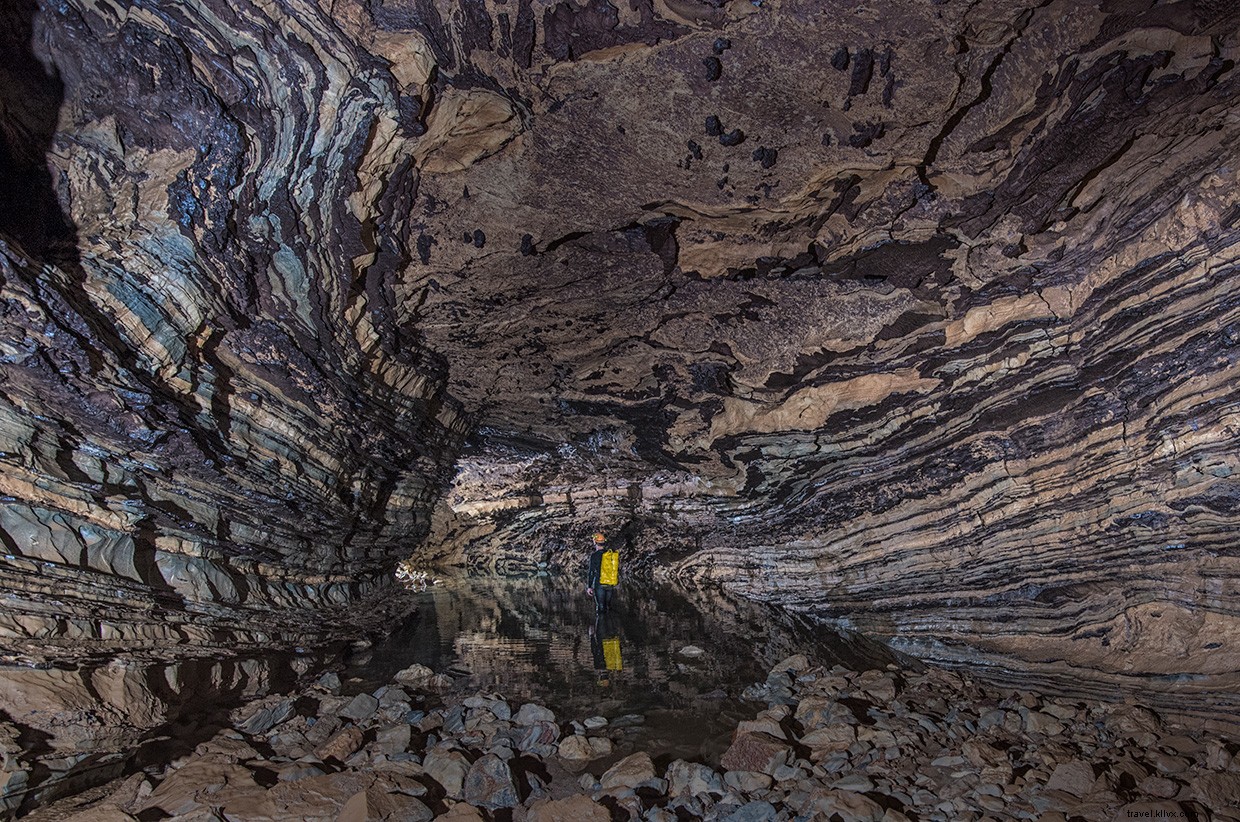
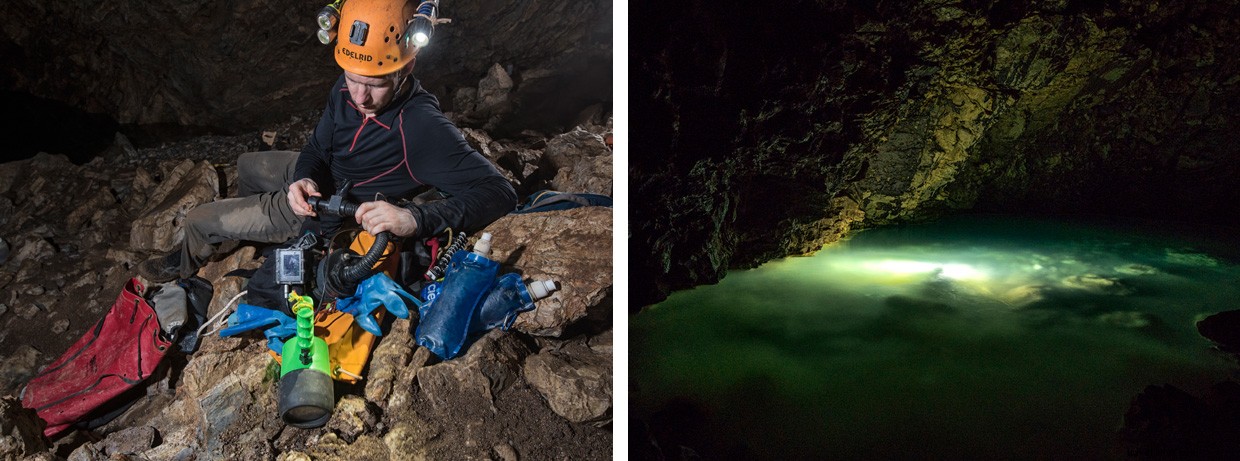
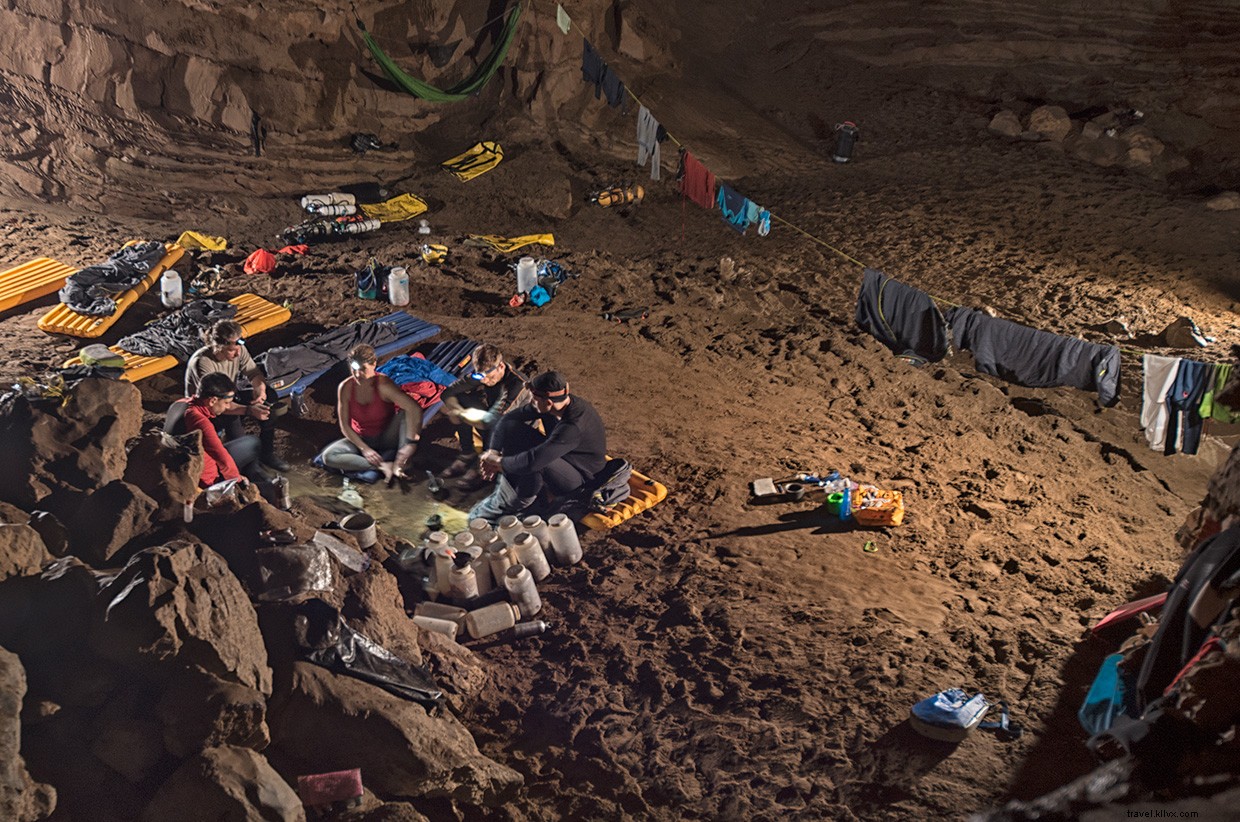
While we were safe from drowning in the Whacking Great Chamber, we were also 1km from the exit. Flooded parts of the cave separated us from both Camp 1 and our dive gear (which was above Sump 3). We had four granola bars between the six of us, the wetsuits we were wearing, and one space blanket. The gravity of the situation soon sank in. Privately we all started asking ourselves some daunting questions. ‘What if the water keeps rising?’ ‘When, and how fast will it drop?’ ‘Will someone from the outside come rescue us?’. All we could do was to lie still in the dark, conserve energy and head lamp batteries while attempting to keep warm, and hope that the water level would drop – which we knew was our only way out.
That first night, as the water level continued to rise, nobody talked. What would we have talked about – our outside lives? I think we were all contemplating the possibility that we might not get out. Eventually the water level began to recede. We continued to huddle in the dark, listening to the sound of the gurgling water and coming up with theories justifying why every noise was a good sign. Luckily, 69 hours later, once the water level had dropped substantially, Mirek Kopertowski – one of our team who was stuck with us in the cave – managed to dive while holding his breath through the remaining water-filled passage, following the line Zeb had put there previously. On the other side Mirek grabbed some dive gear and hauled it back through to the rest of us so that we could all escape. Happy and exhausted, we finally made it back to our field house 11 days after we had left.
Almost a week after the flood, after resting our bodies and recovering much of the gear still remaining in the cave, it was time to get back to Camp 1 to salvage the remaining gear. The cave between the Whacking Great Chamber and Camp 1 was still flooded. Zeb and Matt dived through this passage in very low visibility. When they surfaced at Camp 1 their jaws must have dropped; all of us expected at least the inflated sleeping mats and the 20 or so Nalgene bottles to float in the sump pool, but everything was gone except one light and a camera. The force of the water during the flood must have either washed the gear down a passage we did not know existed or buried the gear under sediment.
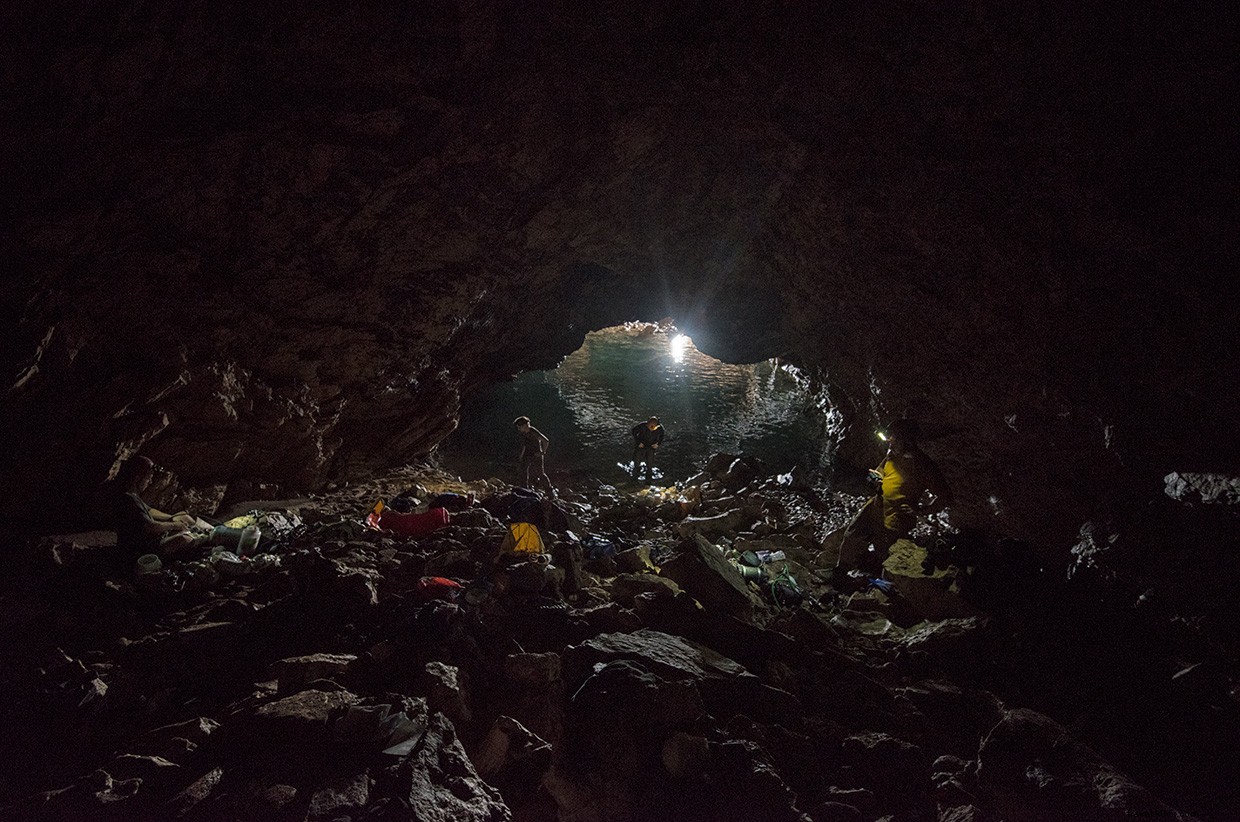
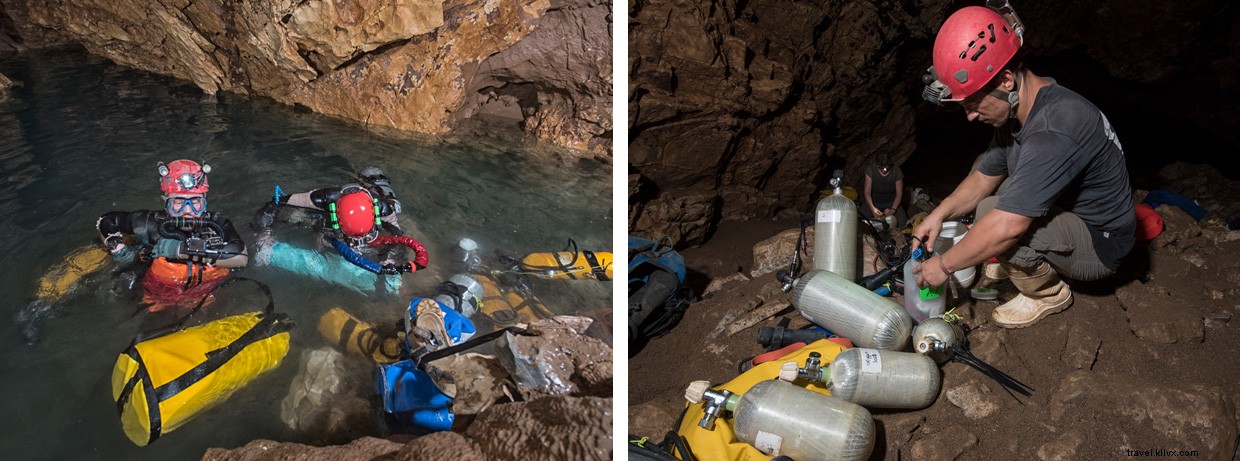
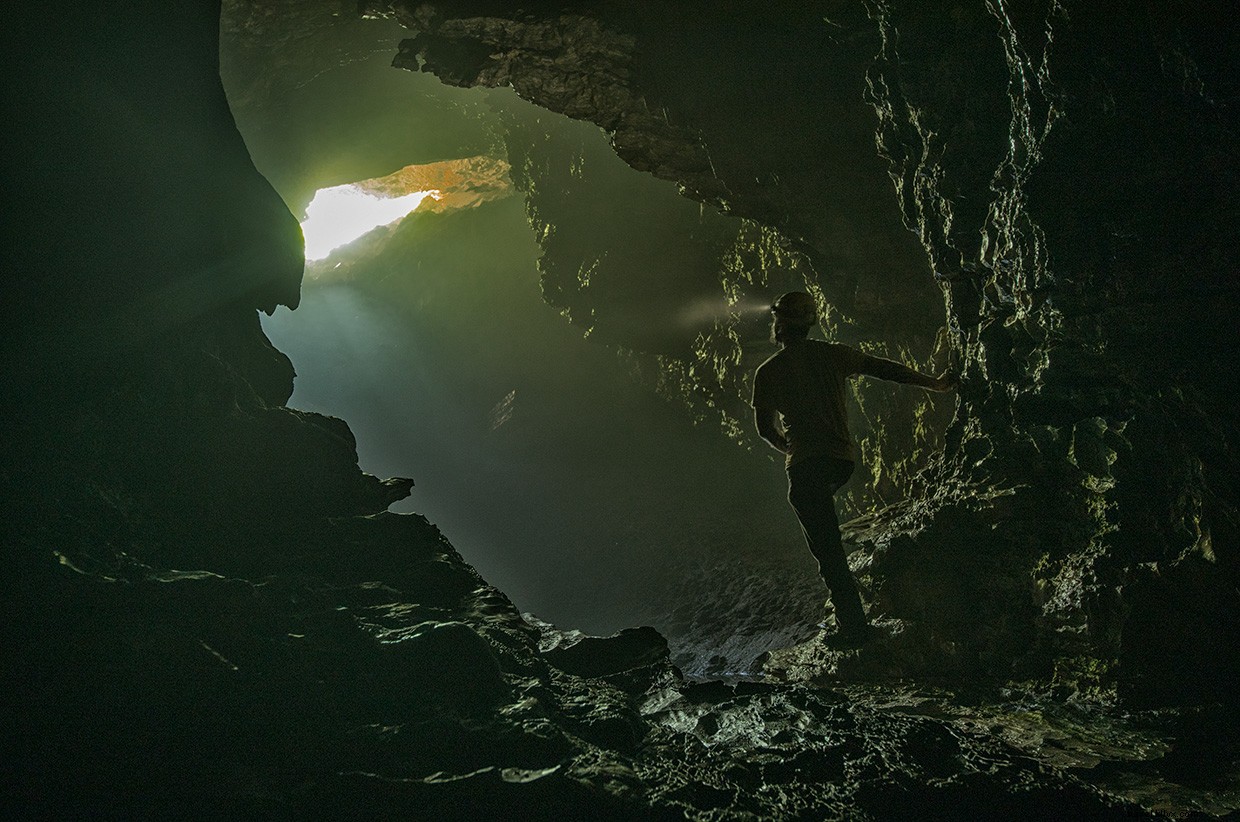
Zeb and Matt then continued on to Sump 4 where we had left two more cave packs full of expensive dive equipment – luckily they were still there. The flood marks must have been quite impressive, listening to Zeb and Matt’s stories after, and in hindsight we were lucky to get all of the cavers to safety.
We learned a lot from this expedition. Sump 7 in the Cueva de la Peña Colorada was a dead end. 34 years after its initial exploration, we had high hopes to push this sump and connect into the underground river sinking in Sump 9 at the bottom of Sistema Huautla, and the Huautla Resurgence where the underground river re-emerges in the Santo Domingo Canyon. To continue our efforts to connect Sistema Huautla with its resurgence, we now have to go back to exploring either Sump 9 – which will be a 100m or more dive on the bottom of a 1.5km-deep cave – or continue exploring the Huautla Resurgence.
It is still unclear what role the Cueva de la Peña Colorada plays in the drainage of this impressive karst system. Luckily, just before the flood, we were able to dump dye into Sump 7, which we could capture again in two resurgences in the Santo Domingo Canyon – resurgences that we thought were probably independent of the Cueva de la Peña Colorada. And from the flood marks in the cave, it looks more like the water that trapped us enters from where the Peña Colorada Canyon crosses above the cave, rather than from Sistema Huautla. We solved a small piece of the puzzle, but have many more to go.