
The Source of the River Gambia: Gaspard Mollien’s 1818 Discovery
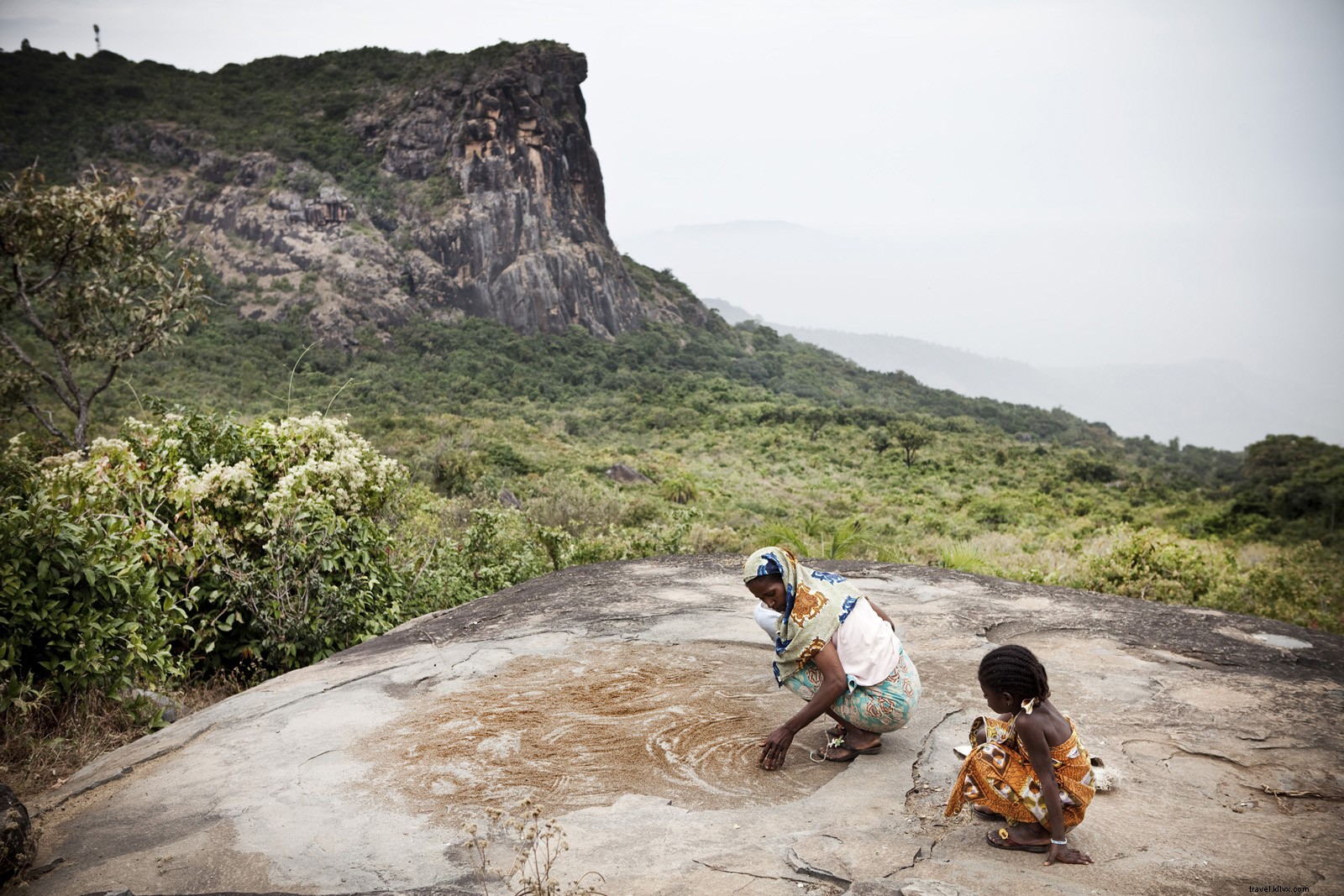
Almost two hundred years later, entering the same woods, I felt deep reverence, something approaching religious and spiritual. I had spent almost a year tracing maps to determine this actual spot, and only when Helen, my wife and expedition partner, found Mollien’s diary at the Royal Geographical Society, were we able to determine where the source was, in the labyrinth of rivulets which make up the headwaters. Now, I felt no compulsion to rush in, despite the knowledge that the Fula people, who protect the source, had mellowed – any thoughts of our brutal demise at their hands were merely echoes of Mollien’s diary. As I finally cupped the clear water, with golden tones reflecting off the iron-rock, I thanked Mollien for the words which had guided us to this place, and the beginning of our own epic quest. The first recorded source-to-sea expedition along River Gambia’s estimated 1130km course to the Atlantic Ocean.
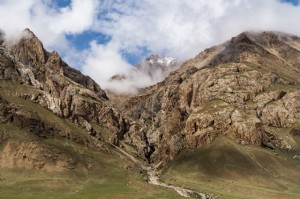
Although River Gambia’s source was the geographical and spiritual start of our expedition, getting there had taken two weeks and a 1000km of snaking road from our landing spot in The Republic of The Gambia. The final assault up the Fouta Djallon highlands, where we had stashed our canoes near the Senegal-Guinea border in the town of Kedougou, to the 1119m high source, was a twenty-four hour meat grinder in a Land Cruiser pickup.
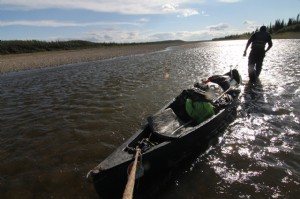
The River Gambia’s level can rise by as much as a Manhattan brownstone in its Senegal sections during the rainy season, and tear through imposing sandstone canyons with rampant fury. The December level of the river was much reduced, but still fast flowing at Kedougou, our ‘put-in’ spot. Launch day, the air was feted with the dregs of stale beer cans. Our auspicious water start was from the town dump abutting the river which set me thinking that this mainly Muslim town must have had a heavy underground drinking scene. Our canoes packed to the gunwales, we pushed into the fast flow. I looked back at Helen who had taken up center seat between myself, and helmsman, Abdou, and queried our sanity. She coolly commanded me to keep my eyes on the river.
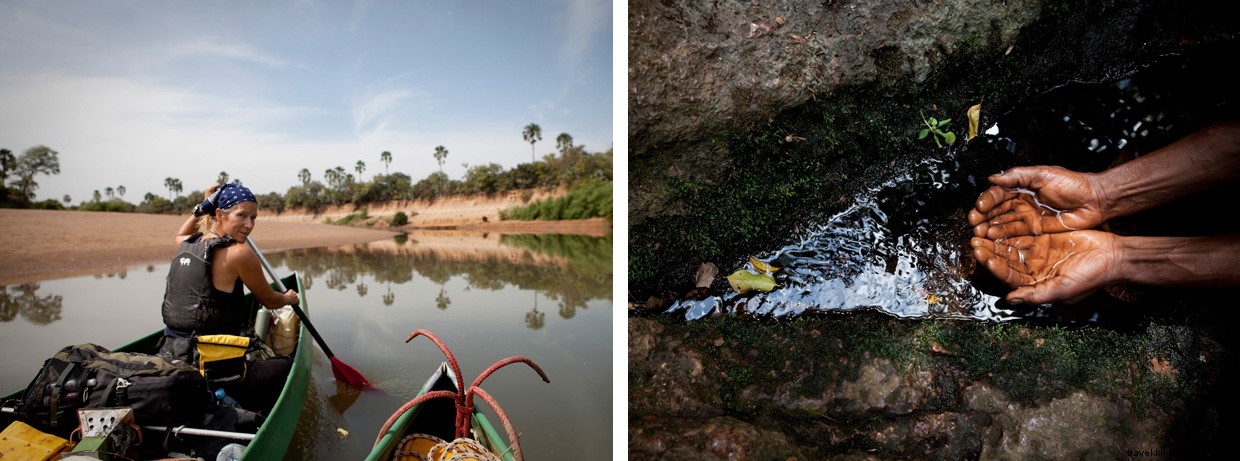 Helen and I were white-water neophytes. Our Gambian teammates, Abdou and Ebou, both chosen not just as old friends, but because of their decades of experience fishing from precarious pirogues in The Gambia section of the river. Within ten minutes of being on the river, I was already having doubts as Abdou stabbed frantically at the water with his paddle to control the canoe in the swift current.
Abdou, it transpired, had never in his 40 years of paddling faced fast water either. The second canoe was coursing smoothly around the fast moving river debris thanks to Yousef Keita at the helm and Ebou shouted directions to Abdou to rescue us from an unplanned swim. Local knowledge is a nearly always best, so just before our launch day we had hired Yousef, a Malian fisherman, who knew the first 100km, he said, like the back of his huge, calloused hand. Another major deciding factor about hiring Yousef was his purported local knowledge of our biggest fear: the hippos. Although Abdou and Ebou had said, in pre-planning Skype calls from the UK, that “hippos are not a problem”, and despite their fishermen background, we all concluded a local on board would not hurt. Every day, all day, we watched for any sign of these powerful mammals, knowing deep-down in our hearts they would be submerged and we might never even see one coming.
The section from Kedougou to Mako is known as ‘gold country’. For centuries the land on either side of the river has been continually pock marked by thousands of narrow mine shafts. We were warned about camping in these lawless areas, filled with anxious men and women, eyes bent on gold and not to be trusted. As I peered down one of the shafts, my eyes adjusted to see a labourer hunched, with axe in hand, a weak Chinese headlamp dotting the path of his striking tool. Watching the daily descent of these people into deep shafts, hauling the gold-bearing quartz and crushing it by hand, all while enveloped by air choked in fine dust made me realise what hard work it was. The unapologetic Sahelian sun seemingly has a softening effect on even the surliest of people because we were only ever treated courteously by them.
As we moved, Helen mixed her paddling with hippo patrol, scanning the river far ahead through binoculars, but it was to prove fruitless. One day, near midday, Yousef was a-stern, and stand-up paddling to gauge the route through a rocky section, when he screamed. Almost as quickly, Helen reciprocated, and we were almost on top of a huge bull hippo, which rose in front of us like a leather mountain of muscle and power, the river sweeping off its back. I was stunned, but managed to recover quickly enough to bow-rudder us sharply in silent, and panicked, disbelief to the rocky shore. The brute, equally shocked, launched into the middle of the river. Once on the seeming safety of the rocks I started laughing out of some perverse antidote to terror. Yousef on the other hand was laughing at me, and was soon whimsically chatting to the hippo in Bambara – seemingly to calm the mammoth beast down, conversely between launching rocks at it, from a hand carved catapult, to show we were not intimated . Although much, I suspect, got lost in translation. The hippo, submerged and then remerged between volleys of rocks and profanity, in Bambara, for the next hour. We needed a plan to get past him.
 Group deliberation in English, Mandinka, Bambara, and French only confused the issue. We finally opted for what seemed the suicidal approach, by way of the river and hugging the bank, ready to leap into the knotted trees if the hippo came in for the kill. Abdou and Ebou, now relegated to their own canoe, nimbly squeezed between us and the brambly bank, in some treacherous attempt to use our canoe as a hippo buffer. Seeing their plan, Helen and I could only furiously wonder at their audacity, as words in any language failed us, but we could do nothing but continue as Yousef left us in Mako.
Two nights later, on Christmas Day, Abdou announced he could not continue, and the two Gambians threatened a mutiny because the “work was too hard”. I suspect, it was more because Yousef was no longer with us and the hippo had spooked them. I was livid that they would consider leaving Helen and I in the wilderness. Perhaps the hippo had spooked me. Helen, far more wily than I, and using her womanly charm in a patriarchal land, said simply “if I, as a mere woman, can paddle the distances, and face hippos, then, surely you, as strong fishermen, can?”. Out-manoeuvred, they agreed, and said that returning home without us would mean disgrace to them and their families. We doubted it.
Camped on the rock, post potential-mutiny, I was now self-medicating with palm-wine, and concluded it was a fine lubricant to complement the bowl of noodles and some mystery meat a young local Bassari boy brought to us. I would like to say, that huddled around a bowl of possible monkey meat on such a Christian holy day – where forgiveness is a paramount tenet – extinguished the sour mood, but it only acted as a balm until more distance was covered and more shared experiences began to heal those mutinous wounds.
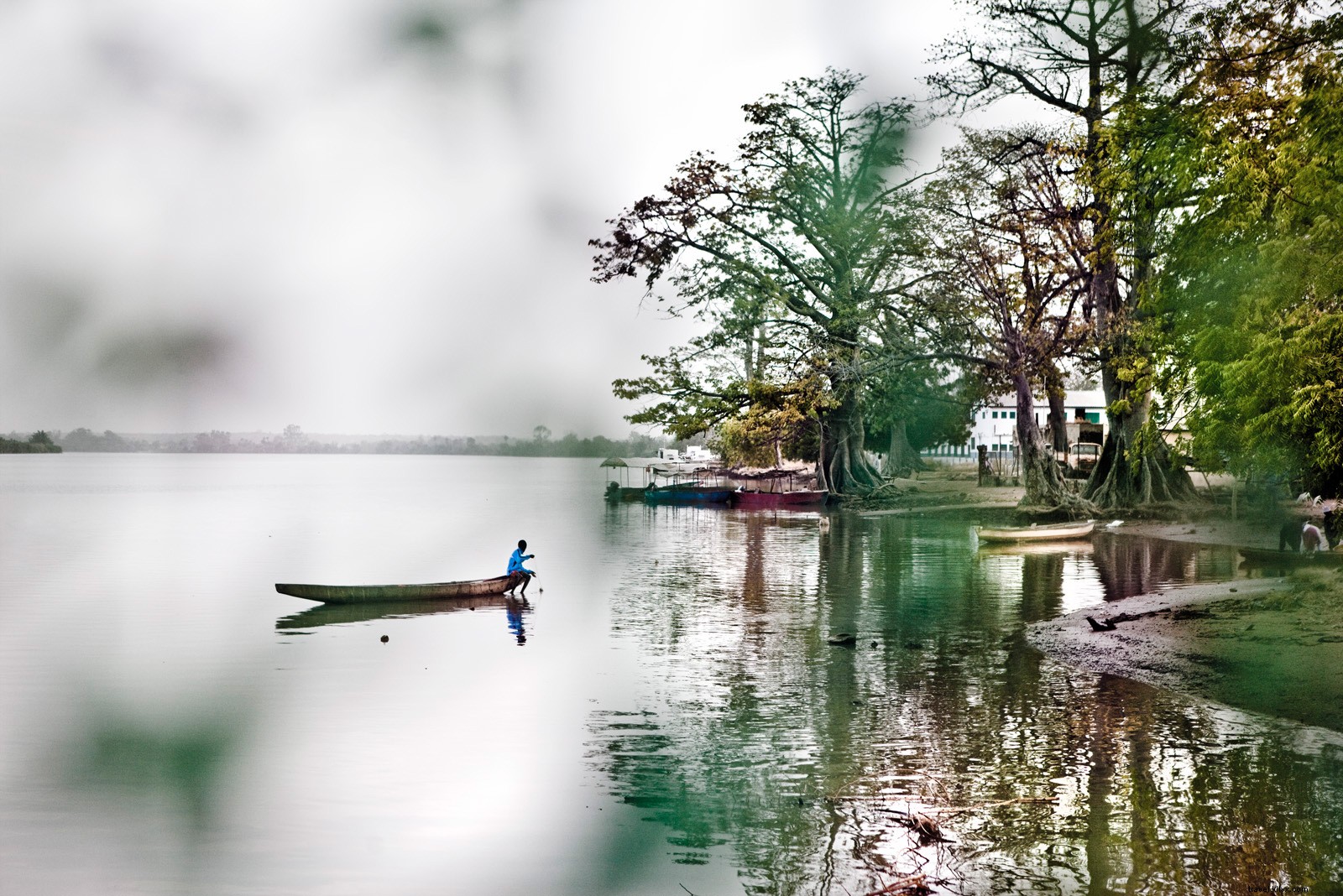
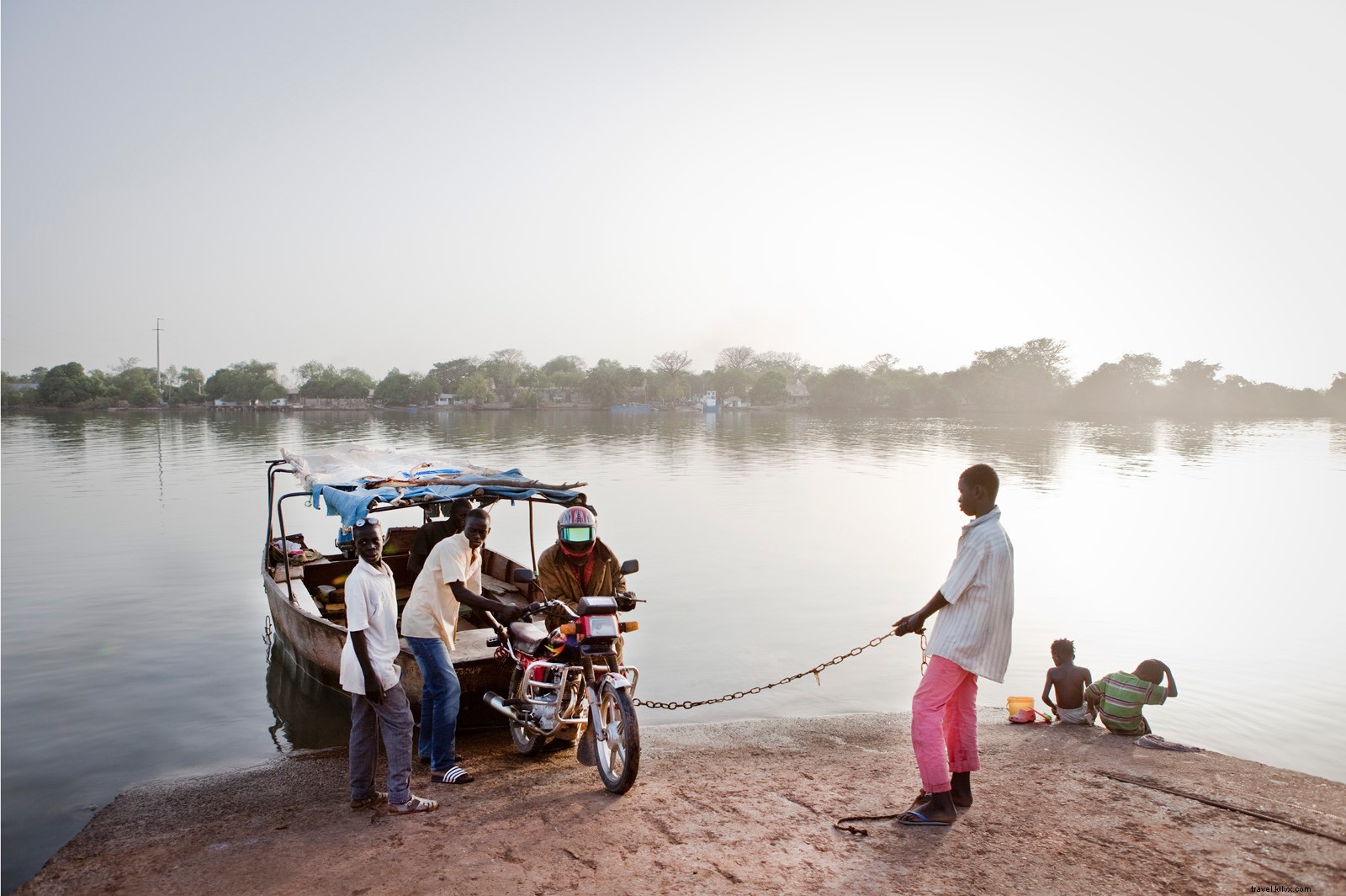
Onwards westerly, and sandstone escarpments, rimmed with barking baboons that had flanked our progress into The Gambia, slowly gave way to low-slung banks as the river widened. Tendas, or village jetties, were becoming more frequent, and our nightly stops were often at these, camping alongside migrant Toucoleur fishermen from Senegal, whose racks of drying catfish produced an odour which made us wretch. Abdou’s concern was no longer hippos, but the fear of the waves beyond Kemoto Point to the Atlantic. Beyond Kemoto was Abdou’s home fishing territory, and we knew his knowledge here was first hand. He started to talk of the river as ‘the sea’, and as we pushed out from a night stop at Kemoto, the north bank was growing indiscernible across the expanse of water. Our small canoes, now lashed together with bamboo poles to create a catamaran, twisted and turned in the rolling waves, threatening to break apart. With water breaching over our bows, I was fearful we would be flooded, our vessel submerged, left to flounder and drown. Although a kilometer from seeming safety of the mangrove lined shore, as I pushed my paddle into the water it came up tarred with thick mud. I had to trust Abdou fully now, which was not easy, and take his advice that we must push far out into the deep river to avoid the breaking waves in the muddy shallows. The river’s 14km expanse enveloped us, but the levity of ‘The Buena Vista Social Club’, issuing from the iPad, allowed some joy in what was the most mentally challenging section of the entire expedition.
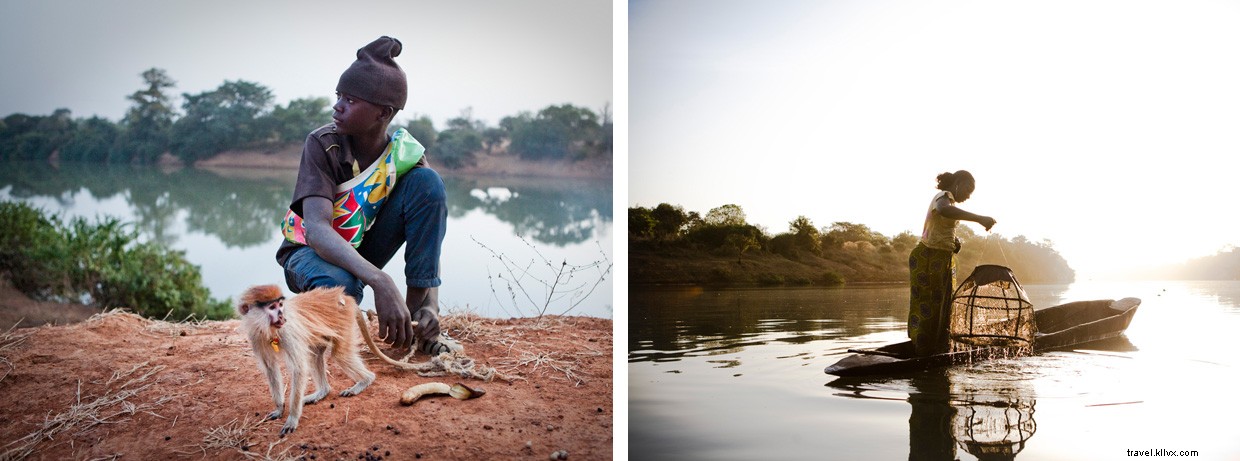
 On our penultimate night, after a two-hour paddle to shore, we reached the now infamous village of Bonto. Pulling in beside the rotting hulk of a beached barge, I was informed by a local fisherman that we needed to let the nearby paramilitary know were we there. Despite dismissing our letter of introduction from the Gambian President’s Office as fake, he allowed us to camp on the jetty. Later in the evening, he approached and apologised for his initially cool, and very un-Gambian, greeting as he sucked attayer tea through his teeth. He explained that they were stationed there, on the lookout for drug smugglers, using the river. In 2009 a haul of cocaine had been found at Bonto, with a street value of one billion dollars – a few million more than the Gambia’s GDP for that year. The irony of us casually coasting past their fortified sentry post, undetected, in our makeshift catamaran, was not lost on us, and probably, embarrassingly so, not on him either.
There was no marching band when we reached the end; no bouquets of bougainvillea, or even ‘The Big Man’, Gambia’s biscuit-tossing President Yahya Jammeh, to welcome us home – just a “hello” from a girl in a party dress, making a ‘selfie’, on a splintering dock. Our ‘heroic’ team scraped under Denton bridge, and into ‘history’ – getting caught momentarily on a low hanging sewage pipe, bursting the balloons Helen had fixed on the bamboo masts.
As we pulled the canoes onto the shore, for the last time, an impromptu welcoming committee did, finally saunter quizzically towards us. It was Terry, a long suffering ex-pat, at whose beach bar we had unapologetically washed up at. “Fuckin’ ‘ell I fort you were a bleedin’ Gambian wedding party! – now I see it’s just bloody Robinson bleendin’ Crusoe”. Mungo Park could have only wished for such a welcome.