Catch Trout, Sunfish, and Crappie with Ease: Beginner-Friendly Fly Fishing in Minnesota
Fly fishing is one of the most beginner-friendly ways to go fishing in Minnesota. Getting started takes a matter of 15 to 20 minutes, and most species of fish can be caught with a fly rod on Minnesota’s 10,000-plus lakes, streams and rivers.
Bob Nasby, Minnesota-based fly fishing guide, teacher and Fresh Water Fishing Hall of Fame member, says the basics to get you on the water catching fish are surprisingly easy to learn.
“You don’t need to be great at this to have fun and catch fish,” says Nasby. “You just have to learn a few basic things. There’s not a person I’ve met who I can’t get going in 15 or 20 minutes. Everybody perceives it to be some special kind of technique and a certain rhythm, and it’s not. It’s very simple.”
Why You Should Go Fly Fishing
Becoming a fly fishing person, you become more aware of the environment, the quality of the water, the subtlety of the sport, as opposed to just catching a lot of fish,” Nasby says. “A day on the water fly fishing can be just a nice day on the water. It doesn’t have to be about a big stringer of fish.”
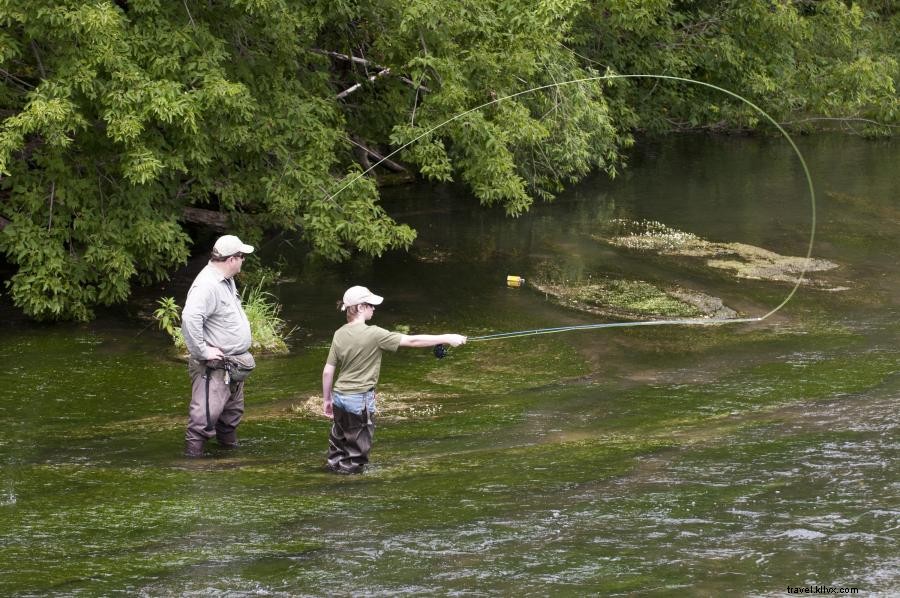
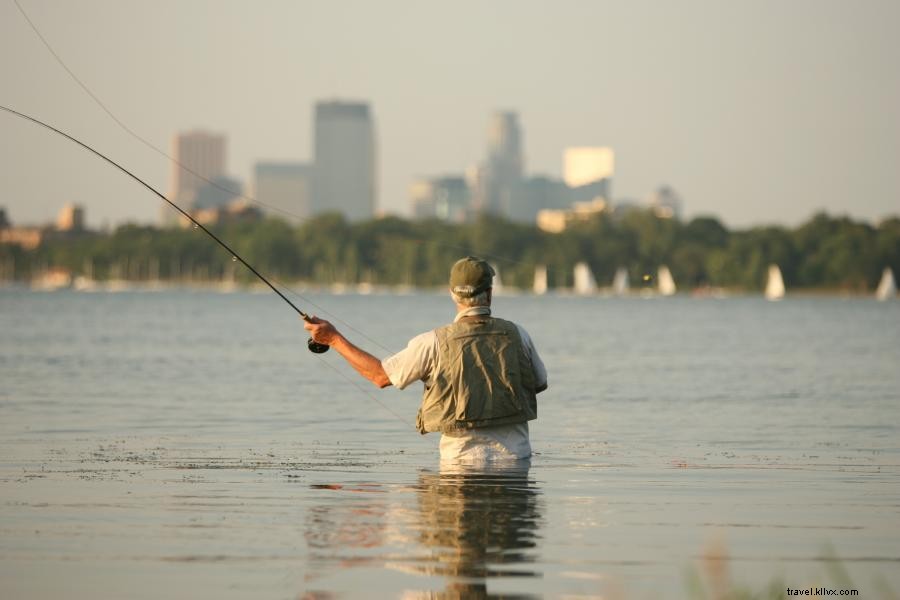
You can basically fly fish anywhere that you have room to cast. Most people see fly fishing as a small stream or river sport where you wade in with waders and a vest. This is a great way to fish, but there are other ways such as out of a boat or float tube, from shore, or from a paddleboard.
Nasby also emphasizes the great diversity of fly fishing. “There are no limits. I’ve caught fish 7 ½ feet long on a fly rod in the ocean, and 10 inches long in a trout stream, and everything in between. It’s great for panfish, bass, trout, muskies, catfish. Fly fishing for carp is loads of fun.”
Tips for Fly Fishing Beginners
1. Avoid Trout Fishing for Now
While Nasby respects traditional trout stream fishing, he recommends against trout altogether for those new to fly fishing. “On trout streams you’ve typically got brush, overhanging trees, and you’re going to get hung up in those trees all day long, and you’re going to give it up.”
Instead, “Sunfish and crappies are easy to catch, you catch a lot of them, and you get some confidence in your abilities that way. I fly fish on the shores of the St. Croix River for sunfish and crappies, and just have a magnificent time! From there you can move onto bass and larger fish if you want.”
2. Pick the Right Rod & Reel
Fly rods, reels and line are rated numerically by weight, from one at the lightest end to 15 for the heaviest. As a beginner, according to Nasby, “you want a rod and reel that’s going to serve more than one purpose.”
Five or six is a great starting size, he says, and works for panfish or trout. Six is the heavy end of the light spectrum, and is the bread and butter of the industry. Combo kits with rod, reel, line and leader are available for less than $150. “The technology nowadays is so good that even a cheap rod can be just great.”
3. Match Your Fly Line
A quality fly line is one of the two most important factors in fly fishing today. Not only does a line float, sink or moderately sink, but it has pretty much everything to do with loading your rod correctly to perform the way it should.
Lines range from zero- to 12-weight, where in theory you would match whatever line weight you have to the corresponding rod and reel weight. A 6-weight fly line would be ideally matched with a 6-weight rod and reel.
Unlike spin fishing or bait casting, it’s not the weight of the lure that makes the rod cast, but the weight of the line. There are a lot of different lines available, but a general floating “weight-forward” fly line works great in pretty much all situations.
4. Pick The Right Fly & Rigging
There are tons of fly patterns to choose from, based on what looks tasty to a particular species of fish. A few general categories include topwater, subsurface and wet fly.
A topwater fly does just what it sounds like: it sits on the top of the water. This is probably the most exciting way to catch fish, where you see everything happen before your eyes. The hunt, the strike, and the splash.
Subsurface flies are similar to the topwater fly, but lay partially under the water, representing food that is half submerged. Another great fly is the wet fly, which is fully submerged, swimming under the surface, brushing the rocky bottom structure and honing in on the deeper fishing alleys.