Explore Minnesota's Stunning Waterfalls: Top Destinations
The serenading song of birds and the translucent green glow of freshly unfurled leaves signal the arrival of spring in Minnesota. If you’re lucky, you can add the thunder of waterfalls, too. As winter loosens its grip, snowmelt fills the state’s rivers that roar toward Lake Superior, rumble through hardwoods and cascade across prairie.
Northeast Minnesota
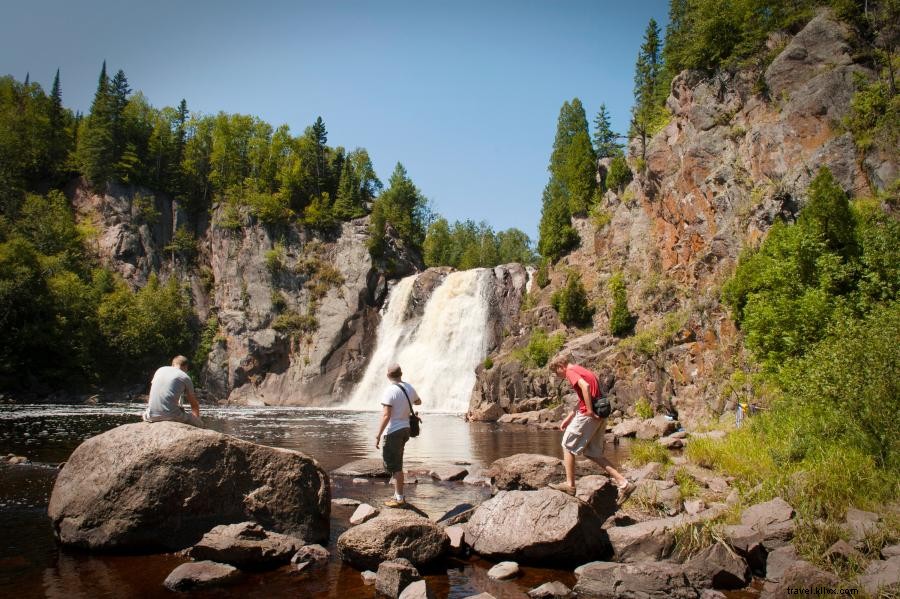
You have to go north—all the way to the Canadian border—to see Minnesota’s highest waterfall as it plummets 120 feet down the Pigeon River at Grand Portage State Park. North West Company fur traders used the river in the late 1700s-early 1800s, and it’s quickly apparent why they carried their large canoes around this daunting waterfall, which can double in size during the spring. Visit the nearby Grand Portage National Monument if you want to know more about Minnesota’s early fur trade.
Follow Lake Superior’s shoreline about 30 miles southwest to see Minnesota’s most unusual waterfalls: Devil’s Kettle on the Brule River. Visitors can park or camp at Judge C.R. Magney State Park north of Grand Marais and hike to the waterfalls where the water splits. One side tumbles 50 feet into a pool that flows to Lake Superior, and the other plunges underground and disappears. Where that water went was a mystery to onlookers and geologists alike, until 2017 when DNR scientists were able to confirm that the water resurfaces somewhere downstream.
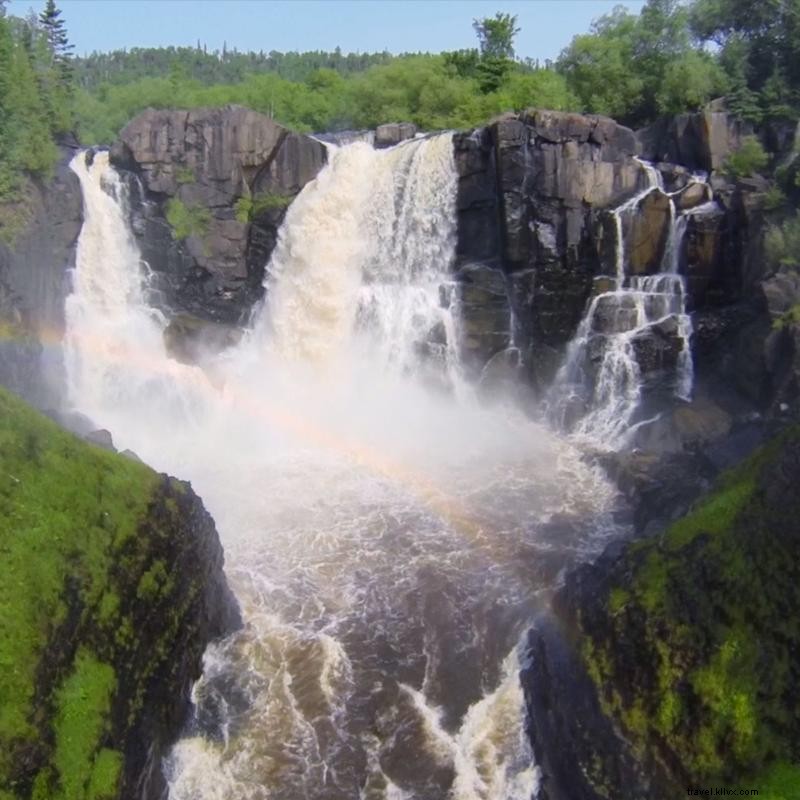
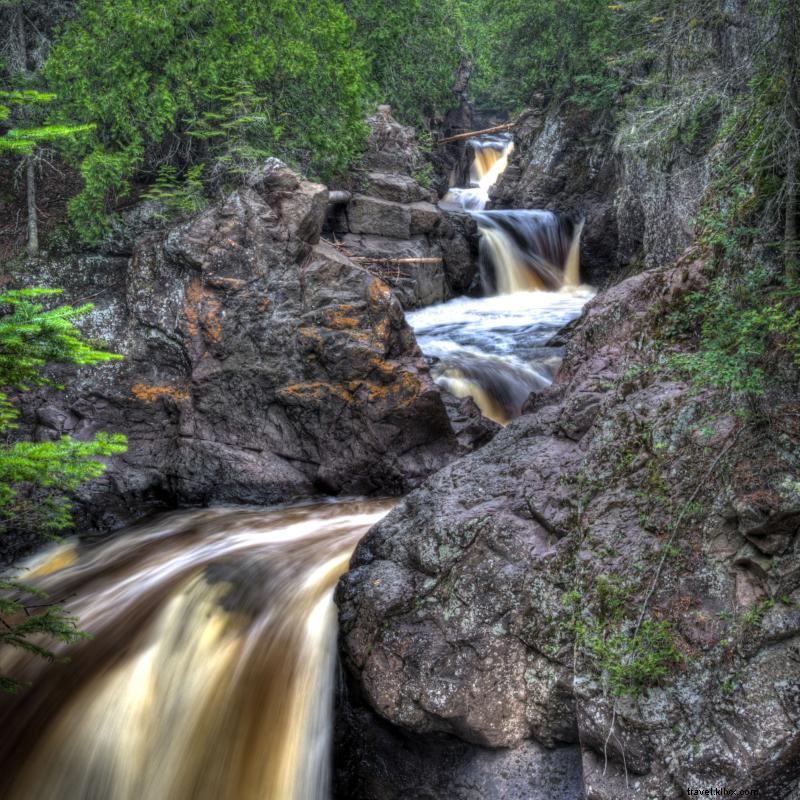
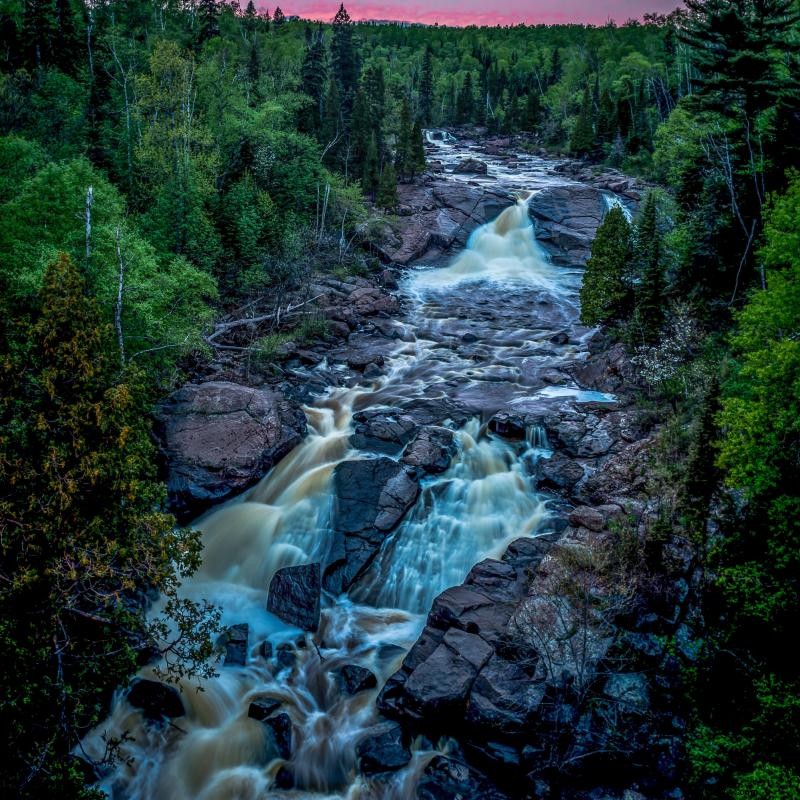
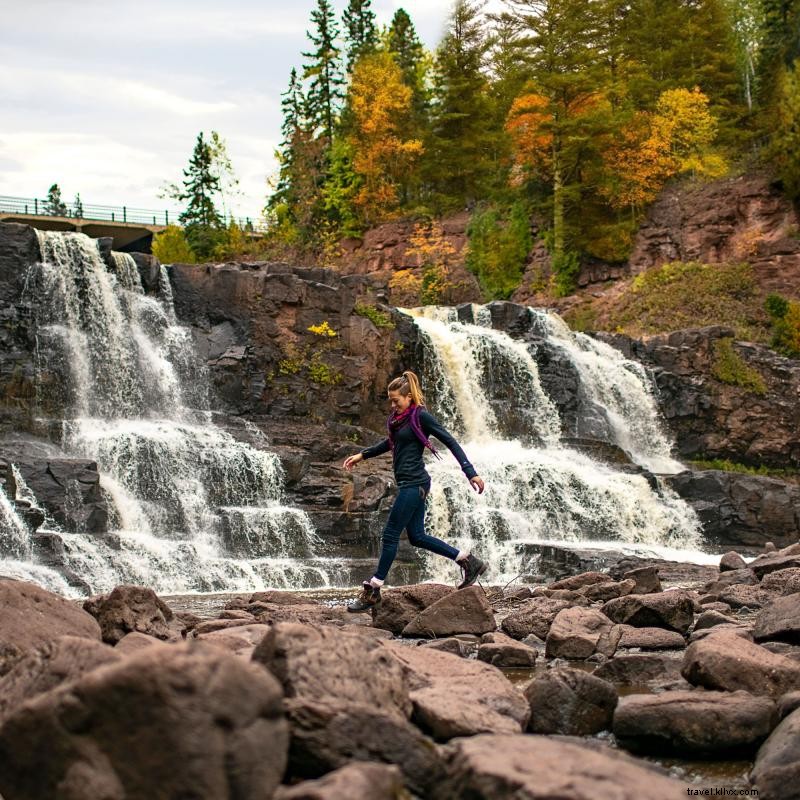
On a 60-mile stretch of the North Shore Scenic Drive between Lutsen and Two Harbors, you can find gentle falls at Cascade River State Park, marvel at dramatic gorges and massive potholes carved out at Temperance River State Park, admire Cross River Falls right on the highway at Schroeder, hike back to High Falls at Tettegouche State Park or explore the multiple falls of Gooseberry Falls State Park.
Elsewhere in the region, the Kettle River in Sandstone—a hot spot for whitewater rafting, rock climbing, and ice climbing in winter—is home to Big Spring Falls, and Wolf Creek Falls within Banning State Park. Hidden waterfalls can be found in Voyageurs National Park and the Boundary Waters Canoe Area Wilderness, both of which border Canada and can only be accessed by water.
Southern Minnesota
About 140 miles southeast of the Twin Cities, almost to the Iowa border, you can find an unusual twist on the typical waterfall on the outskirts of Harmony. The catch? You have to head underground on a Niagara Cave tour to see the almost 60-foot-high waterfall. It’s one of the unique features of this cave that was once popular for underground weddings and still boasts a small chapel among its natural features.
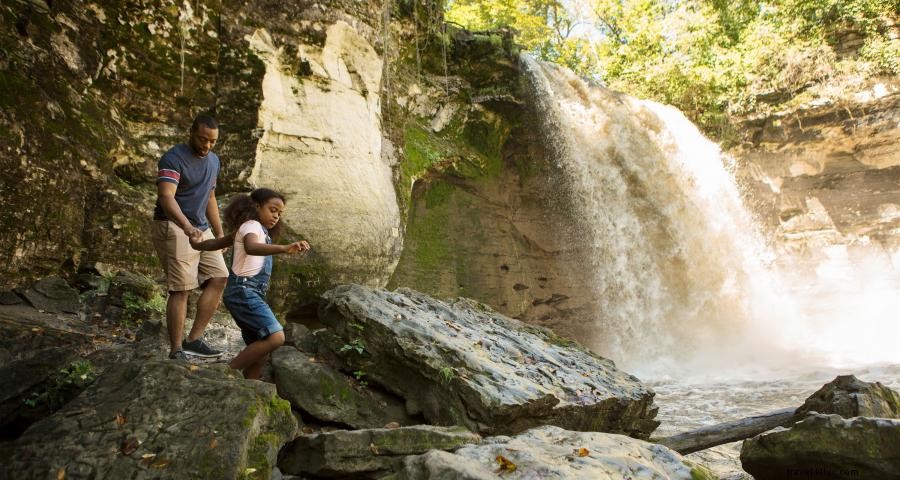
Southern Minnesota’s largest waterfall can be found at Minneopa State Park. Its gentle creek burbles through the hardwood forest until it falls like a curtain across two terraces in a mossy gorge west of Mankato. On the other side of the Minnesota River, about 8 miles away, Minnemishinona Falls cascades into a narrow ravine along the scenic Judson Bottom Road.
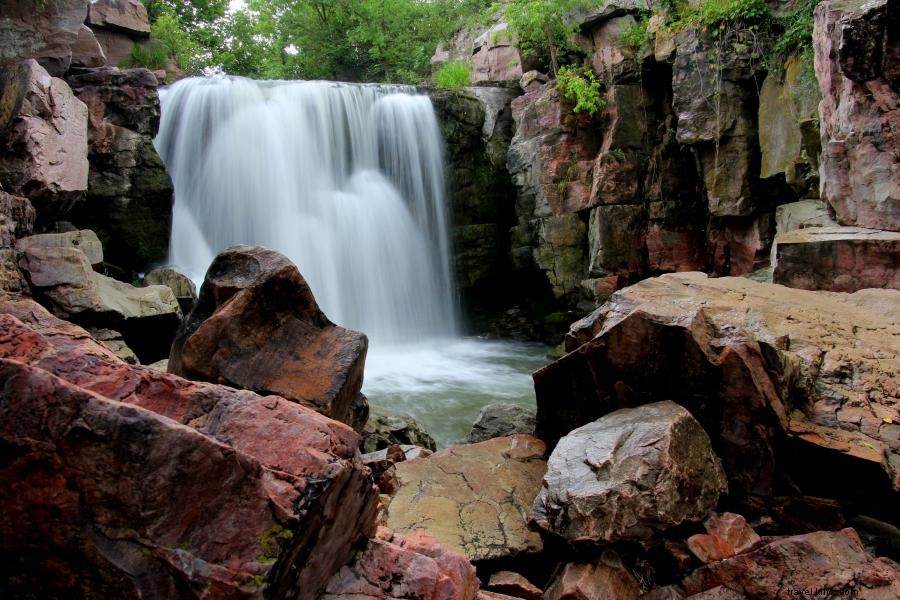
If you continue along the Minnesota River Valley heading west, take a quick side trip to see the namesake of Redwood Falls. It’s tucked into 219-acre Alexander Ramsey Park, the state’s largest municipal park and a popular spot for camping, hiking and visiting a small zoo with buffalo, deer, prairie dogs and waterfowl.
An unexpected waterfall also can be found in far southwest Minnesota, known more for prairie and farms than waterways. That makes the pretty waterfall at Pipestone National Monument a surprise when walking among pink quartzite rocks and learning about the area’s continued spiritual significance to American Indians.
Twin Cities
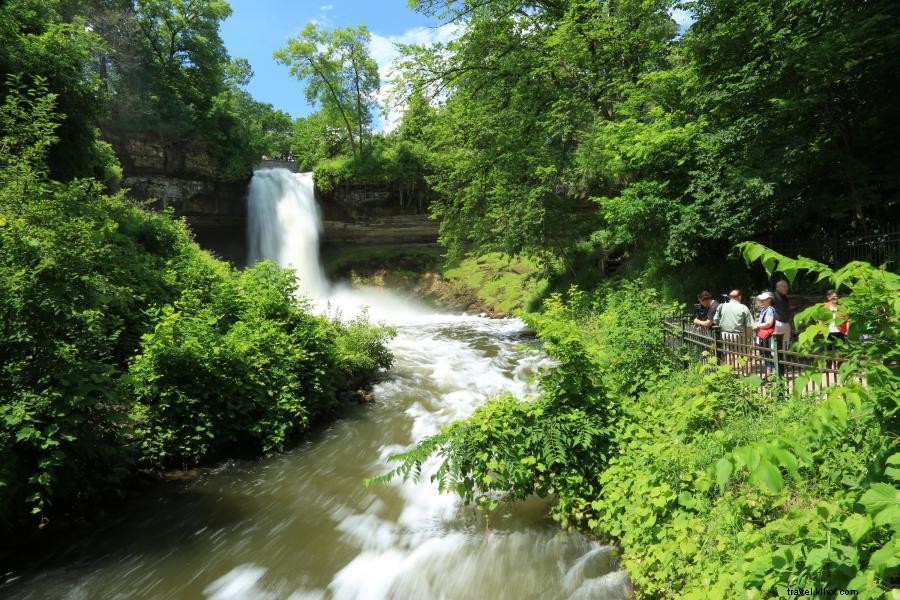
In Minneapolis, the falls at Minnehaha Park cascade 50 feet as the creek rushes toward the Mississippi River. The falls anchor this popular park, where you can hike, rent a bike, catch a concert or kick back on the patio at the seasonal Sea Salt Eatery. The smaller, more secluded Hidden Falls are tucked away in a pretty riverside park in St. Paul.
While some of these sites are free, most require a day pass. State Park daily entrance fees are $7, or $35 for an annual pass.